


In a Small Team, Burnout Is a Business Risk. Including Yours.
Burnout is not a personal weakness. It is a signal about the work. Here is how to prevent burnout in a small team, why it is about the job and not the person, and why the owner’s own wellbeing matters most of all.
Burnout is not a personal failing. It is a warning sign about the work, a chronic imbalance between what the job demands and what supports the person doing it.
In a small team, that matters more, not less. There is no bench and no slack. One burnt-out person, or one burnt-out owner, can stall the whole business. Burnt-out workers are six times more likely to leave.
The biggest driver is how people are treated, then unsustainable workloads and a lack of control. You cannot fix burnout with perks. You prevent it by changing the work.
And the most at-risk, least-supported person is often the owner. Small business owners report higher rates of anxiety and depression than the general population. Your own wellbeing is a business asset, so it belongs in this conversation too.
If you take one thing from this article, take these four moves
- Treat burnout as a signal about the work, not a flaw in the person.
- Fix the load and the behaviour. Sustainable workloads and zero toxic behaviour come first.
- Protect recovery. People need genuine breaks and the right to switch off.
- Look after the owner. Your wellbeing is the business’s wellbeing.
Everything below is optional depth. Read on for why burnout is a work problem, why small teams feel it hardest, and how preventing burnout actually works, including for you.
Digging Deeper
Below sits the supporting case. It covers why burnout is systemic, why small teams are exposed, what prevention looks like across industries, and why the owner cannot be left out.
Burnout is a work problem, not a personal one
The World Health Organization defines burnout as an occupational phenomenon, a syndrome resulting from chronic workplace stress that has not been successfully managed. The clue is in the definition. It is about the workplace.
McKinsey’s research is blunt about what this means. High burnout is a warning sign that the organisation, not the individual, needs to change. It is driven by an imbalance between job demands and the resources people have to meet them.
So the fix is systemic. As the researchers put it, you cannot yoga your way out. Resilience training and wellbeing perks will not rescue a job that is simply unsustainable. Preventing burnout means redesigning the work, not toughening up the people.
That reframe matters, because it changes who has to act. If burnout were a personal weakness, the answer would be to fix the person. Because it is a work problem, preventing burnout is a leadership job, and a solvable one.
Why small teams feel it hardest
It is tempting to think burnout is a big-company problem. The data says otherwise. McKinsey found burnout symptoms are actually higher among employees at smaller companies.
The reason is structural. In a small team there is no slack and no bench. Everyone wears several hats, and when one person is off or quietly checked out, the load lands on everyone else. That is how burnout spreads.
The stakes of losing someone are higher too. Burnt-out workers are six times more likely to leave within months, and in a small business, losing one experienced person is a serious blow that takes a long time to recover from.
This cuts both ways, though. Because a small team is close-knit, you can also see the early signs sooner, and act faster, than any large organisation ever could. Proximity is an advantage if you use it.
The biggest driver is how people treat each other
If you change one thing, change the behaviour. McKinsey found that toxic workplace behaviour is the single strongest predictor of burnout and of people wanting to leave, by a wide margin.
There is a trap here for leaders. Stress makes people more toxic without realising it, because the patience to handle small frictions is the first thing to go when you are under pressure. In a small team, where a few people set the whole culture, that effect is amplified.
So set a clear standard of respect, and hold it, including for yourself on a bad day. It is the highest-leverage move available for preventing burnout.
What prevention looks like across industries
In trades and construction, prevention means realistic schedules rather than endless overtime, and a culture where people look out for their mates. The industry carries high rates of distress, so normalising a simple check-in matters.
In professional services, it means capping the always-on culture, protecting focus and recovery, and managing client demands so they do not quietly crush the team.
In allied health, it means managing caseloads and emotional load, building in debrief and recovery, and watching for compassion fatigue in people who spend all day caring for others.
In not-for-profits, it means protecting mission-driven people from overcommitting, resourcing the work honestly, and genuinely valuing and resting volunteers, not just paid staff.
Protect recovery, not just effort
Burnout is chronic load without recovery, so recovery is not a luxury. Protect genuine breaks, reasonable hours, and the right to switch off after work.
Reward rest and renewal rather than heroics. A culture that celebrates the person who never stops is quietly teaching everyone that the way to be valued is to run themselves into the ground. Sustainable effort beats burnout every time.
Recovery is also cheap. A genuine day off, a protected lunch break, or a quiet end to the week costs nothing and does more for preventing burnout than most paid programs ever will.
Don’t forget the owner, that’s you
The most at-risk person in a small business is often the one reading this. Owners carry relentless responsibility, financial pressure, and isolation, and report higher rates of anxiety and depression than the general population.
Running on empty is not a strategy, and the business depends on you being able to think clearly and lead well. Your wellbeing is not separate from the business. It is part of its foundation.
Use the support that exists, because it is good and much of it is free. Beyond Blue’s NewAccess for Small Business offers free, confidential coaching designed for owners, with coaches who have run businesses themselves. The Small Business Debt Helpline helps with money stress, which is tightly linked to mental health. Reaching out early is a sound business decision, not a weakness.
Modelling it helps your team, as well. When the owner takes a real break and talks openly about managing pressure, it gives everyone else permission to do the same. You cannot ask of your people what you will not allow yourself.
How to start
Pick the one thing that is grinding people down right now, and change it. Set a clear standard of respect. Protect recovery. Check in honestly with your team, and with yourself.
Make support visible, so people know where to turn before things get bad. Small, consistent action prevents far more harm than any one-off wellbeing event, and it is the heart of preventing burnout in a team that cannot afford to lose anyone.
Where to from here
Burnout is a business risk you can manage, because it is built into how the work runs. Treat it as a signal, fix the load and the behaviour, protect recovery, and look after yourself.
Do that, and you protect the people the business depends on, including the one in the founder’s chair.
If you would like help preventing burnout and building a healthier team, from workload and roles to culture and support, SBAAS can guide you through it. We help Australian small businesses across trades, professional services, allied health, and not-for-profits look after their people, and their owners. To learn more about how we work, visit https://sbaas.com.au/about-us/ or call (07) 3916 9896 to talk it through.
This article is general information about burnout and wellbeing, and it is a sensitive topic. If you or someone you know is struggling, support is available. Beyond Blue’s NewAccess for Small Business offers free, confidential coaching, the Small Business Debt Helpline can be reached on 1800 413 828, and Lifeline is available any time on 13 11 14.
Sources
Beyond Blue. (2026). NewAccess for Small Business Owners. https://www.beyondblue.org.au/get-support/newaccess-mental-health-coaching/small-business-owners
business.gov.au. (2024). Mental health and wellbeing support for business. https://business.gov.au/risk-management/mental-health/mental-health-and-wellbeing-support-for-business
McKinsey Health Institute. (2022). Addressing employee burnout: Are you solving the right problem? https://www.mckinsey.com/mhi/our-insights/addressing-employee-burnout-are-you-solving-the-right-problem
McKinsey Health Institute. (2023). Reframing employee health: Moving beyond burnout to holistic health. https://www.mckinsey.com/mhi/our-insights/reframing-employee-health-moving-beyond-burnout-to-holistic-health
Safe Work Australia. (2022). Model Code of Practice: Managing psychosocial hazards at work. https://www.safeworkaustralia.gov.au/doc/model-code-practice-managing-psychosocial-hazards-work
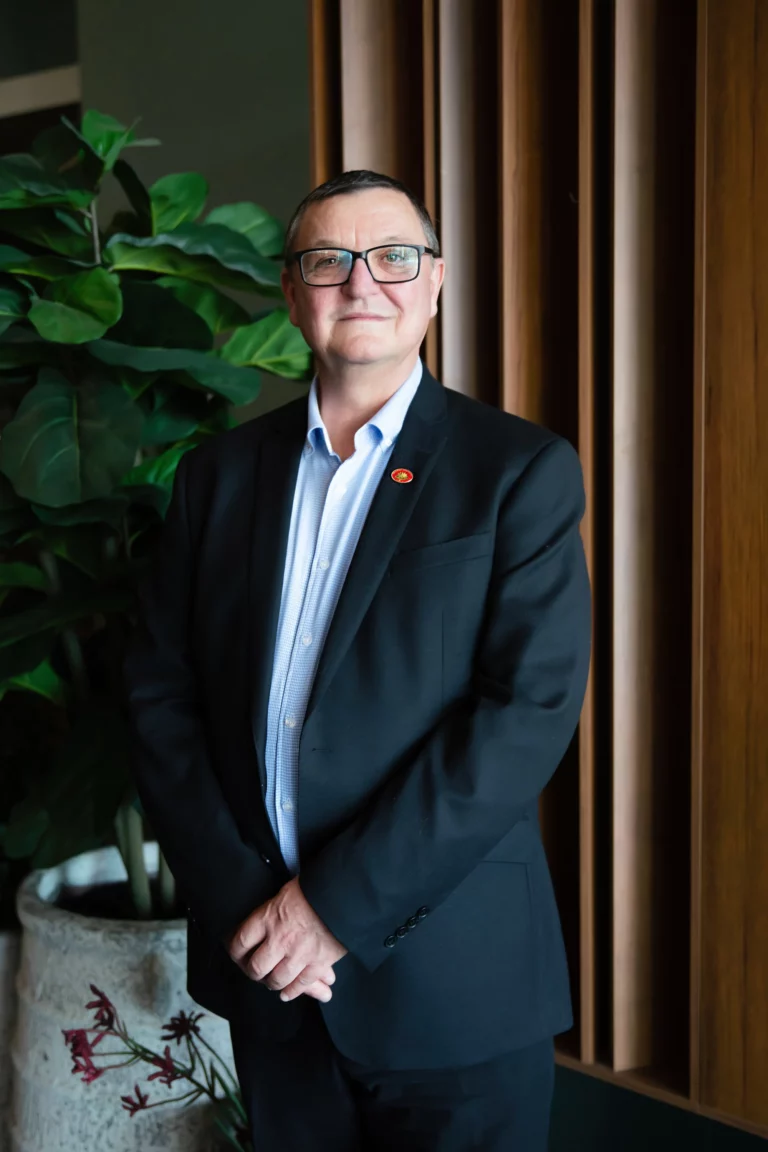
Eric Allgood is the Managing Director of SBAAS and brings over two decades of experience in corporate guidance, with a focus on governance and risk, crisis management, industrial relations, and sustainability.
He founded SBAAS in 2019 to extend his corporate strategies to small businesses, quickly becoming a vital support. His background in IR, governance and risk management, combined with his crisis management skills, has enabled businesses to navigate challenges effectively.
Eric’s commitment to sustainability shapes his approach to fostering inclusive and ethical practices within organisations. His strategic acumen and dedication to sustainable growth have positioned SBAAS as a leader in supporting small businesses through integrity and resilience.
Qualifications:
- Master of Business Law
- MBA (USA)
- Graduate Certificate of Business Administration
- Graduate Certificate of Training and Development
- Diploma of Psychology (University of Warwickshire)
- Bachelor of Applied Management
Memberships:
- Small Business Association of Australia –
International Think Tank Member and Sponsor - Australian Institute of Company Directors – MAICD
- Institute of Community Directors Australia – ICDA
- Australian Human Resource Institute – CAHRI
Our Consulting Services
Management Consulting

Compliance & Risk
Professional Writing Services
Consistency in Communication
Small Business Consulting
Sustainable Businesses
Start-ups
Set-up for Success
Further Reading

Burnout Can Break a Small Business — Especially When It’s Yours
Burnout is not a personal weakness. It is a warning sign that work demands and support are out of balance. In a small team, one burnt-out worker, or one burnt-out owner, can stall the whole business. Prevention means fixing the work, not just offering perks.

A Business Consultant Should Earn Their Fee: How to Know If You Need One, and What to Expect
AI now does the junior work your future experts once learned from. Discover how to build a human-AI workforce that keeps growing expertise, moves people to higher-value work, and meets your Fair Work obligations when roles change.

$34 Million and Counting: The July Fair Work Round-Up
July delivered a blunt lesson for every Australian employer. Some of the country’s largest and best-resourced organisations repaid staff more than $34 million, while smaller operators copped court penalties for ignoring the regulator. Here is what the July Fair Work round-up means for your business

AI for Trades, Without the Hype. It Cannot Fix a Burst Pipe. It Can Kill Your Sunday Night Admin.
AI cannot wire a switchboard, lay a brick, or fix a burst pipe. What it can do is take the quoting, scheduling, and invoicing off your plate, so you spend more time on the tools and less at the kitchen table on a Sunday night. Here is what actually works for trades, and what is just noise.

Exciting Businesses Fail. Boring Ones Get Paid.
Australian trade businesses rarely collapse because the owner had a bad idea. They collapse because nobody did the boring work. Construction now accounts for around 27 per cent of all company insolvencies in Australia, and the pattern behind those failures is identical whether a business turns over $180,000 or $40 million. Same four levers. Same failure points. Same three excuses. Here is what hundreds of engagements reveal about the boring business fundamentals that decide who survives.

If You Stopped Tomorrow, Would the Business Survive Without You?
Many owner-led businesses do not survive their founder’s exit because the knowledge, relationships and decisions all sit in one person’s head. Succession planning turns that fragile structure into a transferable business that can keep running, be sold, or be handed on when the owner steps away.