

AI in Business Will Not End Jobs. It Will End the Businesses That Ignore It.
Every industrial revolution triggered the same fear: that the machines were coming for our jobs. The data on AI in business tells a different story. Adoption is surging, productivity is climbing, and Australian firms using AI are more likely to be hiring than firing. Here is what that means for your business, and where to start.
Every industrial revolution began with the same fear. The machines are coming for our jobs. Steam, electricity, and the computer each triggered that worry. Each time, the work changed rather than disappeared.
AI in business is the next chapter in that story. And the early Australian evidence is clear. Firms adopting AI are more likely to be growing their teams than cutting them.
In one large study of Australian small businesses, 19 per cent of AI users reported employment growth linked to AI. Only 6 per cent reported a decline. Nearly four in five reported productivity gains. That is not the signature of a job killer. It is the signature of a new industrial revolution.
For your business, the message is simple. AI in business is not a threat to manage. It is a capability to build. The firms that start now, with a clear plan and human judgment in the loop, will pull ahead. The ones that wait will spend years catching up.
You do not need to become a technologist. You need to make one decision, to begin deliberately and on your own terms. The rest of this article shows you how, and hands you a free tool to assess where your business stands today.
Free Resource: AI Readiness Self-Assessment for Small Business
Digging Deeper
Why this really is a new industrial revolution
AI in business has crossed from novelty to norm. The pace of adoption is the first clue. Australian small and medium businesses have moved fast. Depending on the survey, between roughly a third and two-thirds now use AI in some form. One national tracker put SME adoption at 43 per cent over the summer of 2025 to 2026.
Usage is deepening, not just spreading. In one study drawing on millions of Australian business records, regular AI use rose from 40 per cent in mid 2024 to 69 per cent by early 2026. Daily use tripled over the same period. AI is becoming routine, not experimental.
The economic stakes are large. Small and medium businesses generate more than half of Australia’s private sector output and around 60 per cent of company profits. Yet they lag behind larger firms in productivity per hour. AI is the clearest chance in a generation to close that gap.
Analysts have put numbers on the prize. One report estimated that helping just one in ten businesses move up a single rung on the AI ladder could add $44 billion to the economy each year. Whatever the exact figure, the direction is not in doubt. This is a structural shift, not a passing trend.
A word of caution on the headline numbers. Several sit behind reports funded by companies that sell AI. That does not make them wrong, but it is worth reading them with a clear eye. The on-the-ground signal, rising adoption, and reported gains are consistent across independent sources, too.
What AI in business actually does well
It helps to be concrete. AI in business is not one thing. It is a set of tools that quietly remove friction from everyday work.
The most common and lowest risk uses cluster in a few areas:
- Writing and communication. First drafts of emails, proposals, reports, and website copy.
- Data and analysis. Summarising spreadsheets, spotting trends, and turning numbers into plain language.
- Customer response. Faster, more consistent replies to routine enquiries.
- Meeting notes, scheduling, and document sorting.
- Finance support. Drafting invoices, categorising expenses, and preparing clean records for the bookkeeper.
None of these replaces a person. Each hand time back. That is the practical promise of AI for small businesses, and it is available now.
Will AI replace your job or your team?
This is the question behind every AI conversation. The honest answer has two parts.
First, AI will change tasks, not erase whole jobs. It is very good at the repetitive middle of knowledge work. Drafting, summarising, sorting, and first-pass analysis. It is poor at judgment, relationships, accountability, and context. Those remain human.
Second, the current evidence points to augmentation rather than replacement. AI in business tends to augment people, not replace them. Australian firms using AI report hiring more often than cutting. The technology tends to lift output per person, which supports growth rather than redundancy.
Consider how this plays out across sectors. In a professional services firm, AI drafts the first version of a report, and the adviser spends the saved hours on client strategy. In an allied health practice, AI handles note-taking and scheduling, allowing the clinician to spend more time with patients. In a trades business, AI writes the quote and chases the invoice, while the owner spends more time on tools and winning work. In a not-for-profit, AI drafts the grant narrative so that the team can spend more energy on the mission.
There is a talent angle too. Skilled staff increasingly expect modern tools. In one survey, more than half of Australian professionals said the availability of AI tools influences whether they take a job. For a small business competing for good people, having no AI is becoming a disadvantage.
The care and health sectors show the upside most clearly. These are areas with deep staffing shortages. AI that removes administrative load does not replace carers. It frees them to do the work only humans can do. That is the pattern to aim for in your own business.
Is AI worth it for a small business?
For most businesses, yes, and the barrier to entry is low. AI for small businesses has never been cheaper to try. Many capable tools cost between $20 and $100 per person each month. The higher cost is attention, not licence fees.
The value shows up in familiar places. Content and communication, data analysis, customer response, admin, and bookkeeping support. These are exactly the tasks that eat a small business owner’s week.
But results are uneven, and the reason matters. One report found that while two-thirds of businesses use AI, only about 5 per cent were set up to capture its full value. The gap was not the tools. It was strategy, clean data, and training.
In plain terms, AI rewards businesses that already have their basics in order. If your data is scattered and your processes are informal, AI will amplify the mess. If your foundations are sound, AI compounds the advantage. This is why readiness, not enthusiasm, predicts return.
The barriers are real and worth naming. Trust is the biggest barrier to AI adoption. Around two-thirds of non-adopters say they distrust AI decisions or want to keep humans in control. Privacy and security worry many. So does simply not knowing where to start. None of these is a reason to avoid AI in business. They are reasons to adopt it carefully.
Where to start with AI in your business
The first step to AI in your business is smaller than most owners expect. Start small, start real, and keep a human in the loop. The goal is one useful win, not a transformation programme.
A simple, low-risk path looks like this.
- Pick one workflow that is repetitive, time-consuming, and low-risk. Quoting, first draft emails, meeting notes, or reporting are good candidates.
- Choose one reputable tool and trial it for a month. Resist the urge to buy five at once.
- Set a simple rule. A person reviews every AI output before it reaches a client, a patient, a funder, or the tax office.
- Protect your information. Do not paste sensitive client, patient, or financial data into public tools without checking privacy settings.
- Measure the time saved and the quality. Keep what works, drop what does not.
- Train your team. The businesses that win are the ones whose people know how to use the tools well.
Governance is not a corporate luxury here. A one-page AI policy that covers acceptable use, privacy, and human review protects your business and gives your team confidence. It is a small task with a large payoff.
If you want a clear read on your starting point, the AI Readiness Self-Assessment that accompanies this article walks you through it in a few minutes. It scores your data, skills, use cases, and safeguards, then shows you the single most useful next step.
Frequently Asked Questions
Will AI replace my job or my team?
The current evidence points to change, not replacement. AI is strong at repetitive tasks and weak at judgment, relationships, and accountability. Australian firms using AI report hiring more often than cutting. The realistic outcome is that AI handles routine work, so your people can focus on higher-value work.
Is AI worth it for a small business?
For most businesses, yes. Entry-level tools often cost $20 to $100 per person each month, and the common wins are admin, content, customer response, and analysis. The businesses that see real returns are the ones with tidy data, clear processes, and trained staff, not simply the ones with the most tools.
Where do I start with AI in my business?
Start with one repetitive, low-risk workflow. Trial a single reputable tool for a month, keep a human to review every output, protect sensitive data, and measure the results. Our free AI Readiness Self-Assessment helps you find the best first step for your business.
Do I need an AI policy for a small business?
A short one is wise. A single page covering acceptable use, privacy, and human review protects your clients and your business, and gives your team the confidence to use AI well. It does not need to be complex to be effective.
Where SBAAS Fits
AI in business rewards the same things good businesses already value: clean data, clear processes, and sound judgment. That is exactly the groundwork SBAAS helps owners get right, so that adopting AI compounds your advantage instead of amplifying the mess. If you want a practical, jargon-free plan for where AI fits in your business, we are ready to help. Learn more about how we work at https://sbaas.com.au/about-us/.
This article provides general information only. It is not financial, legal, or technological advice. Assess tools against your own circumstances and obligations, including privacy law, before adopting them.
Sources
National AI Centre. (2026). AI adoption insights: December 2025 to February 2026. https://www.ai.gov.au/news-and-insights/blog/ai-adoption-insights-december-2025-february-2026
Intuit / IBS Intelligence. (2026). AI adoption surges among Australian SMEs. https://ibsintelligence.com/ibsi-news/ai-adoption-surges-among-australian-smes/
Deloitte Access Economics. (2025). The AI edge for small business. https://www.deloitte.com/au/en/about/press-room/ai-edge-small-business-increased-smb-ai-adoption-can-add-44-billion-australias-economy-251125.html
Reserve Bank of Australia. (2025). Technology investment and AI: What are firms telling us? RBA Bulletin, November 2025. https://www.rba.gov.au/publications/bulletin/2025/nov/technology-investment-and-ai-what-are-firms-telling-us.html
Tech Council of Australia. (2025). Australia’s AI opportunities report 2025. https://www.nextdc.com/blog/australias-ai-opportunity-report-2025
OECD. (2025). AI adoption by small and medium-sized enterprises. https://www.oecd.org/content/dam/oecd/en/publications/reports/2025/12/ai-adoption-by-small-and-medium-sized-enterprises_9c48eae6/426399c1-en.pdf
FlowWorks. (2026). The state of AI adoption for Australian SMEs in 2026. https://flowworks.com.au/blog/ai-adoption-australia-sme
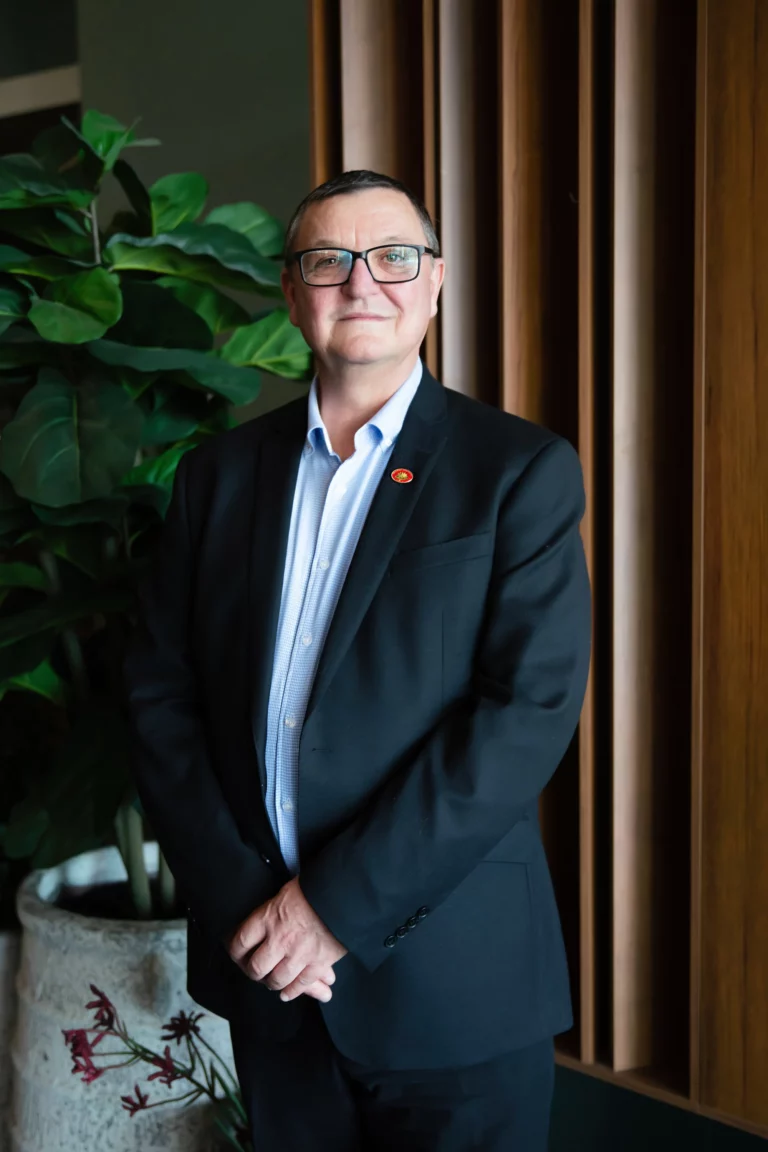
Eric Allgood is the Managing Director of SBAAS and brings over two decades of experience in corporate guidance, with a focus on governance and risk, crisis management, industrial relations, and sustainability.
He founded SBAAS in 2019 to extend his corporate strategies to small businesses, quickly becoming a vital support. His background in IR, governance and risk management, combined with his crisis management skills, has enabled businesses to navigate challenges effectively.
Eric’s commitment to sustainability shapes his approach to fostering inclusive and ethical practices within organisations. His strategic acumen and dedication to sustainable growth have positioned SBAAS as a leader in supporting small businesses through integrity and resilience.
Qualifications:
- Master of Business Law
- MBA (USA)
- Graduate Certificate of Business Administration
- Graduate Certificate of Training and Development
- Diploma of Psychology (University of Warwickshire)
- Bachelor of Applied Management
Memberships:
- Small Business Association of Australia –
International Think Tank Member and Sponsor - Australian Institute of Company Directors – MAICD
- Institute of Community Directors Australia – ICDA
- Australian Human Resource Institute – CAHRI
Our Consulting Services
Management Consulting

Compliance & Risk
Professional Writing Services
Consistency in Communication
Small Business Consulting
Sustainable Businesses
Start-ups
Set-up for Success
Further Reading

AI in Business Will Not End Jobs. It Will End the Businesses That Ignore It.
Every industrial revolution triggered the same fear: that the machines were coming for our jobs. The data on AI in business tells a different story. Adoption is surging, productivity is climbing, and Australian firms using AI are more likely to hire than to fire. Here is what that means for your business, and where to start.

If Parliament Were a Workplace: The Hanson Case Under Australian Workplace Laws
The courts have twice ruled against Senator Pauline Hanson. But run the same facts through the workplace laws that govern every Australian business and the story becomes a compliance masterclass: serious misconduct, vicarious liability, and the steep price of condonation.

Every State Now Has Industrial Manslaughter Laws. Almost No One Has Been Convicted. You Are Still Liable.
Nearly a decade after the reforms began, industrial manslaughter laws cover every Australian jurisdiction, yet prosecutions remain rare. Here is why that gap should not reassure any business owner, and what the personal duty behind these laws means for you right now.

Burnout Can Break a Small Business — Especially When It’s Yours
Burnout is not a personal weakness. It is a warning sign that work demands and support are out of balance. In a small team, one burnt-out worker, or one burnt-out owner, can stall the whole business. Prevention means fixing the work, not just offering perks.

A Business Consultant Should Earn Their Fee: How to Know If You Need One, and What to Expect
AI now does the junior work your future experts once learned from. Discover how to build a human-AI workforce that keeps growing expertise, moves people to higher-value work, and meets your Fair Work obligations when roles change.

$34 Million and Counting: The July Fair Work Round-Up
July delivered a blunt lesson for every Australian employer. Some of the country’s largest and best-resourced organisations repaid staff more than $34 million, while smaller operators copped court penalties for ignoring the regulator. Here is what the July Fair Work round-up means for your business