

AI Can Take the Grind Out of Your Marketing. Just Don't Let It Take Your Voice.

Business 1 2

AI can hand a stretched team real marketing capacity. The risk is sounding like everyone else. Here is how to use AI for the heavy lifting while keeping the voice that makes people care.

AI can take the grind out of your marketing. For a small team with no spare hours, that is a genuine gift.

It can draft a newsletter, turn one update into five posts, summarise a report, and schedule a week of content in minutes. Work that swallowed your evenings now takes a fraction of the time.

Here is the catch. The warmth and honesty that make people care about your cause are exactly what generic AI strips out. Used carelessly, marketing with AI makes you sound like everyone else.

The discipline that works is simple. Let AI do the routine groundwork. Keep a person in charge of the voice, the judgement, and the final word. Done that way, AI marketing gives you back hours without losing what makes you worth following.

If you take one thing from this article, take these four moves

  • Use AI for first drafts and routine tasks, never the final published word.
  • Give AI your real voice to work from: past posts, your tone, your values.
  • Edit every output so it sounds like you, not like a machine.
  • Keep a person accountable for accuracy, tone, and what goes out.

Everything below is optional depth. Read on if you want the evidence, and a simple way to make AI marketing work for a small team.

Digging Deeper

Below sits the supporting case. It covers why this matters for a small team, what AI does well and badly in marketing, and a practical routine for marketing with AI that protects your voice.

Why this matters most for a small team

Most organisations doing their own marketing are stretched thin. Nowhere is that clearer than in the not-for-profit sector.

The figures are stark. According to the ACNC, more than half of Australian charities operate with no paid staff at all. Among the smallest, nearly nine in ten run entirely on volunteers.

Money is tight, too. Across the sector, donations have largely flatlined, and smaller charities are feeling it most. Free hours and free reach matter more than ever.

In those organisations, marketing is not a department. It is one busy person, often a volunteer, writing the newsletter between everything else that has to happen that week.

Picture a community group with one newsletter a month. Writing it used to cost a whole Sunday. With AI handling the first draft, it takes an hour, and the volunteer spends the rest of that time on the people the group exists to help.

This is exactly where AI marketing earns its place. It gives a tiny team the output of a much larger one. The goal is not to replace the human voice. It is to protect the few hours that voice has. For a stretched team, AI marketing is less a luxury than a lifeline.

What AI is genuinely good at in marketing

AI is strong at the routine, repeatable parts of marketing. These are the tasks that drain time without needing your unique judgement.

McKinsey estimates that AI could handle as much as two-thirds of typical marketing activities. For a small team, the practical wins are clear:

  • Drafting a first version of a newsletter, post, or appeal.
  • Turning one piece of content into many, for different channels.
  • Summarising a long report into plain key points.
  • Researching ideas, headlines, and angles quickly.
  • Planning and scheduling a week or month of content.


None of these are the finished product. They are the groundwork. AI gets you to a solid first draft fast, so your limited time goes into improving it, not starting from a blank page. Used this way, AI marketing multiplies a small team’s reach.

What AI is bad at, and why your voice is the point

AI is weak at exactly the thing that matters most to you. Sounding like you.

Generic AI writing is fluent and forgettable. It reaches for the same phrases, the same rhythm, the same polish. Readers have started to recognise it, and to switch off.

For a cause-driven organisation, that is a real risk. People do not support you because your words are tidy. They support you because they feel something true behind them.

A heartfelt appeal written by a volunteer who was there reads differently from a polished paragraph that could belong to any charity. Supporters can feel the difference, even when they cannot name it. Cheap AI marketing chases polish. Yours should chase truth.

Your voice carries that truth. The specific story, the local detail, the honest tone, the lived experience. AI does not have those. You do. Marketing with AI works only when your voice stays in charge of it.

Business 2 3

The discipline: AI drafts, you direct

The model that works mirrors a simple rule. AI drafts. You direct.

Think of AI as a fast, tireless assistant, not a replacement writer. One person can direct a set of AI tools, the way a manager guides junior staff. McKinsey describes this as supervising a team of agents while people focus on creativity and strategy. It helps to write your voice down once, a few lines on tone, the words you use and the words you avoid, and feed that to the tool each time. Good AI marketing keeps the person at the centre, not the tool.

McKinsey is blunt about the central risk, too. Scaling AI without losing control of the brand is a genuine challenge. An unchecked tool can quietly shift your tone, your facts, and your meaning.

So keep the human role clear. AI handles volume and speed. You hold the voice, the judgement, and the final word. Nothing reaches your supporters without a person reading it first. That is the heart of using AI for marketing well.

A simple, repeatable way to use AI for marketing

You do not need a complex system. You need one repeatable routine you can trust.

Here is a practical loop for AI marketing in a small team:

  • Feed it your voice. Paste in past posts and notes on your tone and values.
  • Brief it clearly. Say who the message is for and what it must achieve.
  • Generate a draft, then ask for two or three different versions.
  • Edit hard, so it sounds like you and includes real, specific detail.
  • Check every fact, name, figure, and claim before it goes out.


Run that loop a few times and it becomes second nature. The first drafts get faster. Your editing gets sharper. The output stays unmistakably yours, which is the whole point of marketing with AI rather than handing the work over. That routine is what turns AI marketing from a gimmick into a dependable habit.

Keep it honest: accuracy, tone, and the rules

Speed creates one clear danger. Publishing something wrong because AI sounded confident.

AI can invent a statistic, misname a person, or soften a claim until it is misleading. In marketing and fundraising, that carries real cost, to trust and sometimes to compliance.

A few habits keep you safe:

  • Check every fact and figure against a reliable source.
  • Never publish a claim about your impact that you cannot prove.
  • Be thoughtful about disclosure when content is heavily AI-made.
  • Keep donor, client, and personal data out of public AI tools.


Remember the law applies as normal. Australian Consumer Law prohibits misleading or deceptive conduct, and that covers what you publish, however it was drafted. Government guidance is consistent on one point: a person, not a tool, stays accountable for what AI produces.

For a charity, trust is the whole asset. One exaggerated claim, caught out, can undo years of goodwill. Honest AI marketing is the only kind worth doing.

What to ignore, and what to measure

You will be told you need dozens of AI marketing tools. You do not. One good general tool, used well, covers most of what a small team needs.

Ignore the pressure to automate everything. The aim is not maximum output. It is more of your real voice, reaching more of the right people, in less time.

Measure two simple things. Did AI actually save you hours? And are your supporters still engaging, still opening, still responding? If engagement drops, your voice has slipped, so pull it back.

Be honest about the limits, as well. The tools change often, and they make mistakes. Strong habits and a human final check matter more than any single AI marketing tool.

Where to from here

Marketing with AI is not about handing over your voice. It is about freeing your time so your voice can do more.

Let AI take the routine drafting, repurposing, and scheduling. Keep yourself in charge of tone, truth, and the final word. That balance gives a small team real reach without losing what makes it worth supporting. Approached well, AI marketing protects the very thing it could threaten, which is your voice.

If you would like help using AI in your marketing in a way that saves time and protects your voice, SBAAS can help you set it up properly. We work with Australian not-for-profits and small businesses to build practical, honest systems that suit a small team. To learn more about how we work, visit https://sbaas.com.au/about-us/ or call (07) 3916 9896 to talk it through.

Sources

Australian Charities and Not-for-profits Commission. (2026). Australian charities report (12th edition). https://www.acnc.gov.au/tools/reports/australian-charities-report-12th-edition

Department of Industry, Science and Resources. (2025). Voluntary AI Safety Standard and Guidance for AI Adoption. https://www.industry.gov.au/publications/voluntary-ai-safety-standard

McKinsey & Company. (2026). Reinventing marketing workflows with agentic AI. https://www.mckinsey.com/capabilities/growth-marketing-and-sales/our-insights/reinventing-marketing-workflows-with-agentic-ai

National AI Centre. (2026). AI adoption insights: December 2025 to February 2026. https://www.ai.gov.au/news-and-insights/blog/ai-adoption-insights-december-2025-february-2026

0d9a8782 branding profiles

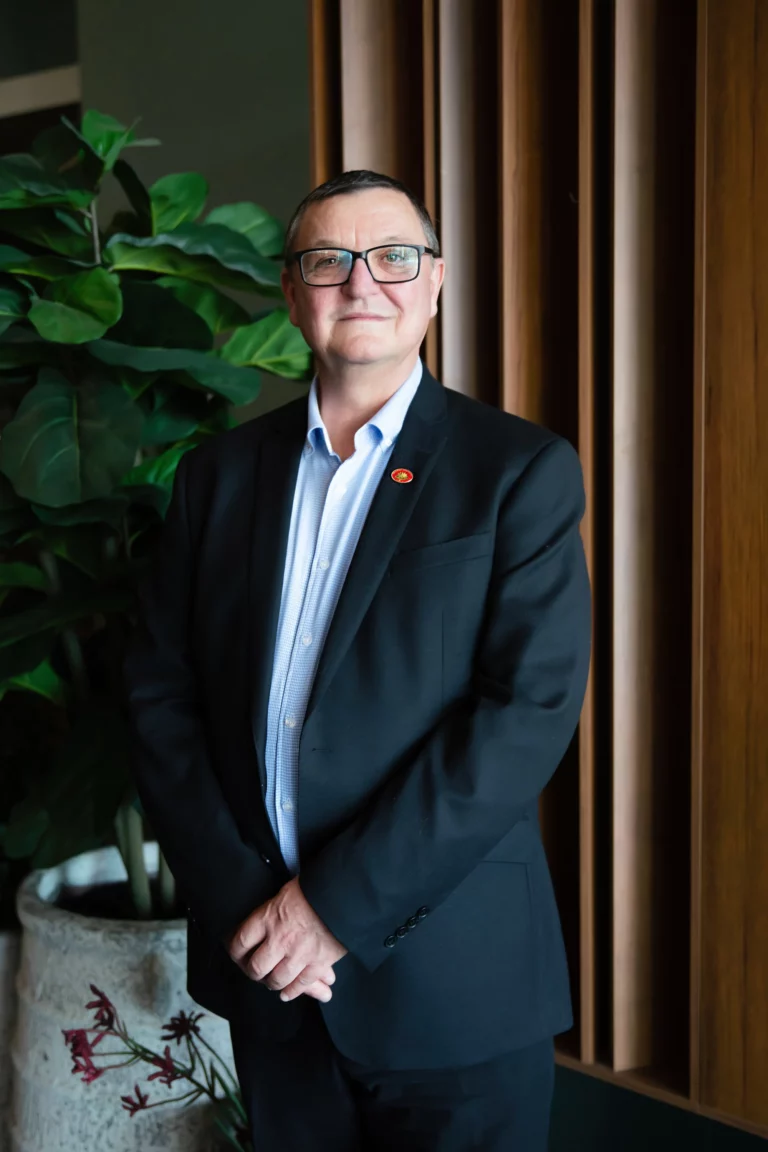
Eric Allgood is the Managing Director of SBAAS and brings over two decades of experience in corporate guidance, with a focus on governance and risk, crisis management, industrial relations, and sustainability.

He founded SBAAS in 2019 to extend his corporate strategies to small businesses, quickly becoming a vital support. His background in IR, governance and risk management, combined with his crisis management skills, has enabled businesses to navigate challenges effectively.

Eric’s commitment to sustainability shapes his approach to fostering inclusive and ethical practices within organisations. His strategic acumen and dedication to sustainable growth have positioned SBAAS as a leader in supporting small businesses through integrity and resilience.

Qualifications:

  • Master of Business Law
  • MBA (USA)
  • Graduate Certificate of Business Administration
  • Graduate Certificate of Training and Development
  • Diploma of Psychology (University of Warwickshire)
  • Bachelor of Applied Management

Memberships:

  • Small Business Association of Australia –
    International Think Tank Member and Sponsor
  • Australian Institute of Company Directors – MAICD
  • Institute of Community Directors Australia – ICDA
  • Australian Human Resource Institute – CAHRI

Our Consulting Services

Management Consulting

For larger companies, SBAAS transforms complexity into clarity with solutions that accelerate performance, growth and market resilience.

Compliance & Risk

From enterprise agreements to governance frameworks, SBAAS ensures compliance, reduces exposure and supports sustainable, risk-aware decision-making.
Learn more
sbaas financial management

Professional Writing Services

Content that elevates your message, builds credibility & drives impact across tenders, reports, policies and executive communications.

Consistency in Communication

Clear, plain-English documents that meet compliance standards, reduce risk, and protect reputation through accurate, accessible and professional communication.
Learn more

Small Business Consulting

For small businesses, tailored strategies in marketing, operations & growth that boost profitability and strengthen customer connections.

Sustainable Businesses

Expert guidance in compliance, HR, policies and financial systems that reduce risks and create a secure foundation for sustainable expansion.
Learn more

Start-ups

For start-ups, SBAAS provides everything needed to launch, from setting up your books to building websites and driving growth strategies.

Set-up for Success

From compliance requirements to business structure, SBAAS ensures new ventures start strong, minimise risks and build systems for lasting success.
Learn more

Further Reading

SBAAS Events

Add Your Heading Text Here

Skip to content