Non-Compete Clauses: What Australia’s Draft Ban Means for Your Business

The Federal Government has released draft legislation to ban non-compete clauses for workers earning under $190,100. It is not law yet. Submissions close on 2 October 2026.

Business 1 4

On 7 September 2026 the Federal Government released draft legislation to ban non-compete clauses for employees earning less than $190,100 a year. That figure is the high income threshold under the Fair Work Act, indexed each 1 July. The draft is open for public consultation until 2 October 2026.

It is not law. That distinction matters, because a great deal of commentary this week has described the ban as settled. An exposure draft still has to survive consultation, redrafting, and both houses of Parliament. The Government intends the reforms to take effect from 2027.

What the draft would change is significant. Non-compete clauses stop a departing employee working for a competitor or starting a competing business. They usually apply for a set period and within a set area. Under the draft, they would not be enforceable against the large majority of Australian workers. Restraints attached to the sale of a business are not affected.

The scale is not marginal. According to the Australian Bureau of Statistics, one in five Australian businesses used non-compete clauses in 2023. Almost half used some form of restraint clause. The Government estimates more than three million workers are covered by one.

Three things follow for owners, boards and senior managers.

First, do not rewrite your employment contracts this month. The exemptions, the definitions and the transition arrangements are precisely what remains open for comment.

Second, find out what you actually have. Most businesses cannot say which of their contracts contain non-compete clauses. The clause arrived inside a template years ago and nobody has looked since.

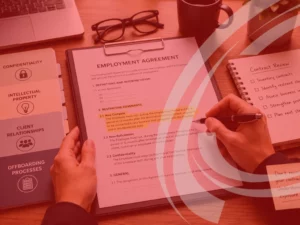
Third, shift your thinking from restriction to protection. Confidentiality obligations, intellectual property terms, client handover processes and proper offboarding are untouched by the draft. For most businesses they were doing the real work all along.

Three dates that matter

7 September 2026: exposure draft released for public consultation.

2 October 2026: submissions close. This is the window to be heard.

2027: intended commencement, subject to the legislation passing Parliament.

Digging Deeper

What the draft legislation actually proposes

The draft Banning Unfair Non-Competes Bill 2026 does two clear things. It bans non-compete clauses for employees earning below the Fair Work Act high income threshold, currently $190,100. It also extends competition law to certain wage-fixing arrangements between businesses.

Beyond that, the picture is less settled than the headlines suggest. Some analysis of the draft reports that it also addresses co-worker non-solicitation and so-called cascading restraints. Other analysis reports that those matters remain subject to further consultation. Cascading restraints stack a series of shrinking fallback restrictions. A court can strike out the widest version and leave a narrower one standing.

That ambiguity is not a footnote. It is the reason to read the draft rather than the coverage of it. If your business relies on layered restraints, the difference between those two readings is the difference between a minor contract update and a rebuild.

The Government has also signalled that exemptions and safeguards will protect legitimate business interests, including confidential information and trade secrets. What those look like in practice is one of the open questions in the consultation.

Why non-compete clauses are being banned: the evidence

The policy did not appear overnight. Treasury’s Competition Review began examining restraints in 2023. The Government announced the ban in the March 2025 Budget. A policy consultation paper followed in July 2025 and drew 67 submissions.

The evidence base is largely Australian and largely official, which is unusual for a reform of this kind.

  • The Australian Bureau of Statistics surveyed around 7,000 employers in late 2023. It found 20.8 per cent used non-compete clauses and 46.9 per cent used at least one type of restraint clause.
  • Where non-compete clauses were used, most employers applied them broadly. Around 68 per cent applied them to between 76 and 100 per cent of their workforce.
  • The e61 Institute surveyed workers rather than employers. It found one in five had a non-compete clause, including lower paid roles in childcare, labouring and clerical work.
  • e61 also found that comparable businesses without widespread restraint use paid workers around four per cent more on average. The Government translates that to roughly $2,500 a year for a typical affected worker.
  • A Treasury analysis used linked survey and administrative data. It found no systematic evidence that workers are paid more for accepting the restrictions non-compete clauses impose.

The argument the Government makes from this is a chilling effect. Workers do not test whether a restraint is enforceable. They assume it is, and they stay. The cost is borne in wages, in job mobility and in the rate at which new businesses can form and hire.

Where the evidence is genuinely contested

A credible analysis says where the case is weaker. Three points deserve airing.

The data is exploratory. The ABS describes its own restraint clause survey as experimental, and it was the first of its kind in Australia. It measures employers, not employees, so a percentage of businesses does not translate neatly into a percentage of workers.

Enforcement is rare. Of the businesses using at least one restraint clause, around five per cent had taken or threatened legal action to enforce one. Roughly one per cent reported that a candidate had declined a job offer because of a non-compete. Those numbers sit awkwardly beside the language of handcuffs and padlocks.

Employers have a real counter-argument. The Australian Industry Group has argued the reform is unnecessary. Its position is that non-compete clauses are already unenforceable at common law unless they are reasonable and protect a legitimate interest. It has also warned that an earnings threshold ignores where commercial risk actually sits, and has raised concerns about research and development investment.

None of this makes the reform wrong. It does mean the honest position is that the direction is well supported and the design detail is not yet settled. Anyone telling you otherwise is selling something.

How exposure to non-compete clauses differs by business size

The ABS data shows a clear gradient. Larger employers use restraints more.

Business size (employees)Used non-compete clauses in 2023
0 to 1920.2 per cent
20 to 4926.6 per cent
50 to 19932.9 per cent
200 to 99937.4 per cent
1,000 or more40.0 per cent
All businesses20.8 per cent

Source: Australian Bureau of Statistics, Restraint Clauses, Australia, 2023. Takeaway: exposure roughly doubles from the smallest employers to the largest.

The practical implications differ by size, and not in the way most people assume.

Micro and small businesses are the least likely to use non-compete clauses, but the most likely to have inherited them without thinking. A restraint sitting in a downloaded template is not a strategy. When the ban lands, many will discover they never had meaningful protection. They were never going to fund an injunction.

Medium businesses face the sharpest adjustment. They are large enough to have real client relationships and know-how at stake. They are small enough that losing a key person genuinely hurts. Around a third of businesses in the 50 to 199 band used non-compete clauses. They will need to replace a blunt tool with several sharper ones.

Large employers have the most contracts to review and the most to lose from getting the transition wrong. Forty per cent used non-compete clauses. Most applied them across almost the whole workforce, which means the review is not a matter of checking a few senior agreements. It is a full contract suite exercise, and the population above the high income threshold will need to be identified precisely.

What this means across four sectors

Industry use varies widely. Financial and insurance services led at 39.6 per cent, followed by rental, hiring and real estate at 32.6 per cent. Retail at 12.7 per cent and construction at 13.3 per cent were the lowest.


Business 2 5

Allied health and NDIS providers

Health care and social assistance sat at 25.6 per cent, above the national average. Restraints are common in practices where a clinician holds the client relationship directly. That is exactly the situation the reform targets, and it is also where the commercial concern is most legitimate. If a physiotherapist or support coordinator leaves and participants follow, the loss is real. The answer after the ban lies in client contracting, transition protocols and continuity of care processes. It does not lie in a clause that was probably unenforceable anyway.

Business 1 2 1

Trades and services businesses

Construction recorded the second lowest use of non-compete clauses at 13.3 per cent. That understates the exposure. Trades businesses often use restraints selectively, for supervisors, estimators and business development staff who hold pricing and client knowledge. Those roles frequently sit below the high income threshold. The reform will bite there, and the response should be tighter control of pricing data, supplier terms and quoting systems.

Business 2 2 1

Professional services firms

Professional, scientific and technical services sat at 28.8 per cent, and administrative and support services at 29.5 per cent. This is the sector where non-compete clauses have been most routinely applied and most rarely justified individually. Firms should expect the ban to reach a large share of their staff. The better response is building client relationship depth across teams, not a contractual barrier to exit.

Business 1 3 1

Not-for-profits and community organisations

Education and training sat at 24.5 per cent, and health care and social assistance at 25.6 per cent. Many not-for-profits carry restraint clauses inherited from commercial templates or from a funder’s preferred contract. Boards should ask whether those clauses were ever appropriate to a mission-driven workforce. In most cases the honest answer is no, and the ban simply removes something the organisation was never going to enforce.

Protecting the business without a restraint

This is the part that separates a prepared business from an exposed one. The draft does not touch the protections that actually work.

  • Clear, specific obligations covering pricing, methods, client data and systems, supported by a separate deed for senior roles.
  • Intellectual property. Explicit assignment of work product, templates, code and materials created during employment.
  • Client relationship design. Multiple points of contact, documented account histories and shared client records, so no single person owns the relationship.
  • Access control. Reviewing who can export data, and removing access promptly at notice rather than on the last day.
  • Offboarding discipline. Written reminders of continuing obligations, return of materials and a documented handover.
  • The least glamorous and most effective control. People who are paid fairly, developed properly and managed well are the ones who stay.

None of these depend on non-compete clauses. All of them survive the reform. Several of them are better protection than a restraint was ever likely to deliver in court.

The consultation window closes on 2 October

Submissions on the exposure draft close on 2 October 2026. This is not a symbolic process. The previous consultation attracted 67 submissions and visibly shaped the draft that has now appeared.

Businesses with a genuine interest should say so, and say it specifically. Vague opposition is easy to discount. Useful submissions describe a concrete situation, quantify the exposure and propose a workable alternative.

Points worth raising, if they apply to you, include the following. How does the high income threshold treat commission-based or seasonal earnings? How should transition apply to existing contracts? Does the definition capture clauses never intended as competition restraints? What evidence should be required to rely on an exemption?

If you make a submission, be specific

Describe the role and the actual commercial risk, not the principle.

Give a number: revenue at risk, training investment, client concentration.

Propose an alternative that still meets the policy objective.

Say what transition period your business would realistically need.

A readiness checklist for the next four weeks

  • Locate every employment template and standard contract in use, including ones held by a franchisor, industry body or previous adviser.
  • Record which contain non-compete clauses, non-solicitation clauses, confidentiality terms or cascading restraints.
  • Identify which employees currently earn above and below $190,100, and note anyone close to the line.
  • Assess, role by role, what commercial harm a departure would actually cause. Be honest. Most roles do not warrant a restraint.
  • Review the strength of your confidentiality and intellectual property clauses, which the reform leaves in place.
  • Map where client relationships depend on a single individual, and start reducing that dependency.
  • Decide whether to make a submission, and lodge it before 2 October 2026.
  • Diarise a contract review for the quarter after the legislation passes, not before.

Common questions

Has the ban on non-compete clauses passed?

No. Draft legislation was released on 7 September 2026 and is open for consultation until 2 October 2026. It must still pass both houses of Parliament. The intended start is 2027.

Are my existing contracts void right now?

No. Existing clauses are unaffected until legislation commences. How the final law treats existing contracts is one of the matters still being consulted on.

Does the ban apply to the sale of a business?

No. Restraints connected to the sale of a business sit outside the announced design. A buyer paying for goodwill can still protect it.

What happens to employees earning above $190,100?

Non-compete clauses would remain available for them under the draft. The threshold is indexed annually on 1 July, so the population above it shifts each year.

Do confidentiality and non-disclosure clauses still work?

Yes. The draft does not target confidentiality or intellectual property protections. Strengthening them is the single most useful step most businesses can take now.

Should I remove non-compete clauses from my templates today?

Not yet. Removing them early gives up protection you currently have, based on a document that may still change. Locate them, assess them, and wait for the final drafting.

Where to from here

Reform like this rewards businesses that prepare early and punishes those that react late. The work between now and 2027 is not legal drafting. It is knowing what is in your contracts, understanding what actually protects your business, and building the operational habits that make a restraint unnecessary.

The SBAAS team can help you map your restraint clauses, strengthen what remains, and prepare a submission before 2 October. Learn more at sbaas.com.au/about-us/.

This article is general information only and does not constitute legal or financial advice. It reflects the position as at 8 September 2026, while the draft legislation remains open for consultation. Businesses should seek advice specific to their circumstances before changing employment contracts.

Sources

Australian Bureau of Statistics. (2024). Restraint clauses, Australia, 2023. https://www.abs.gov.au/articles/restraint-clauses-australia-2023

Australian Industry Group. (2026). Proposed heavy handed ban on non-compete clauses is unnecessary and will be problematic. https://www.australianindustrygroup.com.au/news/media-centre/2026/proposed-heavy-handed-ban-on-non-compete-clauses-is-unnecessary-and-will-be-problematic/

Chalmers, J. (2025). Cracking down on non-compete clauses to boost wages and productivity. https://ministers.dewr.gov.au/chalmers/cracking-down-non-compete-clauses-boost-wages-and-productivity

e61 Institute. (2023). Non-compete clauses, job mobility and wages in Australia. https://e61.in/non-compete-clauses-job-mobility-and-wages-in-australia/

e61 Institute. (2023). The ghosts of employers past: How prevalent are non-compete clauses in Australia? https://e61.in/the-ghosts-of-employers-past-how-prevalent-are-non-compete-clauses-in-australia/

Leigh, A. (2024). New data shows 1 in 5 Australian employers used non-compete clauses. https://ministers.treasury.gov.au/ministers/andrew-leigh-2022/media-releases/new-data-shows-1-5-australian-employers-used-non-compete

McDonald, P., Stewart, A., van den Broek, D., & Kennon, C. (2025). Locked in or left out: Assessing the impact of post-employment restraints in Australia. QUT Centre for Decent Work and Industry. https://eprints.qut.edu.au/254319/

Rishworth, A. (2026). Opening the door to better and higher paying jobs: Banning unfair non-competes. https://ministers.dewr.gov.au/rishworth/opening-door-better-and-higher-paying-jobs-banning-unfair-non-competes

The Treasury. (2025). Non-competes: A case of missing wages in Australia. https://treasury.gov.au/publication/p2025-717176

The Treasury. (2025). Reform to non-compete clauses and other restraints on workers. https://treasury.gov.au/consultation/c2025-681950

The Treasury. (2026). Non-compete clauses and other restraints. https://treasury.gov.au/review/competition-review-2023/non-compete-clauses

0d9a8782 branding profiles

Eric Allgood is the Managing Director of SBAAS and brings over two decades of experience in corporate guidance, with a focus on governance and risk, crisis management, industrial relations, and sustainability.

He founded SBAAS in 2019 to extend his corporate strategies to small businesses, quickly becoming a vital support. His background in IR, governance and risk management, combined with his crisis management skills, has enabled businesses to navigate challenges effectively.

Eric’s commitment to sustainability shapes his approach to fostering inclusive and ethical practices within organisations. His strategic acumen and dedication to sustainable growth have positioned SBAAS as a leader in supporting small businesses through integrity and resilience.

Qualifications:

  • Master of Business Law
  • MBA (USA)
  • Graduate Certificate of Business Administration
  • Graduate Certificate of Training and Development
  • Diploma of Psychology (University of Warwickshire)
  • Bachelor of Applied Management

Memberships:

  • Small Business Association of Australia –
    International Think Tank Member and Sponsor
  • Australian Institute of Company Directors – MAICD
  • Institute of Community Directors Australia – ICDA
  • Australian Human Resource Institute – CAHRI

Our Consulting Services

Management Consulting

For larger companies, SBAAS transforms complexity into clarity with solutions that accelerate performance, growth and market resilience.

Compliance & Risk

From enterprise agreements to governance frameworks, SBAAS ensures compliance, reduces exposure and supports sustainable, risk-aware decision-making.
Learn more
sbaas financial management

Professional Writing Services

Content that elevates your message, builds credibility & drives impact across tenders, reports, policies and executive communications.

Consistency in Communication

Clear, plain-English documents that meet compliance standards, reduce risk, and protect reputation through accurate, accessible and professional communication.
Learn more

Small Business Consulting

For small businesses, tailored strategies in marketing, operations & growth that boost profitability and strengthen customer connections.

Sustainable Businesses

Expert guidance in compliance, HR, policies and financial systems that reduce risks and create a secure foundation for sustainable expansion.
Learn more

Start-ups

For start-ups, SBAAS provides everything needed to launch, from setting up your books to building websites and driving growth strategies.

Set-up for Success

From compliance requirements to business structure, SBAAS ensures new ventures start strong, minimise risks and build systems for lasting success.
Learn more

Further Reading

SBAAS Events

Add Your Heading Text Here

Skip to content