
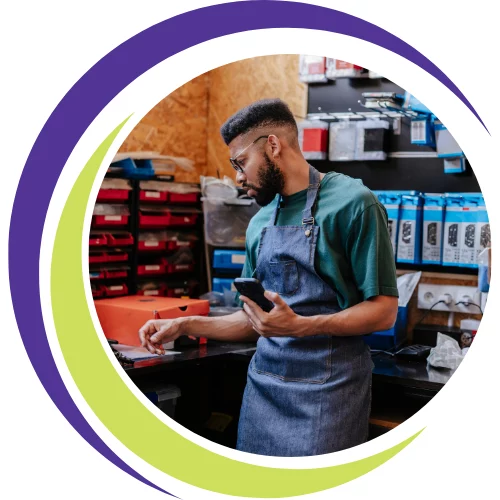



What a Business Health Check Actually Reveals. Usually, It Is Not What You Feared.
Most businesses do not fail from one dramatic event. They fail from small, unseen problems that compound quietly. A business health check surfaces them early, while they are still cheap to fix. Here is what a good one reveals, what it covers, and why thirty focused minutes can change your year.
A business health check reveals the small, fixable problems that quietly undermine good businesses. Not the dramatic ones you already know about. The slow leaks. The pricing that no longer covers costs. The compliance gap. The cash flow blind spot. The fact that the whole operation depends on you.
Here is the core message. Most businesses do not collapse overnight. They drift. A business health check is simply a structured way to step back, see the whole picture, and catch the drift early, while it is still cheap and easy to correct.
The evidence backs this up. Australian businesses with proper systems and discipline survive far longer than those without. The difference is not luck or talent. It is the habit of looking, honestly and regularly, at how the business is actually tracking.
And the good news for most owners is this. A business health check rarely uncovers disaster. More often, it reveals two or three practical fixes that lift profit, reduce risk, and take pressure off you. The rest of this article shows what it covers, what it typically finds, and how little time it takes.
Free Resource: Business Health Check
Digging Deeper
Why even healthy looking businesses need one
It is easy to assume a health check is for businesses in trouble. The data says otherwise. The businesses that last are the ones that check in before there is a problem to find.
Consider survival. Australian businesses that employ staff have a three-year survival rate of around 61 per cent. For solo operators, it is closer to 43 per cent. The gap is not about size alone. It reflects that employing businesses are forced to build systems, processes, and financial discipline earlier. Structure keeps businesses alive.
Now consider cash. Nearly 80 per cent of Australian small businesses reported cash flow impacts over the past year. Cash flow is the single biggest concern for around 43 per cent of owners. Many have dipped into personal savings or stopped paying themselves. These are not fringe cases. They are the mainstream.
The point is simple. A business can look busy, even successful, while a problem builds under the surface. A trades business with a full job book can still be quietly underpricing every quote. A business health check is how you find out before the year does it for you.
Research on why Australian businesses fail points to the same culprits, year after year. Weak financial management. Thin market insight. Gaps in leadership and systems. Business exits have been climbing, and insolvency appointments rose sharply through 2025. None of these causes appear overnight. Each shows up early if someone is looking.
What a business health check actually covers
A good business health check looks across the whole business, not just the numbers. Six areas cover most of what matters.
- Money and cash flow. Are you profitable, priced correctly, and holding a cash buffer? Where does the money actually go?
- Compliance and risk. Are your obligations covered, from WHS and Fair Work to privacy and tax? What could bite you?
- Operations and systems. Do reliable processes run the business, or does it run on memory and heroics?
- People and capability. Do you have the right roles, skills, and support? How much depends on you alone?
- Customers and marketing. Where does work come from, and is that source reliable and diverse enough?
- Strategy and direction. Do you have a clear goal and a simple plan, or are you busy without direction?
A business health check does not need to be exhaustive to be valuable. A focused conversation across these six areas quickly surfaces the two or three things that matter most right now. Depth can follow where it is warranted.
What it typically reveals
The findings are usually practical, not alarming. A few patterns come up again and again.
- Pricing that has fallen behind costs. Wages, materials, and energy have risen, but prices have not moved. The business is quietly giving itself a pay cut.
- A cash flow blind spot. Profit on paper, but no buffer, and no clear view of the weeks ahead.
- Owner dependency. The business cannot function without the owner. That caps growth and makes a holiday impossible.
- A compliance gap. A missing policy, an out-of-date agreement, or a record-keeping habit that would not survive scrutiny.
- No simple plan. Plenty of activity but no clear direction, so effort scatters rather than compounds.
Context shapes the findings. For a trades business, the health check often reveals underpricing and owner dependency. For an allied health practice, it tends to surface compliance and capacity limits. For a professional services firm, the usual issues are client concentration and unbilled time. For a not-for-profit, it is often funding-reliant and has thin reserves.
None of these is a catastrophe. Each is fixable, and often quickly. That is the quiet value of a business health check. It turns vague unease into a short, clear list of things you can act on.
How long it takes
Less time than you think. A structured business health check can be done in about thirty minutes. The value is in the structure, not the length.
A focused thirty-minute diagnostic works because it is guided. The right questions, asked in the right order, cut straight to what matters. You leave with a clear read on where you stand and one priority to act on first.
From there, the path is your choice. Some owners take the findings and act on them alone. Others want help with a specific fix, such as pricing, cash flow, or compliance. Either way, you are better off than before, because you can now see clearly. A business health check gives you back that clarity in half an hour.
How to prepare and get the most from it
A little preparation sharpens the result. You do not need polished reports. You need honesty and a few basics.
- Bring your recent numbers. Even rough figures for revenue, costs, and cash on hand help.
- Be honest about what worries you. The health check works best when it starts with the truth.
- Name your goal. Knowing where you want the business to go focuses the whole conversation.
- Come ready to act. The value is in the one step you take afterwards, not the discussion itself.
Approached this way, a business health check is not an audit to dread. It is thirty minutes that can reset your year and set a clear direction for the next one.
Frequently Asked Questions
What is a business health check?
A business health check is a structured review of how your business is actually tracking, across money, compliance, operations, people, customers, and strategy. It gives you an honest, outside perspective on your strengths, your risks, and the most important next step. Think of it as a diagnostic, not a sales pitch.
What does a business health check cover?
A good one looks across six areas: cash flow and finances, compliance and risk, operations and systems, people and capability, customers and marketing, and strategy and direction. It does not need to be exhaustive. A focused conversation quickly surfaces the two or three things that matter most for your business right now.
How long does a business health check take?
A structured business health check takes about thirty minutes. The value comes from the structure, not the length. The right questions, asked in the right order, quickly reveal where you stand and what to prioritise. You can act on the findings yourself or seek help with a specific fix.
Is a free business health check worth it?
Yes. A free, structured diagnostic gives you genuine clarity at no cost and no obligation. Even if you change nothing, you leave knowing where your business stands and what matters most. For thirty minutes, that is a strong return.
Where SBAAS Fits
The Free Business Health Check is exactly what it sounds like. A structured thirty-minute conversation that gives you an honest read on your business and a clear first step, with no cost and no hard sell. It is how SBAAS delivers genuine value before asking for anything in return. If you would like to see where your business really stands, we are ready to help. Learn more about how we work at https://sbaas.com.au/about-us/.
This article provides general information only. It is not financial, legal, or business advice tailored to your circumstances. A business health check is a starting point for discussion, not a substitute for professional advice on specific decisions.
Sources
Australian Bureau of Statistics. (2025). Counts of Australian businesses, including entries and exits, July 2021 to June 2025. https://www.abs.gov.au/statistics/economy/business-indicators/counts-australian-businesses-including-entries-and-exits/latest-release
Commonwealth Bank / Mi3. (2025). Cash flow crisis: 8 in 10 Aussie SMBs struggle. https://www.mi-3.com.au/16-01-2025/cash-flow-crisis-8-10-aussie-smbs-struggle-due-declining-revenue-low-reserves-and
Small Business Australia. (2025). Navigating cash flow challenges: Insights and solutions for Aussie small businesses. https://smallbusinessaustralia.org/navigating-cash-flow-challenges-insights-and-solutions-for-aussie-small-businesses/
Australian Small Business and Family Enterprise Ombudsman / TaxWindow. Why do businesses fail in Australia. https://taxwindow.com.au/why-do-businesses-fail-in-australia/
Business.gov.au. Guide to managing cash flow. https://business.gov.au/finance/cash-flow/guide-to-managing-cash-flow
Eric Allgood is the Managing Director of SBAAS and brings over two decades of experience in corporate guidance, with a focus on governance and risk, crisis management, industrial relations, and sustainability.
He founded SBAAS in 2019 to extend his corporate strategies to small businesses, quickly becoming a vital support. His background in IR, governance and risk management, combined with his crisis management skills, has enabled businesses to navigate challenges effectively.
Eric’s commitment to sustainability shapes his approach to fostering inclusive and ethical practices within organisations. His strategic acumen and dedication to sustainable growth have positioned SBAAS as a leader in supporting small businesses through integrity and resilience.
Qualifications:
- Master of Business Law
- MBA (USA)
- Graduate Certificate of Business Administration
- Graduate Certificate of Training and Development
- Diploma of Psychology (University of Warwickshire)
- Bachelor of Applied Management
Memberships:
- Small Business Association of Australia –
International Think Tank Member and Sponsor - Australian Institute of Company Directors – MAICD
- Institute of Community Directors Australia – ICDA
- Australian Human Resource Institute – CAHRI
Our Consulting Services
Management Consulting

Compliance & Risk
Professional Writing Services
Consistency in Communication
Small Business Consulting
Sustainable Businesses
Start-ups
Set-up for Success
Further Reading

What a Business Health Check Actually Reveals. Usually, It Is Not What You Feared.
Most businesses do not fail due to a single dramatic event. They fail from small, unseen problems that compound quietly. A business health check surfaces them early, while they are still cheap to fix. Here is what a good one reveals, what it covers, and why thirty focused minutes can change your year.

How to Win Government Tenders: What Evaluators Actually Score, and Why Your Best Work Is Not Enough.
Doing great work does not win government tenders. Writing to the score sheet does. Evaluators are not reading for brilliance; they are hunting for specific evidence against published criteria. Here is exactly how tenders are scored, why good businesses keep losing, and how to write a response that wins.
Non-Compete Clauses: What Australia’s Draft Ban Means for Your Business
On 7 September 2026 the Federal Government released draft legislation to ban non-compete clauses for employees earning less than $190,100 a year. That figure is the high income threshold under the Fair Work Act, indexed each 1 July. The draft is open for public consultation until 2 October 2026.
AI Can Take the Grind Out of Your Marketing. Just Don’t Let It Take Your Voice
AI can give small teams valuable marketing capacity, handling first drafts, repurposing and routine content faster. But efficiency should not come at the cost of authenticity. The best approach keeps people in charge of tone, judgement and accuracy, using AI for the groundwork while protecting the voice audiences trust most.
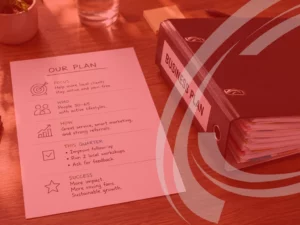
The One-Page Business Plan That Actually Gets Used. Because the Forty-Page One Never Does.
The research is clear. Businesses that plan do better. But the traditional business plan, dozens of pages long, usually ends up in a drawer. A one-page business plan captures the same clarity in a format you will actually use, revisit, and act on. Here is what goes in it, and a free template to build yours in an afternoon.

Stop Waiting for Perfect: How Australian SMEs Win by Embracing Imperfection in Strategy
Small businesses do not need perfect plans to grow. They need to embrace imperfection in strategy, make small reversible bets, and learn fast. This practical playbook shows how Australian SMEs can move with confidence, reduce waste, and create value in any market.