Do You Need a Business Consultant? How to Know If It’s Worth It, and What to Expect

Engaging a business consultant is not a “nice to have”. It is a commercial decision about speed, risk, and outcomes. This guide explains what a business consultant does, when consulting is worth the investment, and where business consulting experts deliver the most significant lift across strategy, governance and risk, marketing and growth, people, compliance, professional writing, grants, and tenders.

Most capable leaders do not engage a business consultant because the business is failing. They engage one because they want traction without betting months on trial and error. The right consulting support brings clarity, pace, and discipline when the market is uncertain and the team is stretched.

Australia’s operating environment can tighten quickly. Borrowing costs, consumer sentiment, hiring constraints, and supplier pricing all move faster than internal systems can keep up. The Reserve Bank has noted that conditions for small businesses vary across cash flow, confidence, and lending, and that shifts in these factors can amplify day-to-day pressure.

A business consultant is most valuable when the cost of delay exceeds the fee. Delay rarely appears as a single dramatic event. Instead, it shows up as:

  • Margin erosion that goes unnoticed quarter to quarter

  • Inconsistent delivery that frustrates customers

  • Staff turnover driven by unclear expectations

  • Avoidable disputes and rework

  • Tenders lost by a narrow margin

Over time, it also shows up as leadership fatigue.

This guide helps you make a commercially sound decision. It explains what a business consultant does, how to choose the right engagement model, and when to keep the work in-house. It is relevant to enterprises of all sizes, from growing owner-led businesses to established organisations.

What a business consultant actually does, beyond “advice”

A business consultant is a problem solver with a method. Their job is not to impress you with ideas or frameworks. Their job is to improve outcomes, reduce risk, and leave you with capability that continues to work after they leave.

Strong business consulting typically follows a clear sequence:

  • Diagnose the root cause, not just the symptoms, so effort targets the real constraint

  • Design options that fit your budget, capacity, and risk appetite

  • Drive decisions and trade-offs so priorities are explicit

  • Support delivery so change actually happens inside the business

  • Build internal capability so improvements are sustained

When consulting goes wrong, one of these steps is usually missing. Some consultants stop at diagnosis. Others deliver a plan and disappear when implementation becomes difficult. A high-quality business consultant stays close enough to the work that progress is visible and measurable.

When a business consultant is worth it, and when it is not

A business consultant is often a strong fit when you need speed, objectivity, or specialised capability. This includes moments such as:

  • Rapid growth that strains systems or leadership

  • A stalled pipeline or declining margins

  • A tender or grant opportunity with high stakes

  • A compliance incident or dispute

  • A restructure or operational reset

Consulting is a poor fit when you want reassurance rather than change. It is also a poor fit when the issue is purely time, not capability.

If you already know the following three actions and have capacity to execute them, you do not need consulting. You need focus.

A simple readiness test helps clarify this:

  • What must be measurably better in the next 90 days?

  • What is the cost of staying the same over that period?

  • Who will own implementation each week?

If these answers are unclear, consulting will struggle to deliver value. If they are clear and internal capacity is thin, consulting support can be the most efficient option.

Project support versus ongoing support, and which delivers better results

Business consulting generally works best in one of two models.

Problem-specific consulting is defined by scope, deadlines, and deliverables. It suits outcomes such as:

  • Strategy resets

  • Risk frameworks

  • Tender responses

  • Policy and governance suites

The benefit is focus and predictability. The risk is stalled implementation after handover.

Ongoing support blends coaching, accountability, and delivery cadence. It suits situations where priorities are linked or execution discipline is the real constraint.

The benefit is momentum and course correction over time. The risk is that value depends on consistent engagement.

SBAAS offers both approaches. For ongoing support, the Actually Supported Business Coaching program keeps priorities moving with structure and accountability. For defined outcomes, SBAAS delivers consulting services across strategy, finance, people, growth, governance, and operations.

A staged approach often works best. Many organisations start with a defined project to create clarity and quick wins, then move into ongoing support when execution needs reinforcement.

Do I need a business consultant to help me with business strategy?

You may need a business consultant when direction feels unclear or effort is high but results are uneven. Strategy is not a document. Strategy is a set of choices you can explain, defend, and execute.

Leaders typically seek help when questions repeat, such as:

  • What should we focus on this quarter?

  • Which services should we scale, and which should we stop?

  • Why is revenue growing but profit is not?

  • How do we compete without discounting?

A strong strategy engagement usually produces:

  • A one-page direction

  • A small set of meaningful measures

  • A weekly rhythm for execution

It also clarifies what the business will stop doing.

Do I need a business consultant to help me with governance?

You may need a business consultant when decision-making is slow, inconsistent, or personality-dependent. Governance is how decisions are made, recorded, and reviewed so the organisation can move with confidence.

Common triggers include:

  • Constant escalation back to the owner

  • Repeated rework

  • Confusion about decision ownership

  • Meetings without outcomes

Consulting support typically:

  • Clarifies roles and decision rights

  • Introduces practical meeting rhythms

  • Creates simple reporting that highlights issues early

Do I need a business consultant to help me with risk management?

You may need a business consultant when risk feels reactive rather than controlled. Risk management protects:

  • Cash flow

  • Reputation

  • People

  • Operational continuity

Leaders often ask:

  • Which risks should we track?

  • How do we manage cyber risk sensibly?

  • What happens if a key person leaves?

Consulting support turns guidance into a practical roadmap.

Do I need a business consultant to help me with marketing and growth?

You may need a business consultant when marketing feels busy but unpredictable. Growth becomes difficult when:

  • Leads fluctuate

  • Conversion is unclear

  • Delivery capacity is misaligned

A strong consulting approach clarifies:

  • Ideal customer

  • Core offer

  • Proof and positioning

  • A simple, measurable pipeline

Do I need a business consultant to help me with people management and leadership?

You may need a business consultant when people issues dominate leadership time or performance varies widely.

Consulting support often includes:

  • Clear role scorecards

  • Structured one-on-one routines

  • Fair and documented performance conversations

This work is especially valuable during growth.

Do I need a business consultant to help me with compliance?

You may need a business consultant when obligations are unclear or informal practices create risk.

Consulting support helps by:

  • Identifying highest-risk areas

  • Building usable policies and procedures

  • Creating evidence and documentation

Do I need a business consultant to help me with professional writing?

You may need a business consultant when writing slows decisions or costs wins.

Consulting support can:

  • Create proposal and policy templates

  • Rewrite high-stakes documents for clarity

  • Build document systems that scale

Do I need a business consultant to help me with grants?

You may need a business consultant when grant readiness is unclear.

Support typically includes:

  • Readiness assessment

  • Outcome and budget structuring

  • Evidence alignment

Do I need a business consultant to help me with tenders?

You may need a business consultant when tendering is strategic or bids keep failing.

Tender consulting strengthens:

  • Capability statements

  • Case studies

  • Compliance schedules

  • Internal tender processes

Choosing the right business consultant

Before engaging, ask for:

  • A clear problem statement

  • A clear plan for the first 30 days

  • A clear definition of success

Strong consultants build capability, not dependence.

Do you need a business consultant? Your next step

A business consultant should make your organisation easier to run, not harder to understand. If the cost of delay is starting to show up in missed opportunities, inconsistent delivery, margin erosion, or leadership bottlenecks, it may be time to get structured support that creates momentum and measurable improvement.

If you want practical help that combines clear thinking with real follow-through, contact us today to speak with SBAAS about tailored consulting services, ongoing coaching, and delivery support that fits your stage and priorities.

Sources 

Australian Bureau of Statistics. (2025). Counts of Australian businesses, including entries and exits, July 2021 to June 2025 (latest release). https://www.abs.gov.au/statistics/economy/business-indicators/counts-australian-businesses-including-entries-and-exits/latest-release Australian Bureau of Statistics

Australian Cyber Security Centre. (n.d.). Essential Eight. https://www.cyber.gov.au/business-government/asds-cyber-security-frameworks/essential-eight Cyber Security Australia

Australian Competition and Consumer Commission. (n.d.). Contracts. https://www.accc.gov.au/business/selling-products-and-services/contracts ACCC

Australian Government. (n.d.). Style Manual (Australian Government writing and editing standard). https://www.stylemanual.gov.au/ Style Manual

business.gov.au. (n.d.). Check if you’re ready to apply for a grant. https://business.gov.au/grants-and-programs/check-if-youre-ready-to-apply-for-a-grant Business.gov.au

business.gov.au. (n.d.). Work health and safety. https://business.gov.au/risk-management/health-and-safety/work-health-and-safety Business.gov.au

Department of Finance (Australia). (2025). Commonwealth Procurement Rules 2025 (PDF). https://www.finance.gov.au/sites/default/files/2025-10/Commonwealth-Procurement-Rules-2025.pdf Department of Finance

Fair Work Ombudsman. (2025). Small business and the Fair Work Act best practice guide (PDF). https://www.fairwork.gov.au/sites/default/files/2025-04/small-business-and-the-fair-work-act-best-practice-guide.pdf Fair Work Ombudsman

GrantConnect. (n.d.). Welcome to the Australian Government’s grants information system. https://www.grants.gov.au/ grants.gov.au

Harvard Business Publishing. (n.d.). How to Choose, and Work with, Consultants. https://hbsp.harvard.edu/product/U9809A-PDF-ENG hbsp.harvard.edu

Institute of Management Consultants Australia. (2025). IMC Code of Conduct and Ethics (PDF). https://imc.org.au/wp-content/uploads/2025/05/IMC-Code-of-Conduct-Ethics-approved-19-May-2025.pdf IMC Australia

International Organization for Standardization. (2023). ISO 24495-1:2023 Plain language, Part 1: Governing principles and guidelines. https://www.iso.org/standard/78907.html ISO

Office of the Australian Information Commissioner. (n.d.). Small business (Privacy Act coverage and obligations). https://www.oaic.gov.au/privacy/privacy-guidance-for-organisations-and-government-agencies/organisations/small-business OAIC

Organisation for Economic Co-operation and Development. (n.d.). Strengthening SMEs and entrepreneurship for productivity and inclusive growth. https://www.oecd.org/en/publications/strengthening-smes-and-entrepreneurship-for-productivity-and-inclusive-growth_c19b6f97-en.html OECD

Reserve Bank of Australia. (2025, October). Small business economic and financial conditions. https://www.rba.gov.au/publications/bulletin/2025/oct/small-business-economic-and-financial-conditions.html Reserve Bank of Australia

Safe Work Australia. (n.d.). Small business. https://www.safeworkaustralia.gov.au/safety-topic/industry-and-business/small-business Safe Work Australia

World Economic Forum. (2025). The Global Risks Report 2025. https://www.weforum.org/publications/global-risks-report-2025/

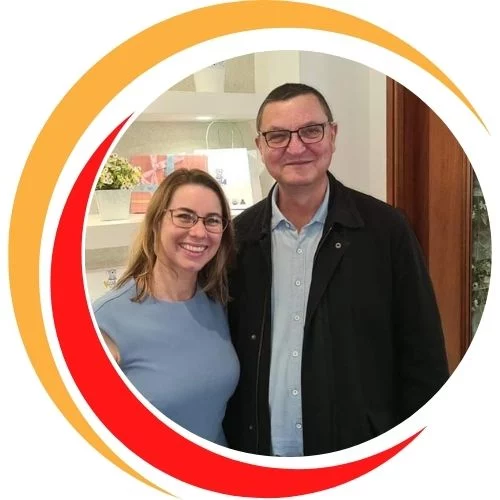
Eric Allgood is the Managing Director of SBAAS and brings over two decades of experience in corporate guidance, with a focus on governance and risk, crisis management, industrial relations, and sustainability.

He founded SBAAS in 2019 to extend his corporate strategies to small businesses, quickly becoming a vital support. His background in IR, governance and risk management, combined with his crisis management skills, has enabled businesses to navigate challenges effectively.

Eric’s commitment to sustainability shapes his approach to fostering inclusive and ethical practices within organisations. His strategic acumen and dedication to sustainable growth have positioned SBAAS as a leader in supporting small businesses through integrity and resilience.

Qualifications:

  • Master of Business Law
  • MBA (USA)
  • Graduate Certificate of Business Administration
  • Graduate Certificate of Training and Development
  • Diploma of Psychology (University of Warwickshire)
  • Bachelor of Applied Management

Memberships:

  • Small Business Association of Australia –
    International Think Tank Member and Sponsor
  • Australian Institute of Company Directors – MAICD
  • Institute of Community Directors Australia – ICDA
  • Australian Human Resource Institute – CAHRI

Our Consulting Services

Management Consulting

For larger companies, SBAAS transforms complexity into clarity with solutions that accelerate performance, growth and market resilience.

Compliance & Risk

From enterprise agreements to governance frameworks, SBAAS ensures compliance, reduces exposure and supports sustainable, risk-aware decision-making.
Learn more
sbaas financial management

Professional Writing Services

Content that elevates your message, builds credibility & drives impact across tenders, reports, policies and executive communications.

Consistency in Communication

Clear, plain-English documents that meet compliance standards, reduce risk, and protect reputation through accurate, accessible and professional communication.
Learn more

Small Business Consulting

For small businesses, tailored strategies in marketing, operations & growth that boost profitability and strengthen customer connections.

Sustainable Businesses

Expert guidance in compliance, HR, policies and financial systems that reduce risks and create a secure foundation for sustainable expansion.
Learn more

Start-ups

For start-ups, SBAAS provides everything needed to launch, from setting up your books to building websites and driving growth strategies.

Set-up for Success

From compliance requirements to business structure, SBAAS ensures new ventures start strong, minimise risks and build systems for lasting success.
Learn more

Further reading

Do You Need a Business Consultant? How to Know If It’s Worth It, and What to Expect

Australia’s smallest employers now face big-business expectations on safety, conduct and culture. It is no longer enough to download a template and hope for the best. Micro and small businesses need effective workplace policies and procedures that align with how they work, behave, and lead. This article explains the real compliance burden, why “tick-box” documents fail, and how SBAAS helps business owners build practical, human systems that protect people, reduce risk and support sustainable growth.

Read More »
late payments, cash flow management, debt recovery Australia, accounts receivable, invoice reminders, Xero invoicing, small business finance, payment terms, security of payment, bookkeeper benefits

Start 2026 with stronger cash flow, not more stress

If you want a bigger 2026, you need tighter payment systems. This practical guide shows Australian businesses how to protect their cash flow from late payments, reduce slow-paying clients, and recover overdue debts using the right state-by-state pathways, without burning relationships or wasting weeks in follow-ups.

Read More »
Australian micro and small businesses now face big-company expectations on safety and conduct. Learn why effective workplace policies and procedures matter more than ever, and how SBAAS helps turn legal obligations into practical, lived systems.

Drowning in Paperwork: The new reality for Australia’s smallest employers

Australia’s smallest employers now face big-business expectations on safety, conduct and culture. It is no longer enough to download a template and hope for the best. Micro and small businesses need effective workplace policies and procedures that align with how they work, behave, and lead. This article explains the real compliance burden, why “tick-box” documents fail, and how SBAAS helps business owners build practical, human systems that protect people, reduce risk and support sustainable growth.

Read More »
Build a simple automated business process that saves time, speeds payment, and lifts win rates, with tools you already use.

Stop Self-Sabotage: Turn Every Lead Into Money in the Bank

Winning work is hard. Losing time and cash to clunky admin is optional. This guide shows how to design an automated business process that captures leads, books jobs, issues invoices with timely reminders, and keeps clients returning. Plain English, practical steps, and a sharp focus on simplification, speed, and cash flow.

Read More »

SBAAS Events

What our clients are saying about us

Skip to content