


If You Stopped Tomorrow, What Would Be Left to Sell?

One in three Australian small business owners plans to retire within five years, and only 16 per cent have a plan for what happens to the business. Most will discover late that the thing they built is worth less than they thought, because its value walks out the door with them. Here are the five business assets every owner should be building now, whether they intend to sell, borrow, step back or stop working weekends.

Business 1 15

Most small businesses are not assets. They are jobs with overheads. The difference is whether the business would keep earning if the owner stopped.

Research released in April 2026 put numbers on how common that problem is. Thirty-one per cent of Australian small business owners plan to retire within five years. Of those, 16 per cent have a documented succession plan. Forty-five per cent of owners considering an exit have no plan at all. Seventy-one per cent say the business relies more on their personal reputation and word of mouth than on anything the business itself owns. Among owners over 50, that rises to 78 per cent. A third of Baby Boomer owners expect to sell their business to fund their retirement. Many are counting on selling something a buyer cannot see.

A buyer, a bank and a successor all ask the same question in different words: what is here that does not depend on you? The answer is the five business assets that hold value when the owner is not in the room:

  • 1. Systems. Documented ways of quoting, delivering, invoicing and fixing problems, held in software and procedures rather than in one person’s head.

  • 2. People. A team that can run the day without the owner, with authority to decide and someone who could step up.

  • 3. Customers and recurring revenue. Contracts, maintenance agreements, and repeat work that belong to the business, not to the owner’s phone number.

  • 4. Brand, reputation and data. A name people search for, reviews attached to it, a trademark you own, and a customer database you control.

  • 5. Clean records and compliance. Books, contracts, licences, insurances and employee records that survive due diligence without a story attached.

These five business assets are what a bank lends against, what a buyer pays a multiple for, and what a successor can actually take over. They are also what lets the owner take a holiday.

The Reserve Bank reported in October 2025 that small business access to finance has improved. Even so, the requirement to put up property or personal assets as collateral remains one of the most common obstacles owners report. A business with documented systems, recurring contracts and clean books is one a lender can assess on its own merits. One that runs on the owner’s reputation is not.

For a trades business, the gap is easy to picture. The licence is in the owner’s name. The customers ring the owner’s mobile. The quoting lives in the owner’s experience. The apprentice knows how to do the job but not how to run it. Everything that makes the business valuable is attached to a person, and a person cannot be sold.

The rest of this article shows how to build each of the five business assets and what they are worth. It shows what they look like in health, professional services and community organisations, and gives you a free audit to score your own.

The point in one minute

  • A business is an asset only if it earns without the owner. Seventy-one per cent of Australian small businesses rely on the owner’s personal reputation instead.

  • Five business assets hold transferable value: systems, people, recurring customers, brand and data, and clean records.

  • The same five things decide whether a bank will lend, what a buyer will pay, and whether a successor can take over. They also decide whether you can take a holiday.

  • Building them takes years, not weeks. The owners who retire on time started before they needed to.

Free Resource: The Five Business Assets Audit

Score each of the five business assets on four criteria, get a transferability score out of twenty, and build a 90-day plan for the two weakest. Built for owners who want the business to be worth something without them.

Digging Deeper

Why the owner is the discount

When a buyer values a small business, they start from normalised earnings and apply a multiple. The multiple is a judgement about risk, and the largest risk in most small businesses is that the earnings depend on the owner.

Advisers who work on these transactions describe the same pattern. Two businesses have identical profits. One sells at three and a half times earnings, the other at four and a half to five and a half times. The difference is owner dependence and the quality of the books. At $300,000 in earnings, the gap is $300,000 to $600,000 for the same business, depending on how transferable it is.

Each of the five business assets removes part of that risk.

The same logic runs through a bank’s credit assessment. A lender wants to see that the cash flow servicing the loan will continue if the owner is ill, absent or gone. A successor, whether a child, a manager or an employee buying in, wants to inherit relationships and processes rather than a phone that rings for someone else. Building the five business assets is how an owner converts a job into something that holds value on its own.

Asset one: systems

A system is the way the business does a thing when the owner is not doing it. Quoting. Scheduling. Site set-up. Ordering. Invoicing. Chasing payment and handling a complaint. If each of these lives in one person’s head, the business has no system, only a habit. If each is written down, built into software and followed by everyone, the business has an asset a stranger could operate.

For a trades business, the fastest gains come from two things. A job management platform that holds every quote, job, photo and invoice, and a short procedures manual covering the ten things that happen every week.

The test is simple. Could a competent tradesperson who joined last month quote a standard job, run it and invoice it using only what the business has written down? If not, the system is not built yet. The earlier article in this series on capacity showed that systems also lift the ceiling on what a team can deliver. Here, they are the first of the business assets a buyer pays for.

Asset two: people

The second of the five business assets is a team that can carry the day without the owner. That means people with the authority to decide, not just the skill to do. A supervisor who can run a site, a senior who can price a variation, an office manager who can chase a debtor. Key-person dependence is the flaw buyers and lenders look for first, and the cure is deliberate: delegate a decision, document the limits, and let it stand.

In trades, this asset includes the licence position. Where the business licence relies on the owner as nominee, a successor needs a pathway to hold it, which takes time to arrange. It also includes the apprentice pipeline because a business that trains its own people has a workforce that is hard to buy elsewhere.

Retention, employment contracts, position descriptions, and documented supervision all form part of the people asset, and they all appear in a due diligence checklist.

Asset three: customers and recurring revenue

Revenue that repeats is worth more than revenue that must be won again. Revenue that belongs to the business is worth more than revenue that belongs to the owner. Maintenance agreements, service contracts, and preferred supplier arrangements with builders, body corporates, or property managers are sources of recurring revenue. So are panel positions with councils. A list of people who ring the owner’s mobile is not.

Two measures matter. Recurring share: what proportion of last year’s revenue was contracted or repeat, without a new sale. Concentration: how much came from the largest customer, and the largest three.

A business where one builder accounts for 40 per cent of revenue has customer risk that will be priced into any valuation or loan. Move customers from the owner’s phone to the business’s number, convert one-off work to agreements, and spread the base. That is how the third of the five business assets gets built.

Asset four: brand, reputation and data

The April 2026 research found 67 per cent of owners had no consistent branding across signage, vehicles, uniforms or packaging. Eighteen per cent had no logo, website, social presence or marketing at all. One Melbourne construction business described what happened when two sons took over from their father: his reputation did not transfer with them. They built signage, uniforms, a website and a name people could find, and the enquiries followed.

Brand, the fourth of the business assets, means a business name that is registered and, where it matters, trademarked so that it can be sold. It means reviews attached to the business rather than to the owner. It means a website and a Google listing the business controls.

And it means the customer database, with consents, sitting in a system the business owns rather than in the owner’s phone contacts. Data has become an asset in its own right. A clean list of 1,500 past customers with service history and permission to contact them is worth real money to a buyer. It is also the base for every recurring-revenue offer the business will make.

Asset five: clean records and compliance

The fifth of the business assets is the one owners most often leave until the sale, and the one that most often collapses the price. Due diligence requires three years of financial statements that reconcile to the tax returns and a debtors’ ledger that matches the bank. It asks for signed contracts with customers and suppliers, current licences and insurance, and employee records that show the correct award, rate, and superannuation. It asks for evidence that safety and privacy obligations are met. Every gap becomes a price adjustment, a warranty the owner must give, or a reason to walk away.

Clean records also compound into every other asset. A bank prices a loan on financial statements it can trust. A successor can only take over obligations that are written down. And a business with an unresolved wage underpayment or an expired licence has a liability where an asset should be.

Advisers on business sales are consistent that this is where the multiple is won or lost. It is also the cheapest of the five business assets to build because it is mostly a matter of discipline.

The five business assets in one table
AssetWhat a buyer or bank looks forEvidence it existsTrades example
SystemsThe business runs on a documented process.Procedures manual; job or practice management software with history.A new hire can quote, run and invoice a standard job from the manual.
PeopleDecisions do not wait for the owner.Delegations; position descriptions; contracts; a named second-in-command.A supervisor runs the site and prices variations while the owner is away.
Customers and recurring revenueRevenue repeats and belongs to the business.Contracts and agreements; recurring share; concentration below 20 per cent.Maintenance agreements with strata managers; no builder over 20 per cent.
Brand, reputation and dataThe name is findable, owned and reviewed.Registered name or trademark; Google listing; review profile; customer database.Branded vehicles; reviews on the business, not the owner; 1,500 customers on file.
Clean records and complianceNothing in due diligence needs a story.Three years of reconciled accounts; licences; insurances; employee records; contracts.Books tie to BAS; QBCC licence and nominee arrangements current; awards correct.

Score each asset from naught to four, and the total out of twenty is a fair proxy for how transferable the business is today. The audit at the end of this article does exactly that.

What this looks like in your sector

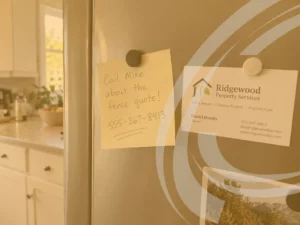
Trades and services. The owner’s phone number on the fridge is the whole problem and the whole opportunity. Move the number to the business. Put a job management system between the customer and the owner. Convert the best repeat customers to agreements, and settle the licence and nominee position early. A trades business with those four things and clean books is one of the most saleable small businesses in Australia. Without them, it is a ute, some tools and a reputation that retires with the owner.

Allied health and NDIS providers. Practices are valued on clinician contracts, referral relationships that belong to the practice, participant and patient records held in compliant systems, and accreditation. Where the principal is also the busiest clinician and the only referrer relationship, the practice has a key-person discount that a buyer will price. Building those two business assets means associate clinicians with their own referrers and a practice brand that patients search for.

Professional services. Firms are bought for recurring client fees and the staff who service them, and both are at risk when the principal holds all the relationships. Engagement letters in the firm’s name, a second partner or senior manager on each key client, documented workpapers and a clean trust account are the business assets in this sector. Client concentration is scrutinised closely because a departing principal can take a client with them.

Not-for-profits. Nobody sells a charity, but funders, boards and merger partners assess the same five things. Documented programs, a staff and volunteer structure that survives a CEO change, multi-year funding agreements, a brand donors recognise and clean acquittals all count. Together they decide whether an organisation is trusted with the next contract. Key-person dependence on a founder is as costly here as anywhere.

Business 1 2 7
This quarter
  1. Score the five business assets. Use the audit below, honestly. Most owners score highest on customers and lowest on systems and records.

  2. Fix the records first. Reconcile the books, check the awards and superannuation, gather the contracts, renew the licences. It is the cheapest asset, and it underwrites the others.

  3. Move one thing off the owner. The phone number, the quoting, or the site supervision. Document it, delegate it, and do not take it back.

  4. Convert three customers to agreements. Maintenance, service or preferred supplier. Recurring revenue starts with three.

  5. Register the name and own the data. Business name, trademark where it matters, Google listing, and a customer database in a system the business controls.

Free Resource: The Five Business Assets Audit

Score each of the five business assets on four criteria, get a transferability score out of twenty, and build a 90-day plan for the two weakest. Built for owners who want the business to be worth something without them.

Frequently Asked Questions

I am not planning to sell. Why does this matter?

Because the five business assets are also what lets you borrow on the business rather than your house, take a holiday without the phone, and survive an illness. They let you pay yourself for the value you have built rather than only for the hours you work. Exits are often unplanned. The research found many are driven by events other than retirement.

Which of the business assets should I build first?

Clean records, because they are the cheapest, underwrite every other asset, and a gap there can undo the rest. Then systems, because they make the people and customer assets possible. Brand and data can be built alongside. Recurring revenue takes the longest, so start it early, even if it is the last to mature.

How much does owner dependence cost at sale?

Advisers describe multiples on the same earnings from about three and a half times for an owner-dependent business with rough books, to four and a half or five and a half times for a transferable one. On $300,000 of earnings, that is a gap of $300,000 to $600,000. Actual outcomes depend on the industry and the buyer, but the direction is consistent.

Does this apply to a sole trader?

Yes, with a harder starting point, because a sole trader is, by definition, the business. The first move is usually a company or trust structure, a business name, and systems that allow a second person to work within it. Without those, there is nothing to transfer and nothing to lend against.

How long does it take to build the five business assets?

Records can be fixed in a quarter. Systems take six to twelve months to document and embed. People and recurring revenue take one to three years. Brand and data build continuously. Owners planning to exit in five years are at the latest sensible starting point, which is why the 16 per cent figure matters.

Build Something Worth Something Without You

The businesses that sell well, borrow easily, and survive treat their founders, systems, people, customers, brand, and records as assets to be built, not chores to be avoided. SBAAS works alongside trades and services businesses, allied health and NDIS providers, professional services firms and not-for-profits across Queensland.

We audit the five business assets, write the systems and policies that make them real, and plan the transition, whether it is a sale, a succession or simply a business that no longer needs the owner every day. If you would like an honest read on what your business would be worth without you, we are ready when you are.

Find out more about SBAAS and book a conversation.

General information only

This article provides general information for Australian businesses as at September 2026 and does not constitute financial, legal or business valuation advice. The valuation multiples referred to are illustrative ranges reported by advisers and may vary significantly depending on the industry, business size, financial performance, risk profile and purchaser. Licensing, business structuring, succession planning and business sale decisions can have important legal, tax and financial consequences. Businesses should seek advice from a qualified accountant, lawyer or business valuer before acting on any information contained in this article.

Sources

Business News Australia. (2026, April 16). Thousands of viable small businesses face closure as succession cliff looms, says new research. https://www.businessnewsaustralia.com/articles/thousands-of-viable-small-businesses-face-closure-as-succession-cliff-looms-says-new-research.html

Dynamic Business. (2026, April 15). New research reveals Australia’s small businesses are heading for a succession cliff. https://dynamicbusiness.com/topics/news/new-research-reveals-australias-small-businesses-are-heading-for-a-succession-cliff.html

ChannelLife Australia. (2026, April 21). Australian small business owners face succession cliff. https://channellife.com.au/story/australian-small-business-owners-face-succession-cliff

Inside Small Business. (2026, June 1). SMEs warned of looming ownership succession crisis. https://insidesmallbusiness.com.au/management/planning-management/smes-warned-of-looming-ownership-succession-crisis

NAB. (2025). Business owners face retirement roadblock, succession setback. https://www.nab.com.au/news/business-banking/small-business-succession-challenges

Reserve Bank of Australia. (2025, October). Small business economic and financial conditions. RBA Bulletin. https://www.rba.gov.au/publications/bulletin/2025/oct/small-business-economic-and-financial-conditions.html

Scale Suite. (2026, July 15). The succession wave: Business owner retirement data. https://www.scalesuite.com.au/resources/succession-wave-owner-retirement-data

Scale Suite. (2026, March 30). Why 85 per cent of Australian SMEs don’t seek external finance. https://www.scalesuite.com.au/resources/why-australian-smes-dont-seek-external-finance

Everglow. (2026, September). Business succession planning in Australia: A roadmap. https://everglow.au/business-succession-planning/

Broker.com.au. (2026, March 11). Australia’s ageing business owners: The succession crisis creating a wave of opportunity. https://www.broker.com.au/blog/ageing-business-owners-succession-australia/

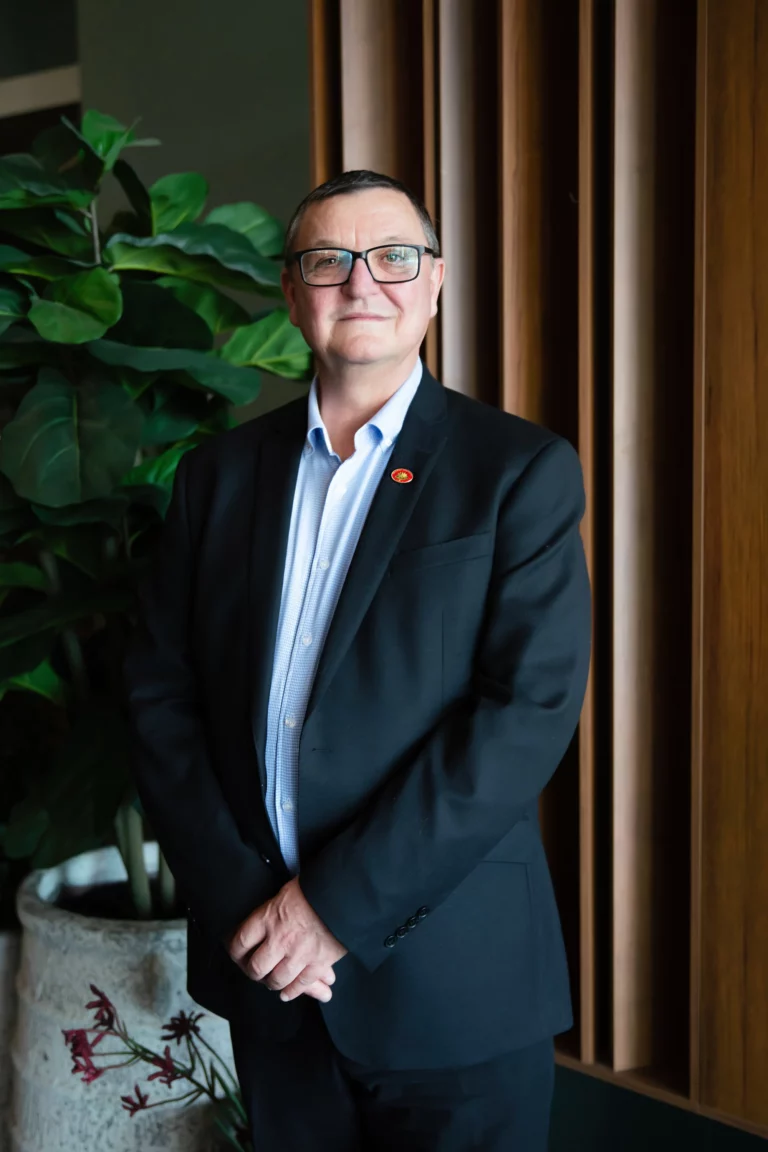
Eric Allgood, Founder and Managing Director of SBAAS

Eric Allgood is the Managing Director of SBAAS and brings over two decades of experience in corporate guidance, with a focus on governance and risk, crisis management, industrial relations, and sustainability.

He founded SBAAS in 2019 to extend his corporate strategies to small businesses, quickly becoming a vital support. His background in IR, governance and risk management, combined with his crisis management skills, has enabled businesses to navigate challenges effectively.

Eric’s commitment to sustainability shapes his approach to fostering inclusive and ethical practices within organisations. His strategic acumen and dedication to sustainable growth have positioned SBAAS as a leader in supporting small businesses through integrity and resilience.

Qualifications:

  • Master of Business Law
  • MBA (USA)
  • Graduate Certificate of Business Administration
  • Graduate Certificate of Training and Development
  • Diploma of Psychology (University of Warwickshire)
  • Bachelor of Applied Management

Memberships:

  • Small Business Association of Australia –
    International Think Tank Member and Sponsor
  • Australian Institute of Company Directors – MAICD
  • Institute of Community Directors Australia – ICDA
  • Australian Human Resource Institute – CAHRI

Our Consulting Services

Management Consulting

For larger companies, SBAAS transforms complexity into clarity with solutions that accelerate performance, growth and market resilience.

Compliance & Risk

From enterprise agreements to governance frameworks, SBAAS ensures compliance, reduces exposure and supports sustainable, risk-aware decision-making.
Learn more
sbaas financial management

Professional Writing Services

Content that elevates your message, builds credibility & drives impact across tenders, reports, policies and executive communications.

Consistency in Communication

Clear, plain-English documents that meet compliance standards, reduce risk, and protect reputation through accurate, accessible and professional communication.
Learn more

Small Business Consulting

For small businesses, tailored strategies in marketing, operations & growth that boost profitability and strengthen customer connections.

Sustainable Businesses

Expert guidance in compliance, HR, policies and financial systems that reduce risks and create a secure foundation for sustainable expansion.
Learn more

Start-ups

For start-ups, SBAAS provides everything needed to launch, from setting up your books to building websites and driving growth strategies.

Set-up for Success

From compliance requirements to business structure, SBAAS ensures new ventures start strong, minimise risks and build systems for lasting success.
Learn more

Further Reading

Business assets

If You Stopped Tomorrow, What Would Be Left to Sell?

One in three Australian small business owners plans to retire within five years, and only 16 per cent have a plan for what happens to the business. Most will discover late that the thing they built is worth less than they thought, because its value walks out the door with them. Here are the five business assets every owner should be building now, whether they intend to sell, borrow, step back or stop working weekends.

Read More »
The right to disconnect

Your After-Hours Email Just Became a Legal Question

Your people can now refuse to monitor or answer work contact outside their hours, unless that refusal is unreasonable. The right to disconnect is not a ban on contact, nor is it only for junior staff. For professional services firms with an always-on culture, the smart move is to set clear expectations before a dispute forces the issue. Here is what the law asks, and how to get ahead of it.

Read More »
An early childhood educator working with young children in a centre.

The Employee Choice Pathway

The rules for casual conversion have flipped. Under the employee choice pathway, eligible casuals now tell you they want to go permanent, and you must respond in writing within 21 days. For early childhood centres that run on casuals, this changes how you roster and plan. Here is who is eligible, how to respond, and the few grounds on which you can say no.

Read More »
Practice principal marking up a workplace policy next to a calendar of review dates.

Policy Review Services: Workplace Policies Expire. When Did You Last Check Yours?

Review your workplace policies at least once a year, and immediately when the law, your business, or your risks change. Since January 2025, employers have absorbed criminal wage theft laws, the right to disconnect and Payday Super, and new privacy policy rules starting on 10 December 2026. This guide covers how often to review, what triggers an early review and where to start.

Read More »

SBAAS Events

Skip to content