
If You Stopped Tomorrow, Would the Business Survive Without You?

Most owner-led businesses do not survive their founder. Not because the work is poor, but because everything lives in the owner’s head. Here is how succession planning turns a business that dies with you into one that outlasts you, and is worth handing on.
Most owner-led businesses do not survive their founder’s exit. Not because the work is not good, but because everything lives in the founder’s head.
The knowledge, the relationships, the decisions, all of it sits with one person. When that person stops, there is little left to hand over. The business often simply stops too.
Australia is heading for a succession cliff. Nearly a third of small business owners plan to retire within five years, yet only about one in six have a documented plan.
The fix is not a document you write on the way out. Succession planning is something you build years in advance, by making the business able to run, and be sold, without you.
Start early. Get the business out of your head. Choose and develop a successor, family or not. And plan your own exit. Do that, and you turn a business that dies with you into one that outlasts you.
If you take one thing from this article, take these four moves
- Start early. Succession is a journey of years, not a decision you make on the way out.
- Get the business out of your head. Document, systematise, and delegate so it runs without you.
- Choose and develop a successor, family or not. Give them the time to grow into it.
- Plan your own exit, and your next purpose. The hardest part is letting go.
Everything below is optional depth. Read on for the evidence, the Australian picture, and the practical detail on succession planning that actually works.
Digging Deeper
Below sits the supporting case. It covers why so many businesses die with their founder, the scale of the problem in Australia, and how to build a business that outlasts you.
Why most businesses die with their founder
Start with a hard truth. A business built entirely around the owner is very hard to hand over or sell. When the knowledge, the relationships, and the decisions all live in one head, there is nothing to transfer.
This is not only a small-business problem. McKinsey studied more than 200 family-owned businesses across 50 countries. On average, they underperformed for five years after a leadership transition, with shareholder returns falling around 5.7 points. Only about one-third of transitions created any value at all.
The surprising part is where the problem sits. It is usually not the heir who fails. It is the outgoing leader who never let go, or never prepared the business to run without them.
For a small trade business, the version is starker still. If the owner stops, the work stops. There is no five-year decline. There is a closed door.
That is why succession planning matters even for the smallest operator. The goal is simple, to build a business that can keep going, or be sold, when you are no longer the one holding it together.
Australia’s succession cliff
The scale of this in Australia is striking, and the timing is urgent.
Recent research found that nearly one in three small business owners plan to retire within five years. Yet only about 16 per cent have a documented succession plan. Among those actively considering an exit, 45 per cent have no succession or sale plan at all, and one in four have never even thought about it.
Worse, exits are often not planned. Four in ten owners have already lived through a sudden departure from a business, through illness, burnout, financial pressure, or a market shift. Few of us get to choose our timing.
And the businesses are tied to their owners. More than seven in ten owners say the business runs on personal reputation and word-of-mouth rather than systems and brand. Among owners aged 50 and over, that rises to 78 per cent.
Trades are especially exposed. Builders, electricians, plumbers, and contractors are often highly profitable, yet heavily reliant on the owner’s relationships and licences. The result is a wave of viable businesses at risk of closing, not because they are failing, but because no one is ready to take over.
Start early, it’s a journey not an event
Here is the mindset shift. Succession planning is not a single decision you make in your last year. It is a long process you start while the business is strong and you are still in good health.
McKinsey describes leadership succession as an 8-to-15-year journey, and finds most families start far too late, only once the leader is already winding down. At small scale the timeline is shorter, but the principle holds. More lead time means more options, a better successor, and a higher price.
So do not wait for retirement or a health scare to force the issue. The four in ten owners who faced a sudden exit did not choose the moment. Begin the work now, while you still can shape it on your terms.
Get the business out of your head
This is the heart of succession planning, and the part most owners skip. The reason a business cannot be handed over is that it lives in the founder’s head. So move it out.
Document how the work actually gets done. Write down your process for quoting, scheduling, the job itself, invoicing, and the suppliers you trust. Turn the things you carry in memory into something another person could follow.
Then delegate real responsibility, not just tasks. Let your people own decisions and outcomes, and resist the urge to take every problem back. A business that needs you for every call is a business that cannot be sold.
Build relationships and a brand that belong to the business, not just to you. When customers trust the company name, not only your mobile number, the value transfers with the business. That is what a buyer or successor is actually buying.
There is a simple test. Take a genuine two-week holiday and see what breaks while you are gone. Whatever breaks is your succession to-do list. Many owners who believe they have stepped back discover the business still cannot move without them.

Choose and develop a successor, family or not
A successor can be a family member, a trusted employee, or an outside buyer. The mistake is leaving the question open until the end. Decide the direction early, then develop the person.
Do not assume your children want it. Fewer in the next generation are stepping into business ownership, often choosing their own careers instead. Have the honest conversation early, rather than building a plan on an assumption no one has tested.
Whoever takes over needs time and real responsibility to grow into it. McKinsey’s advice for big firms scales down well. Consider more than one candidate. Develop them through mentoring and stretch. Teach them to think like an owner, not just to do the work. A successor needs years of preparation, not a fortnight of handover notes.
Family dynamics, handled fairly
When family is involved, succession turns emotional. McKinsey points to sibling rivalry and unclear roles as a common root cause of failure.
So separate the family rules from the business rules. Be explicit about who does what, who owns what, and how decisions get made. Put it in writing before it is tested by a disagreement.
Remember too that fair does not always mean equal. The best operator should run the business, even where ownership is shared more evenly across the family. Confusing the two questions is how good businesses get torn apart.
Get outside help, as well. The founder is rarely the right person to run their own succession. A trusted adviser keeps the process objective and less emotional. This is general information, not legal, tax, or financial advice, and succession carries real tax and legal consequences, so seek professional guidance early.
The hardest part is letting go
For all the planning, the deepest obstacle is emotional. McKinsey puts it plainly. The single most important decision a founder makes for the longevity of the business is the decision to let go.
That is hard because the business is your baby. The antidote is to find a new purpose, a fresh reason to get up in the morning, so stepping back feels like moving towards something rather than losing it.
And there is real work in the letting go. Your last and most valuable job as owner is to set the business up to thrive without you. Resolve the lingering conflicts. Tidy the messy parts. Hand over the relationships. Then step back, and let your successor lead.
What to ignore, and how to start
Ignore the idea that succession planning is a document you write the year you retire. It is years of small, deliberate moves, and the best time to start was a while ago. The second best time is now.
Start small and concrete this month. Write down the three things only you know how to do, and start teaching one of them. Book a real holiday and note what breaks. Have one honest conversation about who might take over. Get one piece of professional advice on structure and tax.
Be honest about the goal. You are building a business that is worth something without you. That is what protects your family, your staff, your customers, and the legacy you spent years building.
Where to from here
Every owner leaves their business eventually. The only real choice is whether you leave it well, on your terms, or leave it to chance.
Start early. Get the business out of your head. Choose and develop your successor. Plan your own exit, and your next chapter. Do that, and succession planning stops being a worry you avoid and becomes the thing that lets your business outlast you.
If you would like help building a business that can run, and be handed over, without you, SBAAS can guide you through it. From getting the business out of your head to choosing a successor and planning your exit, we help Australian trades and family businesses prepare for a succession worth having. To learn more about how we work, visit https://sbaas.com.au/about-us/ or call (07) 3916 9896 to talk it through.
Sources
Australian Bureau of Statistics. (2025). Counts of Australian businesses, including entries and exits. https://www.abs.gov.au/statistics/economy/business-indicators/counts-australian-businesses-including-entries-and-exits/latest-release
Business News Australia. (2026). Thousands of viable small businesses face closure as succession cliff looms. https://www.businessnewsaustralia.com/articles/thousands-of-viable-small-businesses-face-closure-as-succession-cliff-looms-says-new-research.html
McKinsey & Company. (2026). Passing the baton: Creating value through CEO succession at family businesses. https://www.mckinsey.com/industries/private-capital/our-insights/passing-the-baton-creating-value-through-ceo-succession-at-family-businesses
McKinsey & Company. (2023). The secrets of outperforming family-owned businesses. https://www.mckinsey.com/industries/private-capital/our-insights/the-secrets-of-outperforming-family-owned-businesses-how-they-create-value-and-how-you-can-become-one
National Australia Bank. (2025). Business owners face retirement roadblock, succession setback. https://news.nab.com.au/news/small-business-succession-challenges/
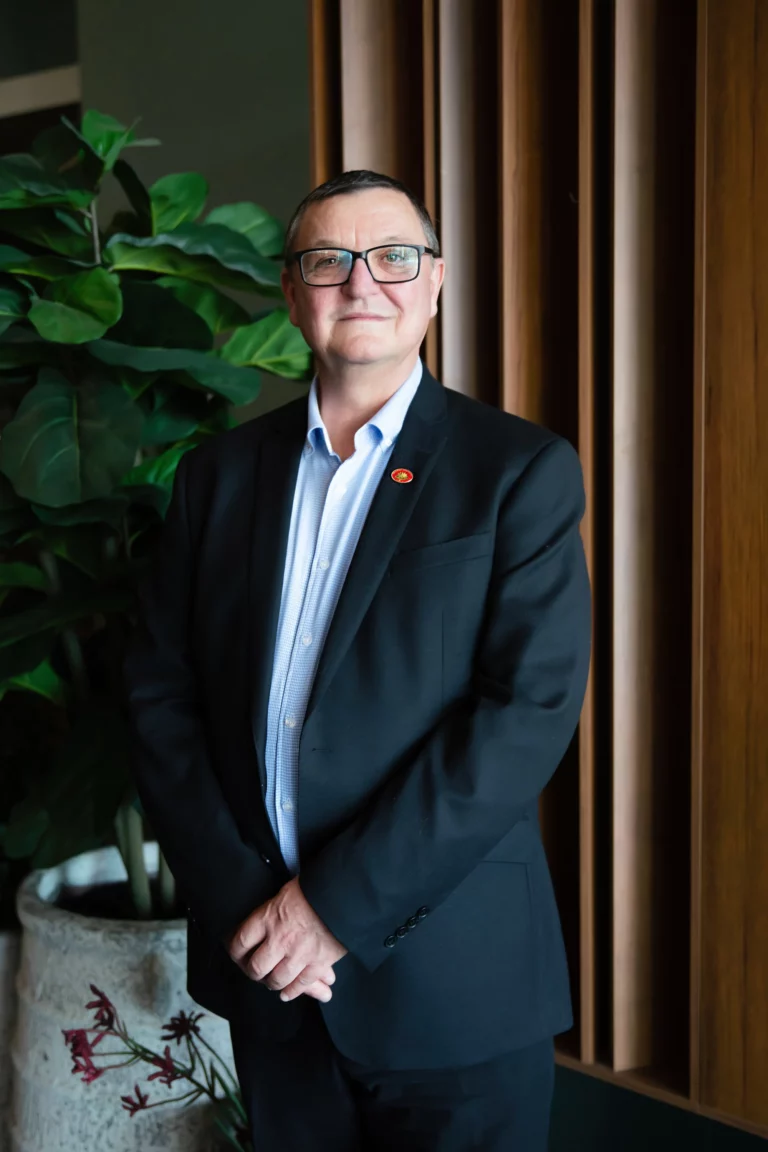
Eric Allgood is the Managing Director of SBAAS and brings over two decades of experience in corporate guidance, with a focus on governance and risk, crisis management, industrial relations, and sustainability.
He founded SBAAS in 2019 to extend his corporate strategies to small businesses, quickly becoming a vital support. His background in IR, governance and risk management, combined with his crisis management skills, has enabled businesses to navigate challenges effectively.
Eric’s commitment to sustainability shapes his approach to fostering inclusive and ethical practices within organisations. His strategic acumen and dedication to sustainable growth have positioned SBAAS as a leader in supporting small businesses through integrity and resilience.
Qualifications:
- Master of Business Law
- MBA (USA)
- Graduate Certificate of Business Administration
- Graduate Certificate of Training and Development
- Diploma of Psychology (University of Warwickshire)
- Bachelor of Applied Management
Memberships:
- Small Business Association of Australia –
International Think Tank Member and Sponsor - Australian Institute of Company Directors – MAICD
- Institute of Community Directors Australia – ICDA
- Australian Human Resource Institute – CAHRI
Our Consulting Services

Management Consulting
For larger companies, SBAAS transforms complexity into clarity with solutions that accelerate performance, growth and market resilience.
Compliance & Risk
From enterprise agreements to governance frameworks, SBAAS ensures compliance, reduces exposure and supports sustainable, risk-aware decision-making.
Learn more

Professional Writing Services
Content that elevates your message, builds credibility & drives impact across tenders, reports, policies and executive communications.
Consistency in Communication
Clear, plain-English documents that meet compliance standards, reduce risk, and protect reputation through accurate, accessible and professional communication.
Learn more

Small Business Consulting
For small businesses, tailored strategies in marketing, operations & growth that boost profitability and strengthen customer connections.
Sustainable Businesses
Expert guidance in compliance, HR, policies and financial systems that reduce risks and create a secure foundation for sustainable expansion.
Learn more

Start-ups
For start-ups, SBAAS provides everything needed to launch, from setting up your books to building websites and driving growth strategies.
Set-up for Success
From compliance requirements to business structure, SBAAS ensures new ventures start strong, minimise risks and build systems for lasting success.
Learn more