



Diesel Hit $2.76 a Litre. Then It Fell
The Lesson Was Never About Fuel
In April 2026, diesel passed $2.76 a litre. By June, prices had fallen back below pre-conflict levels. The businesses that came through best were not the ones that guessed right. They were the ones that had built business resilience before the shock arrived.
In April 2026, diesel reached $2.76 a litre. For a trades business running utes and a small fleet, that is a serious hit to margin. By mid-June, prices had fallen back to around or below where they sat before the Middle East conflict began. The spike was real. The relief was real. And the whole episode carried one clear lesson.
The lesson was never about fuel.
Business resilience is the ability to absorb a shock you did not predict and keep trading. The trades businesses that handled the 2026 fuel shock best did not forecast the price of crude oil. They had the cash buffer, the pricing flexibility, and the supplier options to ride it out. They had built business resilience before they needed it.
That is the point, and it stands on its own. You cannot predict the next shock. You can prepare for the fact that one is coming. Fuel was this year’s disruption. Energy costs, interest rates, late payments, a key supplier failing, or a new compliance cost will be next. A resilient business plans for the category, not the single event.
If you take nothing else from this article, take this. Build your buffers, your pricing flexibility, and your supplier options now, while conditions are calm. The cost of preparing is small. The cost of being caught exposed can be the business itself.
The rest of this article digs into how the fuel shock played out, why it hit trades hardest, and what practical business resilience looks like for a small Australian business.
Read on if you want the detail.
Digging Deeper
The fuel shock of 2026 is a textbook case of external disruption. It started overseas, hit fast, and eased almost as quickly. Understanding how it moved shows why business resilience matters more than prediction.
What happened to fuel prices in 2026
A conflict in the Middle East disrupted global oil supply early in 2026. Crude prices rose sharply. Diesel rose faster than petrol, because Middle Eastern refiners supply much of the world’s diesel.
Australian diesel peaked at about $2.76 a litre in April 2026. The Federal Government cut fuel excise by 32 cents a litre from 1 April to 30 June to ease the pressure on businesses and households.
By mid-June, the picture had turned. Retail petrol sat around or below pre-conflict levels. Diesel had fallen close to 39 per cent from its peak across the five largest cities. International benchmark prices were at three-month lows.
The relief is partly temporary. Part of the excise cut unwinds from 1 July 2026, with the remainder under review for early August. Prices may drift up again. None of this was predictable in advance, and the direction changed within weeks.
The shock also reached the wider economy. Higher fuel costs pushed headline inflation up through the first half of 2026. The Reserve Bank lifted the cash rate three times, to 4.35 per cent, and inflation ran near 4 per cent in May. Fuel does not stay in the fuel tank. It flows into freight, materials, and the price of nearly everything.
Why the shock hit trades businesses hardest
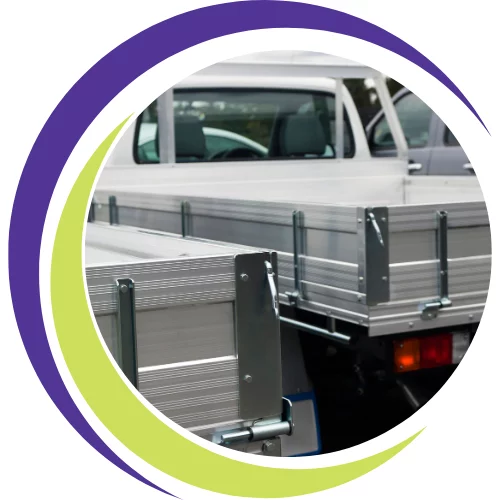
Trades businesses carry direct fuel exposure that office-based firms do not. Utes, vans, trailers, and machinery all run on diesel or petrol. When the bowser price jumps, the cost lands immediately.
The harder problem is timing. A trades business often quotes a job weeks or months before doing it. The price is locked. When fuel spikes between quote and invoice, the business absorbs the difference. Margin disappears with no way to recover it.
This is the same trap airlines face, scaled down. Airlines sell tickets months ahead at fares set when fuel was cheaper. When fuel rises, they fly those passengers at a loss on the fuel line. Industry analysis shows it can take three to four months for higher costs to pass through into prices. A small trades business has even less room to move.
There is a second parallel worth noting. Airlines that hedge their fuel soften the blow. They lock in prices ahead of time and ride out the spike. Most small businesses cannot hedge fuel directly. What they can do is build the equivalent buffer in other ways, through pricing clauses, cash reserves, and cost flexibility. That is business resilience in practical form.
Fuel did not arrive alone. Australian small businesses are carrying several cost pressures at once in 2026:
- Energy costs have risen as government electricity rebates expired, lifting bills for some businesses by up to a quarter.
- The cash rate sits at 4.35 per cent, so variable-rate debt costs more than it did a year ago.
- Payday Super starts on 1 July 2026, removing the quarterly super timing buffer that some businesses leaned on for working capital.
- The Australian Taxation Office is enforcing tax debts more firmly, with its debt book above $105 billion.
Each pressure is manageable alone. Together, they squeeze margin and cash flow at the same time. That combination is exactly when business resilience earns its keep.
What business resilience actually means
Business resilience is not a vague aspiration. It is a set of concrete capabilities that let a business take a hit and keep going. Research on the 2008 financial crisis found the most resilient companies fell less, recovered faster, and then pulled ahead of rivals. The same logic applies to a two-person trades business.
Resilience rests on four practical foundations.
Visibility. You cannot manage what you cannot see. A resilient business knows its real numbers: its margin per job, its cash position, and its break-even point. Research shows that 67 per cent of small businesses that entered insolvency had no formal cash flow forecast. Visibility is the cheapest resilience you can buy.
Buffers. Cash in reserve turns a crisis into an inconvenience. A buffer of even a few weeks of fixed costs gives you room to absorb a fuel spike, a late payment, or a quiet month without panic.
Flexibility. Resilient businesses can adjust. They build fuel and material cost clauses into quotes. They keep some costs variable rather than fixed. They avoid locking everything into a single supplier or a single big client.
Foresight. You do not need to predict the future. You need to ask simple questions in advance. What happens if my biggest input cost doubles? What happens if my largest client pays 60 days late? Thinking through these scenarios while calm is far easier than reacting in crisis.
These four foundations are not expensive. They are mostly about discipline and structure. That is good news for a small business, because it puts resilience within reach.
A practical resilience checklist
Use this checklist to test your own business resilience. Each item is something you can act on this quarter.
- Know your numbers. Keep a simple, current cash flow forecast that looks at least 13 weeks ahead.
- Hold a buffer. Aim for a cash reserve covering several weeks of fixed costs, and build it steadily.
- Protect your quotes. Add a clause that lets you adjust for major fuel or material cost rises between quote and delivery.
- Spread your risk. Avoid depending on one supplier or one client for too much of your business.
- Watch your debtors. Chase late payments early, because a late invoice can cascade into your own cash crisis.
- Stay compliant. Keep BAS, super, and tax obligations current, so enforcement pressure never compounds a cost shock.
- Run the scenarios. Once a quarter, ask what a major shock would do to your cash, and plan one response.
None of these steps is dramatic. Together, they are the difference between a business that absorbs a shock and one that is broken by it.
The opportunity hidden in disruption
Business resilience is usually framed as defence. It is also offence. When a shock hits an industry, the exposed businesses retreat. The resilient ones hold their nerve and take ground.
During the fuel shock, some trades businesses paused quoting, delayed work, and lost momentum. Others kept trading, honoured their commitments, and won the customers their rivals dropped. The resilient operators did not just survive. They grew.
This is how large organisations think about disruption. The strongest firms treat resilience as a source of advantage, not just protection. They prepare for shocks so thoroughly that disruption becomes an opening rather than a threat. One global manufacturer recovered from a major supply disruption in two weeks rather than six months, because it had built resilience into its supply chain in advance.
Your business operates at a different scale. The principle is identical. Build business resilience while conditions are calm, and the next shock becomes a chance to pull ahead of competitors who did not prepare.
Where this leaves you
The 2026 fuel shock will not be the last disruption Australian small businesses face. It was simply this year’s version. Diesel at $2.76, then relief within weeks, was a clear reminder that you cannot time these events.
What you can do is prepare. Build the visibility, the buffers, the flexibility, and the foresight that let your business take a hit and keep trading. That is business resilience, and it is the most reliable competitive edge a small business can hold.
SBAAS helps Australian small businesses build exactly this kind of resilience, from cash flow structure to practical risk planning. If you want to understand where your business stands and what to strengthen first, talk to us. Learn more about how we work at https://sbaas.com.au/about-us/, or call (07) 3916 9896 to arrange a conversation.
Sources
Australian Competition and Consumer Commission. (2026). Weekly fuel price monitoring update. https://www.accc.gov.au/about-us/publications/weekly-fuel-price-monitoring-update
Australian Small Business and Family Enterprise Ombudsman. (2026). Small Business Pulse, February 2026. https://www.asbfeo.gov.au/sites/default/files/2026-02/2026%20February%20ASBFEO%20Pulse_0.pdf
Department of the Prime Minister and Cabinet. (2026). Public information on fuel supply: Fuel Supply Taskforce. https://www.pmc.gov.au/domestic-policy/fuel-supply-taskforce/public-information-fuel-supply
Keeping Company. (2026). Australian business insolvency: The truth about why businesses fail. https://www.keepingcompany.com.au/australian-business-insolvency/
McKinsey & Company. (2026). What could rising fuel costs mean for airlines? https://www.mckinsey.com/industries/travel/our-insights/what-could-rising-fuel-costs-mean-for-airlines
McKinsey & Company. (2026). From risk to resilience: New approaches to navigating disruption in Asia. https://www.mckinsey.com/capabilities/risk-and-resilience/our-insights/from-risk-to-resilience-new-approaches-to-navigating-disruption-in-asia
Reserve Bank of Australia. (2026). Statement on monetary policy, May 2026. https://www.rba.gov.au/publications/smp/2026/may/overview.html
Worrells. (2026). Economic pressures facing Australian businesses in 2026. https://worrells.net.au/resources/news/economic-pressures-facing-australian-businesses-in-2026
Eric Allgood is the Managing Director of SBAAS and brings over two decades of experience in corporate guidance, with a focus on governance and risk, crisis management, industrial relations, and sustainability.
He founded SBAAS in 2019 to extend his corporate strategies to small businesses, quickly becoming a vital support. His background in IR, governance and risk management, combined with his crisis management skills, has enabled businesses to navigate challenges effectively.
Eric’s commitment to sustainability shapes his approach to fostering inclusive and ethical practices within organisations. His strategic acumen and dedication to sustainable growth have positioned SBAAS as a leader in supporting small businesses through integrity and resilience.
Qualifications:
- Master of Business Law
- MBA (USA)
- Graduate Certificate of Business Administration
- Graduate Certificate of Training and Development
- Diploma of Psychology (University of Warwickshire)
- Bachelor of Applied Management
Memberships:
- Small Business Association of Australia –
International Think Tank Member and Sponsor - Australian Institute of Company Directors – MAICD
- Institute of Community Directors Australia – ICDA
- Australian Human Resource Institute – CAHRI
Our Consulting Services
Management Consulting

Compliance & Risk
Professional Writing Services
Consistency in Communication
Small Business Consulting
Sustainable Businesses
Start-ups
Set-up for Success
Further reading

They Held the Logins, the Money and the Trust
One Australian business owner paid a digital marketing provider faithfully for almost two years. They received two reports and lost control of their own website and Google accounts. The episode reveals a simple test that protects every business. Judge a provider by the transparency of their reporting, and by who holds the keys to your accounts.

That Board Seat Could Cost You Your House
A board seat is never just an honour. In Australia, directors can face personal liability for unpaid tax, insolvent trading, unsafe workplaces, poor records, and decisions they barely questioned. Whether paid, unpaid, executive, volunteer, de facto or behind the scenes, real influence can bring real exposure.

Diesel Hit $2.76 a Litre. Then It Fell
In April 2026, diesel passed $2.76 a litre. By June, prices had fallen back below pre-conflict levels. The businesses that came through best were not the ones that guessed right. They were the ones who had built business resilience before the shock arrived.

Your Customers Are Still Spending — Just Not Where You Think
Consumer sentiment and spending have split. Learn how small businesses can read customer behaviour, prove value, reduce friction, and build loyalty in a cautious economy.

Wellbeing Isn’t a Perk. It’s One of Your Biggest Business Numbers
Workforce wellbeing is not a soft extra. Mental ill-health costs the Australian economy up to $220 billion a year, while every dollar invested in a mentally healthy workplace returns about $2.30. Here is why wellbeing is a business number, and how small businesses across every sector can improve it.

The Hidden Costs of Poor Strategy
When margins are tight and capacity is stretched, an unclear plan becomes expensive. This guide explains how poor decisions and scattered priorities erode cash, time and talent. It then sets out a practical reset that any owner can run in 90 days. Each step is designed for the Australian market and grounded in business strategy for SMEs.