
The Monoculture Myth: Loud Words, No Policy, and a Bill Your Business Pays
You run a trades business with a crew of six to fifteen. You need staff you can trust, customers who call back, and a suburb that works. The monoculture myth threatens all three and offers nothing in return.
Here is the point in one paragraph. Australia has been diverse for more than 60,000 years. The “British” culture of 1788 was four nations with different laws, languages and churches. The Christianity some want to restore runs to tens of thousands of denominations. There is no monoculture to go back to.
The calls for one come with no plan. In June 2026 the leader of One Nation told the National Press Club that Australia must be monocultural. A week later, asked what that meant, she said her vision looked like the Socceroos. Nobody has explained how a monoculture would be built, funded or enforced. That is the monoculture myth in a sentence: loud words, no plan.
Follow the money and the picture sharpens. The loudest calls for a monoculture are bankrolled by Australia’s richest person and her associates. The policy they endorse is about tax and regulation, not culture. Division costs a tradie with ten staff far more than it costs a mining fortune.
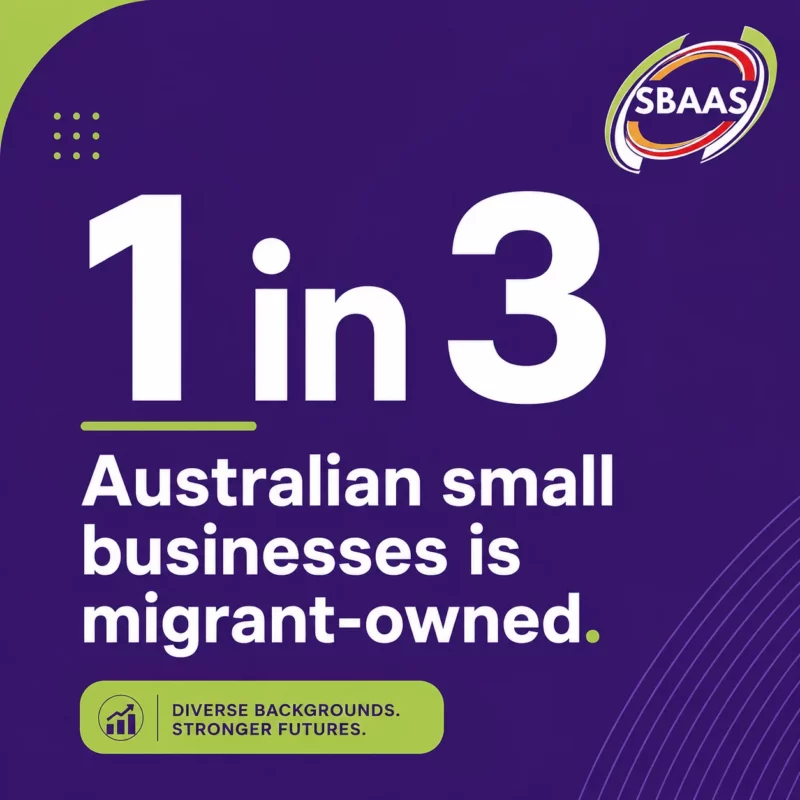
The rhetoric still costs money. Racial discrimination alone drains an estimated 3% of GDP each year. Workers in inclusive teams are three times less likely to leave. One in three Australian small businesses is migrant-owned, and those businesses employ 1.4 million people. Migrants fill the trades, health and care jobs your customers depend on, and they are under-represented in our prisons.
So ignore the noise, hire on skill, and build a crew people want to join. That is the whole message. The myth of monoculture is a distraction from the work. The rest of this article is for readers who want the evidence.
Digging Deeper
Where the monoculture talk came from
On 17 June 2026, Senator Pauline Hanson told the National Press Club that Australia cannot be multicultural and “must be monocultural”. She said immigration had driven the country into a state of crisis. The Prime Minister responded the same day that diversity is a strength of modern Australia. The Opposition Leader said he supported a version of multiculturalism, and several Liberal MPs said their party remained committed to it.
Then came the retreat. In the Senate a week later, Senator Hanson said little would change under her policy. She compared her monoculture to the Socceroos: people of many backgrounds wearing green and gold under one flag. Observers told the ABC it was unclear how she proposed to make Australia monocultural at all. The ABC’s political analysis called it a familiar three-step playbook, and noted that within days “monoculture” had been redefined as a football team.
In August, footage surfaced from a conservative Christian conference held in June. It showed One Nation Senator Malcolm Roberts saying he was in “two minds” about whether gay people should have equal rights. The question was about his own party’s director, who is gay. He offered no policy, only uncertainty.
That is the pattern worth noticing. Strong words arrive first. Detail rarely follows. The monoculture myth is loud on the way in and vague on the way out.
There is nothing to go back to
The monoculture myth needs a golden age. Australian history refuses to supply one.
Before 1788, this continent held more than 250 Indigenous languages and around 800 dialects, each tied to a place and a people. The 2021 Census still recorded 167 Aboriginal and Torres Strait Islander languages used at home. Arnhem Land, the Western Desert and the Torres Strait were, and are, different worlds.
The monoculture myth also needs a single “British” culture, and there was not one. The 1707 Act of Union kept Scotland’s separate legal system and its Presbyterian church. Wales, Scotland and Ireland kept their languages. The latest censuses counted 538,300 Welsh speakers, 2.4 million people with Scots language skills and 1.9 million Irish speakers.
Around 36,000 of Australia’s 163,000 convicts were Irish, and most were Catholic. Catholic and Protestant Australians then fought bitterly for more than a century. As late as 1960, Irish names were rare at the top of banking, insurance and the armed forces.
Go back further and the layers keep coming. The Romans invaded Britain in 43 CE and fused the Celtic goddess Sulis with their own Minerva at Bath. Roman gods were themselves borrowed from Greece: Jupiter from Zeus, Venus from Aphrodite. Christianity later replaced them all.
Christianity is no monoculture either. Researchers count around 50,000 Christian denominations worldwide in 2025, up from 2,000 in 1900. In Australia, 43.9% of people identified as Christian in 2021 and 38.9% reported no religion. Among migrants who arrived after 2017, fewer than three in ten were Christian.
Judaism, Christianity and Islam worship the God of Abraham. The Catholic Church has taught this officially since 1965. Same God, three very different cultures. Strip away the slogans and the myth of monoculture describes a country that has not existed.
Anger is the product. Policy is missing.
Ask what a monoculture policy would do and the answer changes by the day. First it was an end to multiculturalism. Then it was the Socceroos. On equal rights, it was “two minds”.
Why speak this way? Because division works as marketing. Anger travels faster than detail. It wins airtime, fills fundraising emails and separates a party from its rivals. Vague words also carry no cost, because nobody can hold you to a plan you have not written. The monoculture myth is a marketing product, and a well-tested one.
Whatever the intent, the effect is the same. The speaker gains attention. The listener gains nothing they can use. You cannot build a business plan on a slogan, and voters cannot build a country on one. The monoculture myth is sold to the anxious, and the bill is paid by everyone else.
That bill lands close to home. Every time a public figure casts a group as a threat, someone in your crew, your customer list or your supplier network hears it. Businesses then pay in staff who leave, customers who go quiet, and suburbs that trust each other a little less.
Follow the money
Ask who pays for the noise, and the answer is on the public record. In April 2026 a company owned by Gina Rinehart, Australia’s richest person, gave One Nation a new $1 million aircraft. A Hancock Prospecting spokesman confirmed the gift. The same week the party banked $2 million more from three donors. Two of them hold senior roles in Rinehart companies.
Senator Hanson’s interests register lists flights provided by Hancock Prospecting and S. Kidman & Co, including a trip to Florida. Those declarations followed months of questions about undeclared travel on Ms Rinehart’s private jet. The day after the Press Club speech, the two women shared a stage at a News Corp summit in Townsville. Ms Rinehart opened by thanking Senator Hanson by name, told the crowd she gave Australians hope, and handed her a toy bulldozer.
The policy attached to that endorsement is not about culture. Ms Rinehart’s published speech calls for closing every federal department that overlaps with a state one, cutting taxes, cutting regulation and leaving the Paris climate agreement. She has attacked net zero and renewable energy for years. Her fortune, $39 billion on the 2026 Rich List, comes from iron ore and other mining. Cutting tax and environmental rules helps a mining house far more than it helps a plumber.
So who gains from a divided country? Here is the evidence, stated carefully. Australia’s wealth gap is wide and widening. The richest 10% of households hold 46% of all wealth. Their average wealth grew 84% between 2003 and 2022, to $5.2 million, while the lowest 60% grew 55%, to $343,000. Nearly half of all wealth created in that time went to the top tenth. The 200 richest Australians now hold $707 billion.
Division protects that gap. Economists Alberto Alesina, Edward Glaeser and Bruce Sacerdote found the main reason the United States redistributes far less than Europe is racial division, not economics. When voters see the poor as “other”, they vote for less public spending and lower taxes. The people with the most to keep gain the most. The OECD adds the other half of the picture: rising inequality cut growth in 19 rich countries by 4.7 percentage points over two decades. A bigger gap means a smaller pie for everyone else, including small business.
It would be too much to say the rich are the only winners. Politicians win attention and votes. Some media win an audience. Ms Rinehart would say lower taxes and less red tape bring investment to regional Australia, and plenty of small business owners would welcome less red tape too. But the culture war is the wrapper, not the policy. Strip it away and what remains is a tax and regulation agenda that pays a mining fortune far more than it pays you. The monoculture myth is cheap for the wealthy and expensive for everyone else.

What division costs a business like yours
Exclusion has a price tag. Deakin University researchers estimated racial discrimination cost Australia $37.9 billion a year, about 3% of GDP, mostly through lost health and productivity. Their broader estimate reached $44.9 billion. That is the monoculture myth in its purest form: a drag on the economy, measured in billions.
The workplace numbers point the same way. Diversity Council Australia finds workers in inclusive teams are three times less likely to leave. Inclusive teams are also far more likely to innovate and to work together well. A third of LGBT+ workers worldwide are actively looking for a more inclusive employer. On a crew of ten, that is a tradie you cannot afford to lose.
Gender tells the same story. Australia’s gender pay gap sat at 21.1% in 2024 to 2025. Curtin University research for the Workplace Gender Equality Agency found that lifting women into top roles raised company value. Gender-balanced leadership added around $93 million to a $1 billion listed company. Deloitte estimates that dropping rigid gender norms would add $128 billion a year to the economy and 461,000 full-time workers.
The evidence runs across borders and beliefs. A peer-reviewed cross-country study linked each step up in legal rights for gay and lesbian people to about US$2,000 more GDP per person. A study of 173 countries found religious freedom was one of only three factors reliably linked to economic growth. Freedom to be yourself is not a cost centre. It is a growth setting.
What diversity delivers on the tools
Now look at what the monoculture myth would throw away.
One in three Australian small businesses is migrant-owned. That is at least 620,000 businesses employing about 1.41 million people. Eight in ten of those owners started their first business after arriving here. Half hold a degree, and their revenue runs 53% ahead of comparable non-migrant firms. Many are your competitors, your subcontractors and your customers.
Your customers are diverse too. Almost half of Australians have a parent born overseas. More than a quarter were born overseas, and 5.7 million people speak a language other than English at home. The monoculture myth ignores these customers. A crew that reflects the suburb wins more work in it.
Then there is the labour you cannot find. Trades and construction roles have appeared on national skills shortage lists year after year. Allied health leans on overseas-trained staff. In 2021 to 2022 alone, nearly 3,000 international medical graduates registered to practise, along with more than 4,600 internationally qualified nurses and midwives. Skilled migrants had an employment rate of 88%. Almost 60% of migrants hold tertiary qualifications, against around 40% of the Australian-born.
The public finances gain as well. Treasury modelling found the 2018 to 2019 permanent migrant intake will pay about $7 billion more in tax than it costs over a lifetime. That is roughly $20 billion better than a same-sized group drawn from the existing population. The IMF expects migration to add between half a point and a full point to annual growth through to 2050.
Regional towns show what this looks like on the ground. About 160 Karen refugees settled in Nhill in western Victoria. Over five years the district gained an estimated $41.5 million in economic value and 70 full-time jobs.
And the safety fear does not survive the data. In 2018, overseas-born people were 17% of prisoners but 35% of the adult population. In 2022, 82% of prisoners were born in Australia. Migrants are under-represented behind bars, not over-represented.
The fair objections
Good arguments deserve a fair hearing, and there are real ones. They are about numbers and planning, not culture.
Housing and infrastructure are under pressure. The Productivity Commission warned in 2016 that rising migrant numbers strain the natural and built environment without proper planning. Treasury says the same. In 2024, 49% of Australians thought immigration was too high, up from 33% a year earlier. The researchers behind that survey found the concern was about housing and the economy, not diversity. Seventy-one per cent still said accepting immigrants makes Australia stronger, and 84% agreed in 2025 that multiculturalism has been good for the country.
Some gains are modest. The Productivity Commission found in 2006 that migration is unlikely to shift income per person by much. Annual arrivals are small against the whole population. Diversity can also dent neighbourhood trust in the short run, as Robert Putnam’s 2007 study found. Later research argues the effect fades once income and other factors are counted.
Not every business claim holds up either. McKinsey’s well-known finding that diverse executive teams earn higher profits failed an independent replication in 2024. That is why this article leans on official statistics and peer-reviewed work.
None of these objections supports a monoculture. They support better planning. Arguing about the size and pace of migration is legitimate. Arguing for one culture is arguing for a country that has not existed in 60,000 years. The monoculture myth survives only where the evidence goes unread.
What to do on Monday
The monoculture myth is not your problem to solve. Your crew is. Here is where the boring basics earn their keep.
- Hire on skill, licence and attitude. Judge the person in front of you, not the accent.
- Recognise overseas qualifications. Trades Recognition Australia and Ahpra pathways exist. Use them before you write off a candidate.
- Write plain-English inductions and safety procedures. Clear beats clever, in any language.
- Run a pay check. Same job, same rate. Most gaps hide in unwritten habits, not in policy.
- Set the tone on site. One line in your code of conduct and one conversation at the toolbox talk do most of the work.
- Serve the whole suburb. A crew that reflects your customers earns more referrals from them.
- Do not feed the noise. Your business gains nothing from a culture war and can lose a lot.
Sources
ABC News. (2026a, June 20). What does it mean for a nation to be a ‘monoculture’? https://www.abc.net.au/news/2026-06-20/what-is-monoculturalism-and-what-does-it-look-like-in-practice/106818222
ABC News. (2026b, June 24). Pauline Hanson says her vision of ‘monoculture’ is like the Socceroos. https://www.abc.net.au/news/2026-06-24/angus-taylor-believes-in-version-of-multiculturalism/106836144
ABC News. (2026c, June 28). Hanson’s monoculture comments are from her three-step playbook and the Liberals played right into it. https://www.abc.net.au/news/2026-06-28/pauline-hanson-monoculture-multiculturalism-socceroos-words/106847648
ABC News. (2026d, April 29). Australia’s richest person donates ‘sexy’ $1 million plane to Pauline Hanson’s One Nation. https://www.abc.net.au/news/2026-04-29/gina-rinehart-gifts-plane-to-pauline-hanson-one-nation/106620808
ABC News. (2026e, June 20). Not so long ago, politicians cared about the optics of big donations. https://www.abc.net.au/news/2026-06-20/pauline-hanson-bulldozer-new-promiscuity-donor-politics/106820530
ACOSS & UNSW Sydney. (2022). The wealth inequality pandemic: COVID and wealth inequality. https://www.unsw.edu.au/newsroom/news/2022/07/wealth-inequality-in-australia-and-the-rapid-rise-in-house-prices
ACOSS & UNSW Sydney. (2024). Inequality in Australia 2024: Who is affected and how? (Media release: New data shows wealth gap widening). https://www.acoss.org.au/media_release/new-data-shows-wealth-gap-widening/
Alesina, A., Glaeser, E., & Sacerdote, B. (2001). Why doesn’t the United States have a European-style welfare state? Brookings Papers on Economic Activity, 2001(2). https://www.brookings.edu/articles/why-doesnt-the-united-states-have-a-european-style-welfare-state
Ahpra. (2022, December 20). International health worker registrations grow to pre-pandemic levels. https://www.ahpra.gov.au/News/2022-12-20-workforce.aspx
AMES Australia & Deloitte Access Economics. (2015). Small towns, big returns: Economic and social impact of the Karen resettlement in Nhill. https://welcomingcities.org.au/wp-content/uploads/2016/11/deloitte-au-economics-small-towns-big-returns-nhill-resettlement-270415.pdf
Australian Bureau of Statistics. (2018). Prisoners in Australia, 2018: Country of birth. https://www.abs.gov.au/AUSSTATS/abs@.nsf/7d12b0f6763c78caca257061001cc588/1c6443d78f0fc93eca257daa000c8510!OpenDocument
Australian Bureau of Statistics. (2022a). 2021 Census: Nearly half of Australians have a parent born overseas. https://www.abs.gov.au/media-centre/media-releases/2021-census-nearly-half-australians-have-parent-born-overseas
Australian Bureau of Statistics. (2022b). 2021 Census shows changes in Australia’s religious diversity. https://www.abs.gov.au/media-centre/media-releases/2021-census-shows-changes-australias-religious-diversity
Australian Bureau of Statistics. (2022c). Aboriginal and Torres Strait Islander people: Census, 2021. https://www.abs.gov.au/statistics/people/aboriginal-and-torres-strait-islander-peoples/aboriginal-and-torres-strait-islander-people-census/latest-release
Australian Bureau of Statistics. (2022d). Prisoners in Australia, 2022. https://www.abs.gov.au/statistics/people/crime-and-justice/prisoners-australia/2022
Australian Bureau of Statistics. (2022e). Religious affiliation in Australia. https://www.abs.gov.au/articles/religious-affiliation-australia
Australian Bureau of Statistics. (2025). Migrant settlement outcomes. https://www.abs.gov.au/statistics/people/people-and-communities/migrant-settlement-outcomes/latest-release
Australian Catholic Historical Society. (n.d.). Irish Catholic Australians. https://australiancatholichistoricalsociety.com.au/history-resources/irish-catholic-australians/
Australian Institute of Aboriginal and Torres Strait Islander Studies. (n.d.-a). Languages alive. https://aiatsis.gov.au/explore/languages-alive
Australian Institute of Aboriginal and Torres Strait Islander Studies. (n.d.-b). Map of Indigenous Australia. https://aiatsis.gov.au/explore/map-indigenous-australia
Australian National University. (2024). Aussie social cohesion steady but strained by cost of living pressures. https://reporter.anu.edu.au/all-stories/aussie-social-cohesion-steady-but-strained-by-cost-of-living-pressures
Australian Small Business and Family Enterprise Ombudsman. (2022, March 21). Ombudsman thanks migrant-run small businesses for their contribution. https://www.asbfeo.gov.au/media-centre/media-releases/ombudsman-thanks-migrant-run-small-businesses-their-contribution
Badgett, M. V. L., Waaldijk, K., & van der Meulen Rodgers, Y. (2019). The relationship between LGBT inclusion and economic development: Macro-level evidence. World Development, 120. https://www.sciencedirect.com/science/article/pii/S0305750X19300695
Central Statistics Office (Ireland). (2023). Census of Population 2022, Profile 8: The Irish language and the Gaeltacht. https://www.cso.ie/en/releasesandpublications/ep/p-cpp8/censusofpopulation2022profile8-theirishlanguageandeducation/irishlanguageandthegaeltacht/
CGU Insurance. (2018). Migrant small business report (research by EY Sweeney). Analysis & Policy Observatory. https://apo.org.au/node/128756
Cingano, F. (2014). Trends in income inequality and its impact on economic growth (OECD Social, Employment and Migration Working Papers No. 163). OECD Publishing. https://www.oecd.org/en/publications/trends-in-income-inequality-and-its-impact-on-economic-growth_5jxrjncwxv6j-en.html
Crikey. (2026, April 30). Gina Rinehart’s executives are making big One Nation donations. https://www.crikey.com.au/2026/04/30/pauline-hanson-plane-gina-rinehart-hancock-one-nation-donations/
Deakin University. (2016). Counting the billion dollar cost of racism in Australia. https://www.deakin.edu.au/about-deakin/news-and-media-releases/articles/counting-the-billion-dollar-cost-of-racism-in-australia
Deloitte. (2023). 2023 LGBT+ Inclusion @ Work: A global outlook. https://www.deloitte.com/global/en/about/press-room/deloitte-global-2023-lgbt-inclusion-work-survey.html
Deloitte Access Economics & Australians Investing in Women. (2022). Breaking the norm: Unleashing Australia’s economic potential. Analysis & Policy Observatory. https://apo.org.au/node/320656
Diversity Council Australia. (n.d.). Inclusion@Work Index. https://www.dca.org.au/inclusion-work-index-hub
Elias, A., & Paradies, Y. (2016). Estimating the mental health costs of racial discrimination. BMC Public Health, 16, 1205. https://www.ncbi.nlm.nih.gov/pmc/articles/PMC5129635/
Encyclopaedia Britannica. (n.d.-a). Act of Union (1707). https://www.britannica.com/event/Act-of-Union-Great-Britain-1707
Encyclopaedia Britannica. (n.d.-b). Jupiter (Roman god). https://www.britannica.com/topic/Jupiter-Roman-god
Encyclopedia.com. (n.d.). Diaspora: The Irish in Australia. https://www.encyclopedia.com/international/encyclopedias-almanacs-transcripts-and-maps/diaspora-irish-australia
Green, J., & Hand, J. R. M. (2024). McKinsey’s Diversity Matters/Delivers/Wins results revisited. Econ Journal Watch, 21(1). https://econjwatch.org/articles/mckinsey-s-diversity-matters-delivers-wins-results-revisited
Hancock Prospecting. (2026, June 18). Speech by Mrs Gina Rinehart AO, Townsville Bush Summit. https://www.hancockprospecting.com.au/speech-by-mrs-gina-rinehart-ao-townsville-bush-summit-thursday-18-june-2026/
Grim, B. J., Clark, G., & Snyder, R. E. (2014). Is religious freedom good for business? A conceptual and empirical analysis. Interdisciplinary Journal of Research on Religion, 10. https://www.religjournal.com/pdf/ijrr10004.pdf
Law Society of Scotland. (n.d.). The Union and the law. Journal of the Law Society of Scotland, 52(6). https://www.lawscot.org.uk/members/journal/issues/vol-52-issue-06/the-union-and-the-law/
Mediaweek. (2026, May 28). Australian Financial Review Rich List wealth hits $707 billion. https://www.mediaweek.com.au/australian-financial-review-rich-list-wealth-hits-707-billion
National Archives of Australia. (n.d.). Dispossession and revival of Indigenous languages. https://www.naa.gov.au/students-and-teachers/student-research-portal/learning-resource-themes/first-australians/history/dispossession-and-revival-indigenous-languages
National Geographic Education. (n.d.). The gods and goddesses of ancient Rome. https://education.nationalgeographic.org/resource/gods-and-goddesses-ancient-rome/
OECD. (2023). Regional productivity, local labour markets and migration in Australia (OECD Regional Development Papers No. 39). https://www.oecd.org/content/dam/oecd/en/publications/reports/2023/01/regional-productivity-local-labour-markets-and-migration-in-australia_4cff05d4/3cc8f669-en.pdf
Overseas Ministries Study Center & Center for the Study of Global Christianity. (2025). World Christianity: It’s annual statistical table time! https://omsc.ptsem.edu/world-christianity-its-annual-statistical-table-time/
OutInPerth. (2026, August 25). One Nation senator says he’s undecided if gay people deserve equal rights. (Reporting footage first published by The Guardian.) https://www.outinperth.com/one-nation-senator-says-hes-undecided-if-gay-people-deserve-equal-rights/
Productivity Commission. (2006). Economic impacts of migration and population growth (Research report). https://www.pc.gov.au/inquiries-and-research/migration-population/report/
Productivity Commission. (2016). Migrant intake into Australia (Inquiry Report No. 77). https://www.pc.gov.au/inquiries-and-research/migrant-intake/report/
RenewEconomy. (2026, June 19). “Great green incinerator”: Hanson channels Rinehart attacks on wind and solar, but it’s not all it seems. https://reneweconomy.com.au/great-green-incinerator-gina-rineharts-astonishing-attack-on-wind-and-solar-contradicts-her-own-investments/
Putnam, R. D. (2007). E pluribus unum: Diversity and community in the twenty-first century. Scandinavian Political Studies, 30(2). https://onlinelibrary.wiley.com/doi/abs/10.1111/j.1467-9477.2007.00176.x
Roman-Britain.org. (2025). The goddess Sulis at the temple of Bath: Religious syncretism between Romans and Celts. https://www.roman-britain.org/the-goddess-sulis-at-the-temple-of-bath/
SBS News. (2026, June 18). Hanson says one of Australia’s biggest ideas has ‘failed’. The reality is more complex. https://www.sbs.com.au/news/article/hanson-says-one-of-australias-biggest-ideas-has-failed-the-reality-is-more-complex/9fcxaonn8
Scanlon Foundation Research Institute. (2025). Mapping social cohesion 2025. https://scanloninstitute.org.au/mapping-social-cohesion-2025/
Scottish Parliament Information Centre. (2024, August 12). Gaelic and Scots in Scotland: What does the census tell us? https://spice-spotlight.scot/2024/08/12/gaelic-and-scots-in-scotland-what-does-the-census-tell-us/
The Nightly. (2026, June 17). Pauline Hanson vows to make Australia a monocultural society. https://thenightly.com.au/politics/australia/pauline-hanson-vows-to-make-australia-a-monocultural-society-c-22443376
The Treasury. (2021). The lifetime fiscal impact of the Australian permanent migration program. https://treasury.gov.au/sites/default/files/2021-12/p2021-220773_1.pdf
The Treasury & Department of Home Affairs. (2018). Shaping a nation: Population growth and immigration over time. https://treasury.gov.au/sites/default/files/2025-10/p2018-701869.pdf
Vatican News. (2020). Nostra aetate: Opening the path to interreligious dialogue. https://www.vaticannews.va/en/vatican-city/news/2020-06/nostrae-aetate-opening-the-path-to-interreligious-dialogue.html
Welsh Language Commissioner. (n.d.). 2021 Census. https://www.welshlanguagecommissioner.wales/policy-and-research/the-position-of-the-welsh-language/2021-census
Workplace Gender Equality Agency. (2020). More women at the top proves better for business. https://www.wgea.gov.au/newsroom/more-women-at-the-top-proves-better-for-business
Workplace Gender Equality Agency. (2025a). Australia’s gender equality scorecard 2024 to 2025. https://www.wgea.gov.au/publications/australias-gender-equality-scorecard
Workplace Gender Equality Agency. (2025b, October 14). New report shows action to improve gender equity linked to career gains and better business performance. https://www.wgea.gov.au/newsroom/2025-bcec-wgea-gender-equality-insights
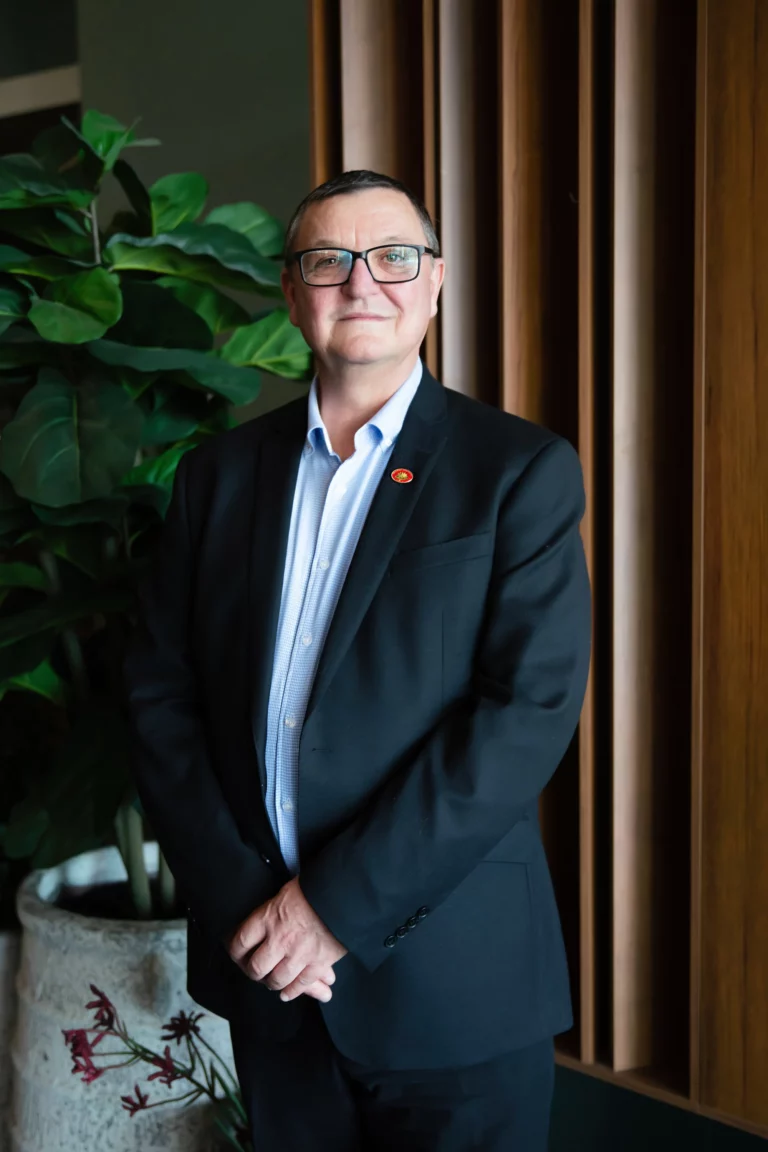
Eric Allgood is the Managing Director of SBAAS and brings over two decades of experience in corporate guidance, with a focus on governance and risk, crisis management, industrial relations, and sustainability.
He founded SBAAS in 2019 to extend his corporate strategies to small businesses, quickly becoming a vital support. His background in IR, governance and risk management, combined with his crisis management skills, has enabled businesses to navigate challenges effectively.
Eric’s commitment to sustainability shapes his approach to fostering inclusive and ethical practices within organisations. His strategic acumen and dedication to sustainable growth have positioned SBAAS as a leader in supporting small businesses through integrity and resilience.
Qualifications:
- Master of Business Law
- MBA (USA)
- Graduate Certificate of Business Administration
- Graduate Certificate of Training and Development
- Diploma of Psychology (University of Warwickshire)
- Bachelor of Applied Management
Memberships:
- Small Business Association of Australia –
International Think Tank Member and Sponsor - Australian Institute of Company Directors – MAICD
- Institute of Community Directors Australia – ICDA
- Australian Human Resource Institute – CAHRI
Our Consulting Services

Management Consulting
Compliance & Risk

Professional Writing Services
Consistency in Communication

Small Business Consulting
Sustainable Businesses

Start-ups
Set-up for Success
Further Reading

The Monoculture Myth: Loud Words, No Policy, and a Bill Your Business Pays
Over 60 per cent of Australian small businesses fail within three years. The common thread? They never sought external advice. Understanding what a business consultant actually does could be the difference between thriving and closing the doors.

Why Marketing Consulting Moves the Needle for Australian SMEs: Strategy Over Tactics
Small businesses in Australia often fall prey to short-term marketing tactics that drain budgets and deliver little return. This article explores how working with a marketing consultant shifts the focus from fleeting campaigns to strategic, sustainable growth. Learn what a marketing consultant does for SMEs and how to avoid common pitfalls that hold businesses back.
There Are Only Four Ways to Grow a Small Business. Most Owners Pull Just One and Wonder Why It Is So Hard
Growing a business feels like a thousand possible tactics. It is not. There are only four levers that actually grow a small business, and most owners pull only the hardest and most expensive one. Here are all four, how they multiply together, and how to pull them without burning out.

Allied health policies and procedures your practice needs for compliance
Allied health policies and procedures your practice needs for compliance An NDIS audit gets booked for six weeks out, and the practice manager opens the

When should you engage a professional policy and procedure writer?
Australian businesses are feeling the squeeze. Costs rise, talent is tight, and customers expect speed. This practical blueprint shows how process improvement consulting maps your work, removes bottlenecks, and lifts throughput, all without adding headcount.

WHS Policies: What Australian Businesses Are Legally Required to Have (And What It Costs If You Don’t)
Every Australian business with workers must have specific WHS policies in place. This is a straightforward legal duty, but a widely misunderstood one. This article sets out exactly what WHS policies are legally required, how the rules apply across allied health, trades, professional services, not-for-profits and early education, and what happens when the paperwork does not exist.