Mansplaining Why Women Returning to Work Are the Best Hire You Are Not Making

Images

A career gap is not a red flag. It is a CV that most employers cannot read. Here is the business case for hiring women returning to work, the parenting skills that transfer straight to your team, and what the Australian data has been saying for years.

The point, up front

Hire the woman returning to work. That is the entire point of this article.

If you stop reading here, you already have the takeaway that matters. Women returning to work after a career break are skilled, motivated and widely overlooked. They are also exactly the people most Australian businesses need right now.

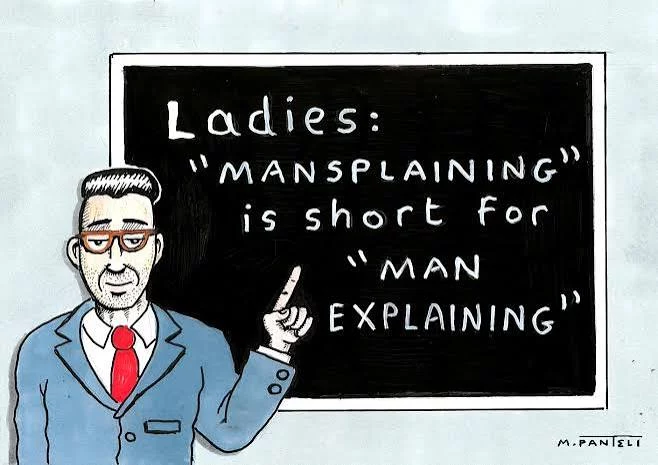
Allow me to mansplain it, since apparently it still needs explaining.

A candidate steps back into the market after raising children. Her CV shows a gap. Many employers see risk. They should see a track record. For several years, she has run a demanding operation with no budget relief, no sick days and no tolerance for missed deadlines.

That experience does not vanish because it happened at home. It transfers. Calm under pressure transfers. Negotiation transfers. Budgeting transfers. Logistics transfer. The skills are real, and your competitors are already hiring for them.

The business case is just as clear. Australia faces persistent skills shortages. Women returning to work are a large, capable and ready talent pool. Hiring them lifts your team, your culture, and, in national numbers, the whole economy.

That is the point. The rest of this article is the evidence, the detail and a few stories you will recognise.

Digging deeper

You stayed. Good. Here is the evidence behind the point, plus a few scenes you will recognise.

The data on women returning to work has been clear for years

The case for hiring women returning to work does not rest on goodwill. It rests on numbers.

Start with the talent shortage. Jobs and Skills Australia found that 29 per cent of assessed occupations were in shortage in 2025. Health care, education, construction, engineering, and the trades bear the brunt of it. Around 139 occupations have stayed in shortage every year since 2021. These are not entry-level gaps. They are skilled roles that take years to fill.

Now look at who is standing right there. Women’s workforce participation reached a record high of 63.5 per cent in July 2025. Many capable people sit just outside the workforce, ready to return. A large share are parents, and most of those parents are mothers.

Here is the part employers miss. Jobs and Skills Australia found that occupations with better gender balance and broader inclusion are less likely to be in shortage. Diversity is not only fair. It fills vacancies.

Then there is the penalty that creates the opportunity. Treasury research found that in the five years after a first child, women’s earnings fall by about 55 per cent on average. That is a penalty close to $250,000 over time. Fathers’ earnings, by contrast, keep climbing.

That gap is not a measure of lost skill. It is a measure of lost opportunity. The skill is intact. The market has simply mispriced it. Employers who hire women returning to work buy the candidate’s capability at a discount the candidate never deserved.

The pay gap tells the same story from another angle. The national gender pay gap sits at a record low of 11.5 per cent. The fuller WGEA measure, which counts bonuses, overtime and part-time work, runs to 21.1 per cent. That is about $28,356 a year for the average woman. Much of that gap traces back to time out of work for care.

Quick version, for the skimmers:

29% of occupations were in shortage in 2025, with 139 in shortage every year since 2021.

63.5% of women were in the workforce by July 2025, a record, with many more ready to return.

55% is the average fall in a woman’s earnings across the five years after a first child.

$60 billion a year is the GDP gain modelled from halving the participation gap between women and men.

The skills you forgot to put in the job ad

Now the fun part. A parent at home is not out of the workforce. She is running a small enterprise with difficult stakeholders and no leave. The skills she builds are the skills you are hiring for. Let me, in the proud tradition of explaining the obvious, spell them out.

  • Calm in sudden adversity. Picture the nappy. Not an ordinary nappy. The kind that arrives without warning, likely breaches several states’ waste regulations, and demands immediate, composed action in a public place. A parent handles this without flinching. Your business calls that grace under pressure. It is the same skill that steadies a clinic during an emergency, a worksite after an incident, or a client call that goes sideways.
  • Negotiation that would impress a union delegate. Try reasoning a toddler into a car seat. Your counterpart is irrational, well-rested and entirely unmoved by logic. There is no fallback position. There is only patience, creativity and an iron refusal to escalate. A parent who lands that deal daily can manage a difficult supplier, a stalled tender or a tense team meeting.
  • Going the extra mile, every single day. For most teams, going the extra mile is an occasional effort worth celebrating. For a parent, it is just doing things. The lunches, the forms, the appointments, and the lost shoe were located in under ninety seconds. Reliability at that level is not a nice-to-have. It is the backbone of a business that delivers.
  • Budget and procurement discipline. A household runs on a fixed budget amid rising costs, with no margin for waste. A parent forecasts, prioritises, sources and substitutes without a finance team. Hand that person a project budget and watch disciplined procurement in action.
  • Logistics that would humble a freight company. Three children. Eight activities. Twelve locations, five kilometres apart, all starting within ten minutes of each other. A parent solves this routing problem every week, in the rain, while taking a phone call. Your operations manager would envy that planning instinct.

None of this appears on the CV. All of it sits in the candidate. The job of a smart employer is to read the second document, not just the first.

How does this looks across your industry

The skills transfer everywhere, yet the value lands differently by sector. The case for women returning to work holds whether you run a two-person practice or a fifty-person firm.

In professional services, the work is deadlines, judgment, and client trust. A returning parent brings calm triage, sharp prioritisation and the discipline to finish. Accounting practices, law firms and consultancies live or die on exactly that.

In trades and services, the work is scheduling, quoting and getting to the site. The parent who routes three children across town can route a crew across a city. Tight quoting and reliable logistics win repeat work.

In allied health, the work is patient care, records and steady nerves. Calm under pressure is not a bonus here. It is the job. This sector also faces some of the deepest shortages, which makes returning talent even more valuable.

In the not-for-profit sector, budgets are tight, and outcomes are everything. A leader who delivers more with less, and stays warm while doing it, is precisely the person grant funders want to see.

Whatever your industry, the pattern holds. Women returning to work bring tested skills into roles that are hard to fill.

Mansplaining

The economy is quietly asking for this.

Zoom out, and the national picture sharpens the case. KPMG modelling found that halving the gap in workforce participation between men and women would lift Australia’s GDP by about $60 billion a year. Living standards would rise by around $140 billion over twenty years.

This is not a fringe idea. In 2014, G20 leaders met in Brisbane and set a goal to cut the gender participation gap by a quarter by 2025. The logic was simple. Bring more skilled women into work, and the whole economy grows.

Global pressure points in the same direction. Care economy investment, flexible work and stronger participation now sit at the centre of economic policy across advanced economies. Australia is no exception.

So when you hire women returning to work, you are not doing anyone a favour. You are responding to the clearest market signal available.

Not every mother gets the same deal.

There is a catch worth naming. The gains described so far have not reached every mother equally. Writing for the Economic Society of Australia’s Women in Economics Network 2026 Credible Economist competition, Savannah Love makes the point sharply. The flexible work and paid leave that helped many women return have mostly reached higher earners. Low-income mothers have been left behind.

The pattern is consistent. Tertiary-educated workers are about 1.6 times more likely to have control over their hours. Even when the job allows flexibility, lower-paid workers get less of it. Schedule control is treated as a reward, not a tool.

Employer-funded parental leave often skips the people who need it most. It is common in corporate and permanent roles. It is rarer for the casual and frontline staff who keep retail, hospitality and care running. Government leave is universal, but the extra employer support sends a signal, and the most stretched mothers do not receive it.

Casual work makes the juggle harder still. Only about half of casual workers in Australia have a say over their start and finish times. Picture a parent who runs a household to the minute, yet is not trusted with a say over her own roster. Now ask her to guarantee a daycare pickup.

The divide can even widen as the overall penalty falls. A 2026 study comparing France and West Germany found that as the motherhood penalty eased, the gap between high and low-income mothers grew. Easing the average is not the same as helping everyone.

For employers, the lesson is refreshingly practical. The barriers fall hardest on the women returning to work who can least afford the hit. Many of them fill frontline and essential roles in trades, allied health, retail and care. Extend genuine flexibility and pro-rata leave to casual and part-time staff, and you widen your hiring pool, not just your conscience.

But what about the gap on the CV

Let me address the one objection that still keeps women from returning to work in good roles. The career break.

A gap is not a void. It is a period of intense, unpaid, high-skill work. Treat it as you would any other demanding role. Ask what she ran, what she managed and what she solved. The answers will surprise employers who expected an apology.

There is a fairness point worth naming, too. Research shows mothers face more hiring scrutiny, lower starting offers and tougher assumptions about commitment. Those assumptions are not supported by evidence. They are habits. Good employers break them.

The bias is measurable. In one comparison of two candidates with identical eighteen-month career breaks, the one whose break came from redundancy was twice as likely to be selected as the one who took the time to raise children. Same gap. Same skills. A different story is attached to it. There is no rational case for treating those two records differently. There is only one habit.

The fix is not complicated:

  • Read the gap as experience, not as risk.
  • Offer genuine flexibility, including part-time and job-share roles, even at senior levels.
  • Write job ads that invite returners rather than quietly excluding them.
  • Build a short, structured return-to-work plan so good people land well.

The part that makes good hiring stick

Hiring well is the start. Keeping good people requires the unglamorous scaffolding behind it. Women returning to work stay where the basics are handled well. Flexible work arrangements need clear policies. Parental leave and return-to-work processes need to meet Fair Work obligations. Recruitment needs to be fair, documented and defensible.

This is the part many small businesses avoid until something goes wrong. It is also the part that turns a good intention into a working system. Getting it right protects the business and the people it hires.

That is where expert support earns its place.

Where to from here

SBAAS helps Australian small businesses build the structure that makes good hiring stick. That includes flexible work policies, compliant return-to-work processes and recruitment frameworks that hold up. If you are ready to hire women returning to work and keep them, talk to our team. Learn more about how we work at https://sbaas.com.au/about-us/, or call (07) 3916 9896 to discuss what your business needs.

Sources

Australian Bureau of Statistics. (2025). Casual work continues to decline. https://www.abs.gov.au/media-centre/media-releases/casual-work-continues-decline

Australian National University, Global Institute for Women’s Leadership. (2024). Preventing Australia’s mothers from being penalised in the workforce. https://policybrief.anu.edu.au/preventing-australias-mothers-from-being-penalised-in-the-workforce/

Bahar, E., Bradshaw, N., Deutscher, N., & Montaigne, M. (2023). Children and the gender earnings gap: Evidence for Australia (Treasury Working Paper 2023-02). The Treasury. https://treasury.gov.au/sites/default/files/2023-03/p2023-372004.pdf

Chung, H. (2017). National-level family policies and workers’ access to schedule control in a European comparative perspective. European Journal of Social Security, 21(1), 25-49. https://doi.org/10.1080/13876988.2017.1353745

Department of the Prime Minister and Cabinet. (2025). Workplace gender equality. https://www.pmc.gov.au/office-women/womens-economic-equality/workplace-gender-equality

Filser, A., Achard, P., Frodermann, C., Müller, D., & Wagner, S. (2026). Stratification of post-birth labour supply in a high- and low-maternal employment regime. Research in Social Stratification and Mobility, 102, 101133. https://www.sciencedirect.com/science/article/pii/S0276562426000144

Jobs and Skills Australia. (2025). Current skills shortages. https://www.jobsandskills.gov.au/publications/towards-national-jobs-and-skills-roadmap-summary/current-skills-shortages

Jobs and Skills Australia. (2025). Occupation shortage list. https://www.jobsandskills.gov.au/data/occupation-shortage/occupation-shortage-list

KPMG. (2018). She’s price(d)less: The economics of the gender pay gap. Workplace Gender Equality Agency. https://www.wgea.gov.au/sites/default/files/documents/gender-pay-gap-economics-full-report.pdf

Workplace Gender Equality Agency. (2018). Workplace gender equality: The business case. https://www.wgea.gov.au/publications/gender-equality-business-case

Workplace Gender Equality Agency. (2025). Australia’s gender equality scorecard 2024-25. https://www.wgea.gov.au/publications/australias-gender-equality-scorecard

Workplace Gender Equality Agency. (2026). Gender pay gap data. https://www.wgea.gov.au/pay-and-gender/gender-pay-gap-data

Yale Law Journal. (2024). Facilitating future workforce participation for stay-at-home parents: Mitigating the career costs of parenthood. https://yalelawjournal.org/forum/facilitating-future-workforce-participation-for-stay-at-home-parents-mitigating-the-career-costs-of-parenthood

Eric Allgood is the Managing Director of SBAAS and brings over two decades of experience in corporate guidance, with a focus on governance and risk, crisis management, industrial relations, and sustainability.

He founded SBAAS in 2019 to extend his corporate strategies to small businesses, quickly becoming a vital support. His background in IR, governance and risk management, combined with his crisis management skills, has enabled businesses to navigate challenges effectively.

Eric’s commitment to sustainability shapes his approach to fostering inclusive and ethical practices within organisations. His strategic acumen and dedication to sustainable growth have positioned SBAAS as a leader in supporting small businesses through integrity and resilience.

Qualifications:

  • Master of Business Law
  • MBA (USA)
  • Graduate Certificate of Business Administration
  • Graduate Certificate of Training and Development
  • Diploma of Psychology (University of Warwickshire)
  • Bachelor of Applied Management

Memberships:

  • Small Business Association of Australia –
    International Think Tank Member and Sponsor
  • Australian Institute of Company Directors – MAICD
  • Institute of Community Directors Australia – ICDA
  • Australian Human Resource Institute – CAHRI

Our Consulting Services

Management Consulting

For larger companies, SBAAS transforms complexity into clarity with solutions that accelerate performance, growth and market resilience.

Compliance & Risk

From enterprise agreements to governance frameworks, SBAAS ensures compliance, reduces exposure and supports sustainable, risk-aware decision-making.
Learn more
sbaas financial management

Professional Writing Services

Content that elevates your message, builds credibility & drives impact across tenders, reports, policies and executive communications.

Consistency in Communication

Clear, plain-English documents that meet compliance standards, reduce risk, and protect reputation through accurate, accessible and professional communication.
Learn more

Small Business Consulting

For small businesses, tailored strategies in marketing, operations & growth that boost profitability and strengthen customer connections.

Sustainable Businesses

Expert guidance in compliance, HR, policies and financial systems that reduce risks and create a secure foundation for sustainable expansion.
Learn more

Start-ups

For start-ups, SBAAS provides everything needed to launch, from setting up your books to building websites and driving growth strategies.

Set-up for Success

From compliance requirements to business structure, SBAAS ensures new ventures start strong, minimise risks and build systems for lasting success.
Learn more

Further reading

What the June Fair Work Round-Up Means for You

June’s Fair Work round-up saw four trusted organisations back-pay nearly $20 million. The common cause was payroll and award complexity, not greed. Learn what these cases reveal about Fair Work compliance, and the practical steps that protect your business and your people.

Read More »
Thinking about business coaching? Learn how SMEs use it to unlock growth, build strategy, and boost long-term ROI.

That Board Seat Could Cost You Your House

A board seat is never just an honour. In Australia, directors can face personal liability for unpaid tax, insolvent trading, unsafe workplaces, poor records, and decisions they barely questioned. Whether paid, unpaid, executive, volunteer, de facto or behind the scenes, real influence can bring real exposure.

Read More »
The lesson was never about fuel

Diesel Hit $2.76 a Litre. Then It Fell

In April 2026, diesel passed $2.76 a litre. By June, prices had fallen back below pre-conflict levels. The businesses that came through best were not the ones that guessed right. They were the ones who had built business resilience before the shock arrived.

Read More »

SBAAS Events

What our clients are saying about us

Skip to content