
$34 Million and Counting: The July Fair Work Round-up

July delivered a blunt lesson for every Australian employer. Some of the country’s largest and best-resourced organisations repaid staff more than $34 million, while smaller operators copped court penalties for ignoring the regulator. Here is what the July Fair Work round-up means for your business.

The July Fair Work round-up carries one clear message. Large, well-resourced employers with full payroll and HR teams still got their Fair Work compliance wrong. The businesses punished hardest were the ones that ignored the regulator.

In July 2026, the University of New South Wales agreed to repay more than $32 million to over 33,000 staff. Disability services provider Yooralla repaid $2.05 million to 1,389 workers. Childcare operator G8 Education is now facing court over more than $2 million in alleged underpayments affecting 1,400 workers. None of these are corner shops. They are national organisations with resources most small businesses can only imagine.

The pattern underneath the numbers matters more than the numbers themselves. Employers who found a problem, self-reported, and fixed it were offered enforceable undertakings. Employers who ignored a Compliance Notice were taken to court and penalised. That single distinction shaped almost every July outcome.

For small business owners, the lesson is direct. Fair Work compliance is not a question of budget or good intentions. It is a question of systems, checks, and response. If organisations with dedicated HR departments can get it wrong, every employer needs to treat Fair Work compliance as an active, ongoing task, not a set-and-forget assumption.

If a university with a team of payroll specialists can underpay staff by $32 million, and a national disability provider can miss $2.05 million across six years, the honest question for any small business owner is simple. How confident are you in your own numbers? Most owners carry payroll, rosters, and award interpretation on top of everything else. That is exactly where Fair Work compliance quietly slips. Our free HR Health Check gives you an honest read on where you stand, before the regulator does.

That is the full point. The rest of this July Fair Work round-up adds the detail, the context, and the practical steps, for readers who want to go further.

Digging Deeper

The big names that got it wrong

July’s enforceable undertakings read like a roll call of trusted institutions. Each is a Fair Work compliance failure at national scale.

The University of New South Wales signed an enforceable undertaking to complete more than $32 million in payments to over 33,000 staff. Many were casual academics. They were underpaid for lectures, tutorials, marking, and exam supervision between 2014 and 2023. The regulator found record-keeping failures so extensive they slowed the investigation itself. UNSW is also facing separate legal action over those records.

Yooralla, a Victorian disability services not-for-profit, repaid $2.05 million to 1,389 current and former staff. The underpayments ran from March 2018 to March 2024. Most affected workers were casual disability support workers. The problem surfaced only when one casual employee asked whether their shift loading was correct. That single question triggered a review, a self-report, and a seven-figure back-payment.

G8 Education, one of Australia’s largest for-profit childcare operators, now faces the Federal Court. The Fair Work Ombudsman alleges more than $2 million in underpayments and compensation across 1,400 workers. Part of the claim involves Individual Flexibility Arrangements that allegedly left staff worse off overall. G8 self-reported and says it has cooperated throughout.

Three organisations. Three different sectors. One shared reality. Good Fair Work compliance is not guaranteed by size, budget, or reputation.

The court penalties: one thread runs through them all

The court outcomes in July tell a sharper story. Here, Fair Work compliance failures met a much firmer response.

A northern New South Wales wheat farm operator, Printpot Pty Ltd, was ordered to pay $110,447. That included a $29,970 penalty and more than $80,000 owed to a single farmhand. The trigger was a failure to comply with a Compliance Notice.

In Perth, the former operator of The Globe Pan and Grill faced $52,242 in penalties and back-pay. The company and its director were penalised after ignoring a Compliance Notice covering 18 hospitality workers.

On the Gold Coast, a former landscaping operator was penalised $13,598 after responding to the regulator with what the court described as utter contempt. The affected workers were a 17-year-old apprentice and a casual aged 19 to 20.

A Tasmanian IT sole trader is now in court over a young casual worker owed $4,089. Again, the alleged breach centres on a Compliance Notice.

The thread is unmistakable. The organisations that repaid millions were largely offered enforceable undertakings because they self-reported and cooperated. The operators dragged to court were penalised because they ignored a formal notice. Fair Work compliance rewards those who act and punishes those who stall.

A Compliance Notice is not a suggestion. It is a formal legal instrument. Ignoring one is the fastest route from a manageable back-payment to a court penalty.

The 1 July wage increase raised the bar again

Every one of these cases sits against a moving baseline. Fair Work compliance is measured against rates that change every July.

From 1 July 2026, modern award minimum wages rose by 4.75 per cent. The National Minimum Wage climbed to $1,004.90 per week, or $26.44 an hour. For the first time, it sits above $1,000 a week. Casual employees on the National Minimum Wage must now receive at least $33.05 an hour, which includes the 25 per cent casual loading.

The increase applies from the first full pay period on or after 1 July. It reaches a large share of the workforce, and award-reliant industries feel it most. Health care and social assistance is one of the most award-reliant sectors in the country.

For employers, the message is practical. Wage rates changed this month. If your payroll still reflects last year’s figures, your Fair Work compliance is already slipping. A single missed increase, repeated across a year and a team, is exactly how six-figure back-payments begin.

The scale in one line: more than $34 million in confirmed July back-payments from just two organisations, plus a further $2 million claim before the Federal Court. Fair Work compliance is now one of the largest quiet risks on a small business balance sheet.

The scale in one line: more than $34 million in confirmed July back-payments from just two organisations, plus a further $2 million claim before the Federal Court. Fair Work compliance is now one of the largest quiet risks on a small business balance sheet.

What a July round-up means for allied health, and every other sector

Allied health and NDIS providers should read this round-up closely.

The Yooralla case is a direct warning. It involved a disability services provider, casual support workers, and award interpretation across shift loadings. That is the daily reality for thousands of allied health and NDIS operators. Rebates and price caps often fix revenue, so a wage error cannot simply be passed on to clients. It erodes margin directly. That makes Fair Work compliance a direct financial control, not an administrative afterthought.

The same logic reaches every SBAAS market. Trades businesses employ apprentices and casuals on complex award clauses, as the landscaping penalty shows. Professional services firms rely on payroll systems that can silently misfire, as the IT and university cases show. Not-for-profits carry the same obligations as any employer, on far tighter budgets, as Yooralla demonstrates.

No sector is exempt. Fair Work compliance is a shared obligation across trades, allied health, professional services, and not-for-profits alike.

Five practical steps to protect your Fair Work compliance

You do not need a university-sized budget to get this right. You need a system.

  1. Confirm the current award and classification for every employee. Most errors start with the wrong award being applied from day one.
  2. Apply the 1 July wage increase from the correct pay period, and check every affected rate.
  3. Check that casual loadings, penalty rates, and allowances are correctly configured in your payroll.
  4. Keep accurate time and pay records. Poor records shift the burden of proof onto you if a claim arises.
  5. Respond to any Compliance Notice immediately, and seek advice before you reply.


Strong Fair Work compliance is built on these habits, not on good intentions. A short, structured review each year prevents most of the errors that reach the courts.

Frequently Asked Questions

What is a Compliance Notice from the Fair Work Ombudsman?

A Compliance Notice is a formal legal direction to calculate and back-pay entitlements. It is not optional. Ignoring one can turn a straightforward back-payment into a court penalty, as several July cases show.

Does self-reporting an underpayment reduce the risk?

Often, yes. Employers who self-report and cooperate are frequently offered an enforceable undertaking rather than facing court. Self-reporting sits at the centre of responsible Fair Work compliance.

How does the 1 July 2026 wage increase affect my small business?

Modern award wages rose 4.75 per cent from the first full pay period on or after 1 July 2026. Every affected employee’s pay must reflect the new rate. The National Minimum Wage is now $1,004.90 per week, or $26.44 an hour. Applying that increase promptly is a basic part of Fair Work compliance.

We are a small allied health practice. Are we really at risk?

Yes. Award interpretation, casual loadings, and fixed rebate revenue make Fair Work compliance genuinely challenging for allied health and NDIS providers. Size offers no protection, and the Yooralla case shows how quickly errors accumulate.

What is the fastest way to check our exposure?

A structured HR health check reviews your awards, classifications, records, and pay settings in one pass. It is the simplest way to confirm your Fair Work compliance before an issue arises.

Where to from here

July’s round-up is a reminder that Fair Work compliance rewards preparation and punishes delay. If any of these cases raised a question you cannot answer with confidence, talk to the SBAAS team. We help small businesses across allied health, trades, professional services, and not-for-profits get their obligations right, quietly and properly. Learn more about how we work at https://sbaas.com.au/about-us/.

This article is general information only and does not constitute legal or workplace relations advice. Fair Work compliance depends on your specific awards, agreements, and circumstances. Given the legal and financial consequences involved, we recommend seeking professional or legal review before acting on any compliance matter.

Sources

Fair Work Ombudsman. (2026, July 1). Minimum wage increase starts today. https://www.fairwork.gov.au/newsroom/media-releases/2026-media-releases/july-2026/20260701-minimum-wage-increase-media-release

Fair Work Ombudsman. (2026, July 3). The University of NSW signs Enforceable Undertaking. https://www.fairwork.gov.au/newsroom/media-releases/2026-media-releases/july-2026/20260703-unsw-eu-media-release

Fair Work Ombudsman. (2026, July 6). NSW wheat farm operator penalised. https://www.fairwork.gov.au/newsroom/media-releases/2026-media-releases/july-2026/20260706-printpot-penalty-media-release

Fair Work Ombudsman. (2026, July 6). Tasmanian IT business operator in court. https://www.fairwork.gov.au/newsroom/media-releases/2026-media-releases/july-2026/20260706-hays-litigation-media-release

Fair Work Ombudsman. (2026, July 8). G8 Education faces court over $2 million in alleged underpayments and compensation for childcare workers. https://www.fairwork.gov.au/newsroom/media-releases/2026-media-releases/july-2026/20260708-g8-litigation-media-release

0d9a8782 branding profiles

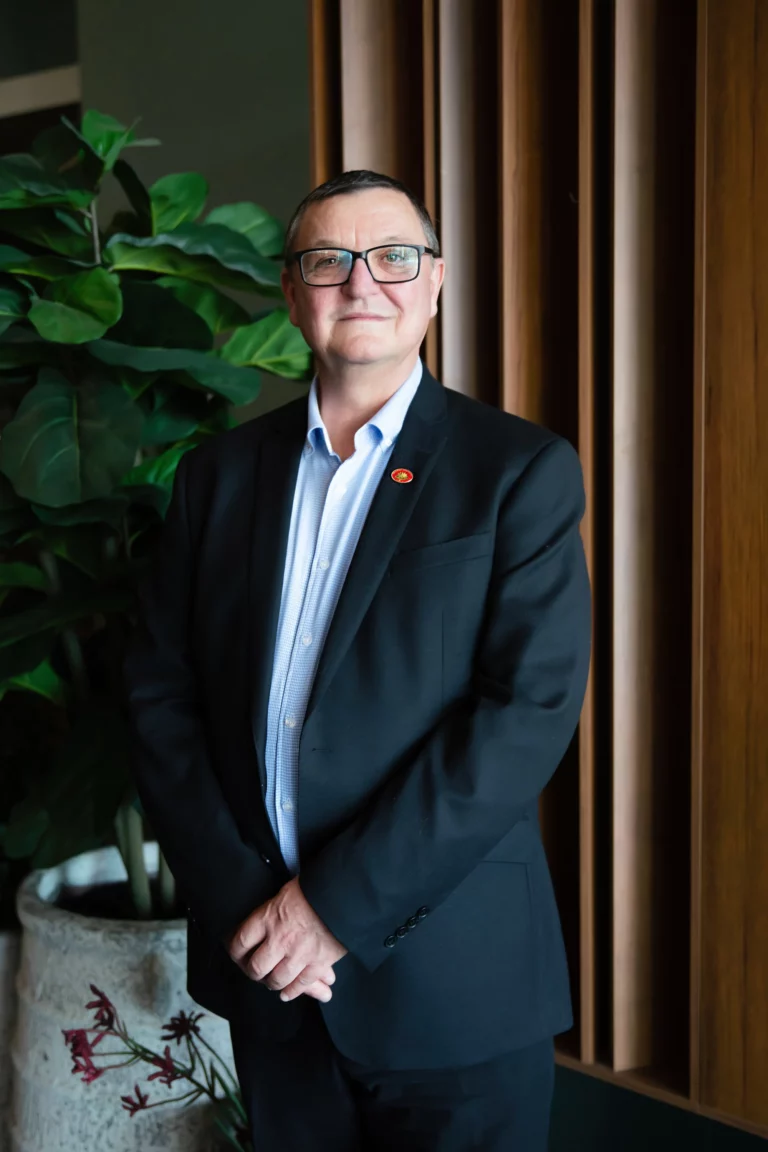
Eric Allgood is the Managing Director of SBAAS and brings over two decades of experience in corporate guidance, with a focus on governance and risk, crisis management, industrial relations, and sustainability.

He founded SBAAS in 2019 to extend his corporate strategies to small businesses, quickly becoming a vital support. His background in IR, governance and risk management, combined with his crisis management skills, has enabled businesses to navigate challenges effectively.

Eric’s commitment to sustainability shapes his approach to fostering inclusive and ethical practices within organisations. His strategic acumen and dedication to sustainable growth have positioned SBAAS as a leader in supporting small businesses through integrity and resilience.

Qualifications:

  • Master of Business Law
  • MBA (USA)
  • Graduate Certificate of Business Administration
  • Graduate Certificate of Training and Development
  • Diploma of Psychology (University of Warwickshire)
  • Bachelor of Applied Management

Memberships:

  • Small Business Association of Australia –
    International Think Tank Member and Sponsor
  • Australian Institute of Company Directors – MAICD
  • Institute of Community Directors Australia – ICDA
  • Australian Human Resource Institute – CAHRI

Our Consulting Services

Management Consulting

For larger companies, SBAAS transforms complexity into clarity with solutions that accelerate performance, growth and market resilience.

Compliance & Risk

From enterprise agreements to governance frameworks, SBAAS ensures compliance, reduces exposure and supports sustainable, risk-aware decision-making.
Learn more
sbaas financial management

Professional Writing Services

Content that elevates your message, builds credibility & drives impact across tenders, reports, policies and executive communications.

Consistency in Communication

Clear, plain-English documents that meet compliance standards, reduce risk, and protect reputation through accurate, accessible and professional communication.
Learn more

Small Business Consulting

For small businesses, tailored strategies in marketing, operations & growth that boost profitability and strengthen customer connections.

Sustainable Businesses

Expert guidance in compliance, HR, policies and financial systems that reduce risks and create a secure foundation for sustainable expansion.
Learn more

Start-ups

For start-ups, SBAAS provides everything needed to launch, from setting up your books to building websites and driving growth strategies.

Set-up for Success

From compliance requirements to business structure, SBAAS ensures new ventures start strong, minimise risks and build systems for lasting success.
Learn more

Further Reading

$34 Million and Counting: The July Fair Work Round-Up

July delivered a blunt lesson for every Australian employer. Some of the country’s largest and best-resourced organisations repaid staff more than $34 million, while smaller operators copped court penalties for ignoring the regulator. Here is what the July Fair Work round-up means for your business

Read More »

Exciting Businesses Fail. Boring Ones Get Paid.

Australian trade businesses rarely collapse because the owner had a bad idea. They collapse because nobody did the boring work. Construction now accounts for around 27 per cent of all company insolvencies in Australia, and the pattern behind those failures is identical whether a business turns over $180,000 or $40 million. Same four levers. Same failure points. Same three excuses. Here is what hundreds of engagements reveal about the boring business fundamentals that decide who survives.

Read More »
A close, well-lit shot of a small business owner reviewing figures on a laptop or printed report, calm and in control

You Can’t Control the Economy. You Can Stop It Controlling You.

The economy feels like a force outside your control, up one year and down the next. It is, but that does not mean it gets to run your business. This guide breaks down the macroeconomic indicators that actually matter for Australian small business owners, and shows how your own records turn the headlines into confident decisions.

Read More »

SBAAS Events

Skip to content