

Wellbeing Isn't a Perk.

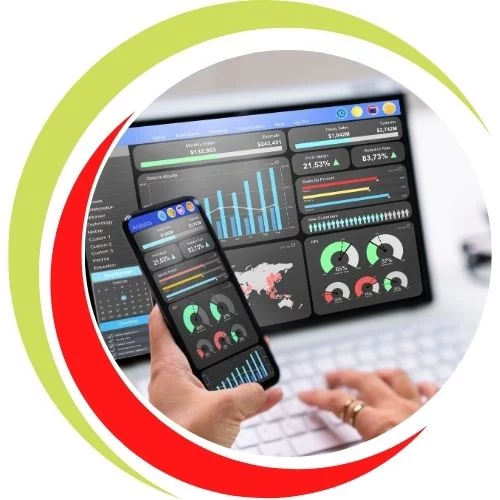
Business professional analysing key performance indicators on a digital dashboard, tracking progress and measuring success against strategic goals

It’s One of Your Biggest Business Numbers

Workforce wellbeing is not a soft extra. It is a business issue with a real cost and a real return. Here is what poor wellbeing is costing small businesses, and the moves that protect both your people and your performance.

Workforce wellbeing is not a perk or a nice-to-have. It is a business issue, with a price tag and a return.

The numbers are stark. Poor mental health costs the Australian economy up to 220 billion dollars a year, and workplace productivity losses run into the tens of billions. Every dollar invested in a mentally healthy workplace returns about 2.30 dollars.

McKinsey finds that around one in four employees is burnt out, and the rate is higher in smaller firms. Burnt-out workers are six times more likely to leave. In a small business, your team is the business, so one person struggling ripples through everything.

And workforce wellbeing is mostly about the work, not the perks. You cannot yoga your way out of it. Wellbeing comes from manageable workloads, control, fairness, and support, far more than from fruit bowls and free coffee.

For a small business, that is good news. The levers that matter most are the ones you already control.

If you take one thing from this article, take these four moves

  • Treat wellbeing as a business number, not a nicety. Notice it, and manage it.
  • Fix the work, not just the perks. Workload, control, and support matter most.
  • Watch the warning signs early. Turnover, absence, and quiet underperformance are signals.
  • Lead by example. Your people read what you actually value.

Everything below is optional depth. Read on for the evidence, the cross-industry picture, and the practical detail on workforce wellbeing in your business.

Digging Deeper

Below is the supporting case. It covers what poor wellbeing costs, the return on getting it right, what actually drives it, and how this plays out across different industries.

Wellbeing has a price tag

Start with the cost, because it is large and often invisible. The Productivity Commission estimated that poor mental health costs Australia up to 220 billion dollars a year, with workplace productivity and participation losses alone running between roughly 12 and 40 billion dollars.

Much of that cost is hidden in presenteeism, people at work but not functioning, which quietly exceeds the cost of absence. Around one in five Australian employees have taken time off because they felt mentally unwell, and those who rate their workplace as mentally unhealthy are far more likely to do so.

There is a safety cost, too. A psychological injury keeps a worker out of work for an average of about 27 weeks, compared with about 5.5 weeks for a physical injury. For a small team, losing one person for half a year is a serious blow.

Add the cost of people leaving. Replacing and retraining is expensive, and in a small business, the knowledge that walks out the door is hard to replace. Poor well-being shows up in all of these numbers.

For a small business, these are not abstract figures. They are the cost of a key person off for months, of work redone because someone is exhausted, and of a valued team member quietly deciding to leave.

And well-being has a return

The other side of the ledger is just as real. Research for the National Mental Health Commission found about 2.30 dollars returned for every dollar invested in a mentally healthy workplace, and the Productivity Commission put workplace returns between 1.30 and 4 dollars.

The gains come mostly from lifting performance, not just cutting absence. McKinsey’s research shows that people with good holistic health are more engaged, more innovative, and perform better at work.

Good workforce wellbeing is also a competitive advantage. In a tight labour market, people choose and stay with employers who look after them. A reputation as a decent place to work is worth real money in hiring and retention.

It compounds, too. A workplace known for looking after its people attracts better candidates, keeps them longer, and spends less on replacing them. Wellbeing quietly lowers your costs and lifts your output at the same time.

It’s the work, not the fruit bowl

Here is the most important and most misunderstood point. Well-being is not built by perks. McKinsey and the Australian evidence agree that you cannot yoga your way out of a workplace problem.

An imbalance between job demands and job resources drives burnout and poor mental health. Too much load, too little control, unclear roles, weak support, and poor behaviour wear people down, no matter how good the fruit bowl is.

The single biggest driver is how people are treated. McKinsey found toxic behaviour to be the strongest predictor of burnout and of people wanting to leave, by a wide margin. Perks help only once the work itself is sustainable and the culture is respectful.

Perks are not useless. They are simply the last ten per cent, not the first. A free lunch is welcome on top of a sustainable job, and almost meaningless underneath an impossible one.

Fruit bowl

What it looks like across industries

The pressures differ by sector, but the principle holds everywhere. In trades and construction, the load is both physical and mental; hours are long; and isolation on site is common, in an industry with well-known rates of distress. Well-being means realistic schedules and people looking out for each other.

In professional services, the risks are overwork, always-on availability, and relentless client and billable-hour pressure. Wellbeing means sustainable workloads, real boundaries, and genuine control over how the work gets done.

In allied health, staff carry an emotional load on top of heavy administration, caring for others all day. Wellbeing means managing caseloads, building in recovery, and watching for compassion fatigue.

In not-for-profits, mission-driven people quietly overcommit while the work is under-resourced and emotionally demanding. Wellbeing means realistic expectations, proper support, and genuinely valuing both staff and volunteers.

Across all of these settings, the pattern repeats. Wellbeing follows the design of the work and the way people are led, far more than any program bolted on the side.

The warning signs to watch

Well-being problems usually show up in your numbers before anyone says a word. Rising absence, higher turnover, more mistakes, more conflict, and presenteeism are all signals worth reading early.

When you see a spike, treat it as information about the work, not a failing in the person. The most useful question is not what is wrong with them, but what about the job is grinding people down.

Where to start

You do not need a big program or a glossy policy. Start by asking your team honestly how the work is really going, and listen. Then fix the single biggest source of pressure you hear about.

Make support visible and easy to reach. Beyond Blue’s NewAccess for Small Business, for example, is free and confidential. And lead by example on hours and respect, because in a small team, your behaviour sets the tone for everyone.

Small, consistent moves beat a wellbeing policy that no one feels. Workforce wellbeing is built into how the work runs day-to-day, not in a document on the shelf.

Measure something simple, even if it is only how people answer an honest monthly question about workload. What you notice, you can manage. What you never look at, you cannot.

Where to from here

Workforce wellbeing is a business issue, with a clear cost and a clear return. The businesses that treat it that way protect their people and their performance at the same time.

Notice the warning signs. Fix the work, not just the perks. Make support visible, and lead by example. Do that, and well-being stops being a soft extra and becomes one of the most practical investments you make.

If you would like help turning workforce wellbeing into something practical, from workload and roles to policy and support, SBAAS can guide you through it. We help Australian small businesses across trades, professional services, allied health, and not-for-profits build healthier, more productive teams. To learn more about how we work, visit https://sbaas.com.au/about-us/ or call (07) 3916 9896 to talk it through.

This article provides general information about workplace wellbeing. If you or someone in your team is struggling, support is available. Beyond Blue offers free, confidential coaching for small business owners, and Lifeline can be reached any time on 13 11 14.

Sources

CEDA. (2024). Mental health and the workplace. https://www.ceda.com.au/research-and-policy/research/health-ageing/mental-health-and-the-workplace

McKinsey Health Institute. (2023). Reframing employee health: Moving beyond burnout to holistic health. https://www.mckinsey.com/mhi/our-insights/reframing-employee-health-moving-beyond-burnout-to-holistic-health

PwC and Beyond Blue. (2014). Creating a mentally healthy workplace: Return on investment analysis. https://www.pwc.com.au/publications/pdf/beyondblue-workplace-roi-may14.pdf

Productivity Commission. (2020). Inquiry into Mental Health: Final report. https://www.pc.gov.au/inquiries/completed/mental-health/report

Safe Work Australia. (2022). Model Code of Practice: Managing psychosocial hazards at work. https://www.safeworkaustralia.gov.au/doc/model-code-practice-managing-psychosocial-hazards-work

Eric Allgood is the Managing Director of SBAAS and brings over two decades of experience in corporate guidance, with a focus on governance and risk, crisis management, industrial relations, and sustainability.

He founded SBAAS in 2019 to extend his corporate strategies to small businesses, quickly becoming a vital support. His background in IR, governance and risk management, combined with his crisis management skills, has enabled businesses to navigate challenges effectively.

Eric’s commitment to sustainability shapes his approach to fostering inclusive and ethical practices within organisations. His strategic acumen and dedication to sustainable growth have positioned SBAAS as a leader in supporting small businesses through integrity and resilience.

Qualifications:

  • Master of Business Law
  • MBA (USA)
  • Graduate Certificate of Business Administration
  • Graduate Certificate of Training and Development
  • Diploma of Psychology (University of Warwickshire)
  • Bachelor of Applied Management

Memberships:

  • Small Business Association of Australia –
    International Think Tank Member and Sponsor
  • Australian Institute of Company Directors – MAICD
  • Institute of Community Directors Australia – ICDA
  • Australian Human Resource Institute – CAHRI

Our Consulting Services

Management Consulting

For larger companies, SBAAS transforms complexity into clarity with solutions that accelerate performance, growth and market resilience.

Compliance & Risk

From enterprise agreements to governance frameworks, SBAAS ensures compliance, reduces exposure and supports sustainable, risk-aware decision-making.
Learn more
sbaas financial management

Professional Writing Services

Content that elevates your message, builds credibility & drives impact across tenders, reports, policies and executive communications.

Consistency in Communication

Clear, plain-English documents that meet compliance standards, reduce risk, and protect reputation through accurate, accessible and professional communication.
Learn more

Small Business Consulting

For small businesses, tailored strategies in marketing, operations & growth that boost profitability and strengthen customer connections.

Sustainable Businesses

Expert guidance in compliance, HR, policies and financial systems that reduce risks and create a secure foundation for sustainable expansion.
Learn more

Start-ups

For start-ups, SBAAS provides everything needed to launch, from setting up your books to building websites and driving growth strategies.

Set-up for Success

From compliance requirements to business structure, SBAAS ensures new ventures start strong, minimise risks and build systems for lasting success.
Learn more

Further reading

Thinking about business coaching? Learn how SMEs use it to unlock growth, build strategy, and boost long-term ROI.

That Board Seat Could Cost You Your House

A board seat is never just an honour. In Australia, directors can face personal liability for unpaid tax, insolvent trading, unsafe workplaces, poor records, and decisions they barely questioned. Whether paid, unpaid, executive, volunteer, de facto or behind the scenes, real influence can bring real exposure.

Read More »
The lesson was never about fuel

Diesel Hit $2.76 a Litre. Then It Fell

In April 2026, diesel passed $2.76 a litre. By June, prices had fallen back below pre-conflict levels. The businesses that came through best were not the ones that guessed right. They were the ones who had built business resilience before the shock arrived.

Read More »
Uncover the financial drag of unclear strategy in SMEs and implement a practical reset aligned to growth and cash flow.

The Hidden Costs of Poor Strategy

When margins are tight and capacity is stretched, an unclear plan becomes expensive. This guide explains how poor decisions and scattered priorities erode cash, time and talent. It then sets out a practical reset that any owner can run in 90 days. Each step is designed for the Australian market and grounded in business strategy for SMEs.

Read More »

SBAAS Events

What our clients are saying about us

Skip to content