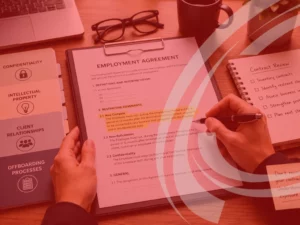


5 Compliance Risks SMEs Can’t Ignore
Financial compliance is a critical area in which Australian SMEs must exercise diligence. The regulatory landscape is evolving, with increased scrutiny on financial reporting, taxation, and anti-money laundering (AML) obligations.
Key Challenges
- Complex Taxation Laws: Navigating the intricacies of the Australian tax system, including GST, PAYG, and superannuation contributions, can be daunting.
- AML Regulations: Businesses must implement robust AML policies to detect and prevent financial crimes.
- Financial Reporting Standards: Adhering to Australian Accounting Standards and ensuring accurate financial statements is essential.
Solutions
- Regular Audits: Conduct internal audits to identify and rectify discrepancies.
- Professional Advice: Engage financial advisors or accountants familiar with SME operations.
- Training: Ensure staff are trained in financial compliance requirements.
Risk #2: HR and Industrial Relations Compliance
Human Resources (HR) and Industrial Relations (IR) compliance is vital for maintaining a fair and lawful workplace. Non-compliance can lead to legal disputes, financial penalties, and reputational damage.
Key Challenges
- Fair Work Act Compliance: Understanding and adhering to the Fair Work Act 2009, including National Employment Standards and Modern Awards.
- Workplace Policies: Developing clear policies on discrimination, harassment, and workplace conduct.
- Record-Keeping: Maintaining accurate employee records, including contracts, timesheets, and leave entitlements.
Solutions
- Policy Development: Create comprehensive HR policies aligned with legal requirements.
- Training Programs: Implement regular training for management and staff on HR compliance.
- Consultation: Seek advice from HR professionals or legal experts to ensure compliance.
Risk #3: Workplace Health and Safety (WHS)
Ensuring a safe working environment is a legal obligation and essential for employee well-being and productivity.
Key Challenges
- Hazard Identification: Recognising and mitigating workplace hazards.
- Safety Procedures: Implementing and enforcing safety protocols.
- Incident Reporting: Establishing clear processes for reporting and addressing incidents.
Solutions
- Risk Assessments: Conduct regular assessments to identify potential hazards.
- Safety Training: Provide ongoing training to employees on safety practices.
- Compliance Tools: Utilise tools and resources to manage WHS obligations effectively.
Risk #4: Data Security and Privacy
In an increasingly digital world, protecting sensitive data is paramount. Data breaches can result in significant financial losses and damage to reputation.
Key Challenges
- Cyber Threats: Due to perceived vulnerabilities, SMEs are often targets for cyberattacks.
- Privacy Regulations: Complying with the Privacy Act 1988 and Australian Privacy Principles.
- Data Management: Ensuring secure storage and handling of personal and sensitive information.
Solutions
- Security Measures: Implement firewalls, antivirus software, and encryption.
- Staff Training: Educate employees on data security best practices.
- Regular Updates: Keep systems and software updated to protect against vulnerabilities.
Risk #5: Environmental Compliance
Environmental regulations are becoming increasingly stringent, and SMEs must meet their obligations.
Key Challenges
- Waste Management: Proper disposal and management of waste materials.
- Resource Usage: Monitoring and reducing energy and water consumption.
- Regulatory Compliance: Adhering to local and national environmental laws and standards.
Solutions
- Sustainability Plans: Develop and implement environmental management plans.
- Compliance Audits: Regularly assess environmental practices and compliance.
- Employee Engagement: Encourage staff to participate in sustainability initiatives.
How to Manage Compliance Risks
Effectively managing compliance risks involves a proactive and structured approach.
Steps to Take
- Risk Assessment: Identify areas of potential non-compliance within your business operations.
- Policy Development: Establish clear policies and procedures to address compliance requirements.
- Training and Education: Ensure all employees understand their roles in maintaining compliance.
- Monitoring and Review: Regularly review and update compliance measures to adapt to changing regulations.
- Seek Expert Advice: Consult with professionals to stay informed about legal obligations and best practices.
How to Mitigate Compliance Risks
Mitigating compliance risks requires ongoing effort and commitment.
Strategies
- Integrate Compliance into Business Culture: Foster a culture where compliance is a shared responsibility.
- Utilise Technology: Implement compliance management systems to streamline processes.
- Stay Informed: Keep abreast of legislative changes and industry developments.
- Regular Audits: Conduct internal and external audits to identify and address compliance gaps.
Final Word
Navigating the complex landscape of compliance is a significant challenge for Australian SMEs. However, by understanding the key risks and implementing effective strategies, businesses can protect themselves from legal and financial repercussions. Proactive compliance management safeguards your business and enhances your reputation and operational efficiency.
For tailored advice and support in managing your compliance obligations, consider exploring SBAAS’s Governance and Risk Consulting Services. To learn more about our approach and how we can assist your business, visit our About Us page or Book a conversation.
Sources
- Australian Government. (2025). Privacy Act 1988.
- Fair Work Ombudsman. (2025). Fair Work Act 2009.
- Safe Work Australia. (2025). Work Health and Safety Laws.
- Australian Securities and Investments Commission. (2025). Environmental Compliance.
- Australian Cyber Security Centre. (2025). Cyber Security for Small Business.
- SBAAS. (2025). Fair Work Compliance: Avoid Costly Mistakes.
Eric Allgood is the Managing Director of SBAAS and brings over two decades of experience in corporate guidance, with a focus on governance and risk, crisis management, industrial relations, and sustainability.
He founded SBAAS in 2019 to extend his corporate strategies to small businesses, quickly becoming a vital support. His background in IR, governance and risk management, combined with his crisis management skills, has enabled businesses to navigate challenges effectively.
Eric’s commitment to sustainability shapes his approach to fostering inclusive and ethical practices within organisations. His strategic acumen and dedication to sustainable growth have positioned SBAAS as a leader in supporting small businesses through integrity and resilience.
Qualifications:
- Master of Business Law
- MBA (USA)
- Graduate Certificate of Business Administration
- Graduate Certificate of Training and Development
- Diploma of Psychology (University of Warwickshire)
- Bachelor of Applied Management
Memberships:
- Small Business Association of Australia –
International Think Tank Member and Sponsor - Australian Institute of Company Directors – MAICD
- Institute of Community Directors Australia – ICDA
- Australian Human Resource Institute – CAHRI
Our Consulting Services
Management Consulting

Compliance & Risk
Professional Writing Services
Consistency in Communication
Small Business Consulting
Sustainable Businesses
Start-ups
Set-up for Success
Further reading

The Hidden Costs of Poor Strategy
When margins are tight and capacity is stretched, an unclear plan becomes expensive. This guide explains how poor decisions and scattered priorities erode cash, time and talent. It then sets out a practical reset that any owner can run in 90 days. Each step is designed for the Australian market and grounded in business strategy for SMEs.

Stop Guessing, Start Growing: The Whole-Business Playbook for Evidence-Led Decisions
Australian businesses gain an edge when every decision is anchored in facts, not hunches. This guide shows what to measure across finance, operations, jobs, inventory, marketing, and customer success, and how to turn those signals into a simple, repeatable system that drives growth without clutter.

Leadership Under Pressure: Decision Discipline for Volatile Markets
Australian businesses are operating through noise. This practical playbook shows owners how to use decision frameworks, firm delegation, and steady rhythms to protect margins and morale when the market moves fast.

Seeing the Wrong Picture: What Most Business Owners Miss When Reviewing Their Performance
Business owners aren’t short on data, but many are missing what matters most. Discover what most business owners miss when reviewing their performance and how to shift from surface-level tracking to strategic insight.

Digital Transformation Without the Hype: Roadmaps That Pay Back
Most small and mid-sized enterprises do not need a big-bang overhaul. You need a clear line from process pain to measurable gain. This guide shows how to prioritise processes, compare tools, and build an implementation plan that ties every step to ROI.

SMALL BUSINESS IN THE SPOTLIGHT Your Child Deserves More Than a Box to Tick – Perth’s Speech Pathologist Agrees
Every parent knows something is up before anyone else does. When your child is not communicating as you expected, early action can change everything. Holistic Speech Pathology in North Perth is the paediatric speech pathologist North Perth families are choosing for one compelling reason: they actually see the whole child.