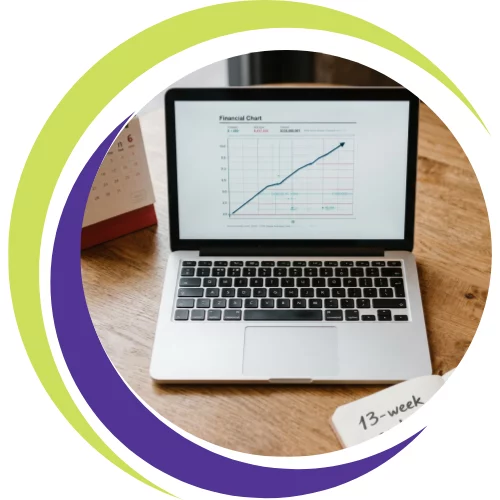
Next, build a demand view. Identify the factors that drive sales in your business. Look at seasonality, promotions, event calendars and lead times. Pair your sales history with external indicators like consumer spending trends by category. Then choose a simple method to project the next 12 weeks and the next 12 months, with ranges rather than false precision. When your team can see demand rising or easing, they can order, hire, and market quickly. That is practical data-driven decision-making for SMEs.
Pricing is where analytics delivers direct profit. Treat it as a process, not a one-off change. Work on two views:
- Value view. Clarify what the customer really buys. Speed, reliability, convenience, quality or support. Map how your offer compares and where you can charge for value delivered.
- Cost view. Identify the full service cost for each product, service or job type. Include labour, materials, freight, rework, returns and payment fees. Do not forget software subscriptions or finance costs that scale with sales.
Use these views to create price tests with clear guardrails. Change one variable at a time. Track conversion, average order value, gross margin and customer feedback. A small, well-run experiment can reveal more than a six-month debate. That is how mature data-driven decision-making for SMEs gets you paid for the value you create.
Remember the rules that govern price displays and fair trading in Australia. They exist to protect customers and fair competition. Build them into your standard operating procedures. Price confidently, communicate clearly and make sure your invoices and displays comply. Trust grows when customers understand what they pay for and why.
To sharpen your forecasting and pricing with support, SBAAS’s Finance service builds models owners understand and use: https://sbaas.com.au/consulting-services/finance/. It is designed to embed data-driven decision-making for SMEs into weekly routines, not sit in a file.
Interpreting trends and acting quickly
Insight is only valuable when it changes behaviour. Turn your dashboard and forecasts into a simple cadence of decisions. Keep it light and repeatable so it survives busy weeks.
Daily rhythm
- Hold a five-minute stand-up on sales, fulfilment and today’s risks
- Confirm any late payers that could affect deliveries or jobs
- Check exceptions and remove roadblocks before trading starts
Weekly rhythm
- Run a one-hour work-in-progress review at the same time every week
- Use the dashboard to check the pipeline, margin drivers and cash
- Decide next week’s focus, price tests and capacity moves
- Record actions, owners and due dates in a visible log
Monthly rhythm
- Review strategy, channel performance and pricing experiments
- Reset targets if external conditions have shifted
- Plan inventory or capacity for the next quarter
- Check compliance deadlines for the month ahead
Guard against bias with clear rules. Decide in advance how you will judge a test. For example, a price move only becomes permanent if the four-week rolling gross margin improves while conversion holds within a set range. If results are mixed, run a second test rather than reverting immediately. This discipline keeps data-driven decision-making for SMEs from becoming a series of lurches.
Use external benchmarks to calibrate your sense of trend. Industry cost ratios and margins can reveal outliers you have normalised. Retail turnover by category can show a tailwind or headwind affecting your store. Monetary policy updates can hint at movements in demand or finance costs. You do not need to watch every release. You need a simple way to bring the proper context into your monthly review. That habit strengthens data-driven decision-making for SMEs without adding noise.
Sector snapshots that apply the method
Hospitality
- Build a menu margin view by item and shift
- Track waste cost and labour ratio daily
- Use local events and seasonal patterns to plan rosters and purchasing
- Test small price changes on high-demand dishes and measure full basket impact
Trades and field services
- Measure first-time fix rate and travel time as a share of billable hours
- Price by job type using actual hours and warranty rates
- Use the 13-week cash flow to sequence supplier payments and receipts
- Keep parts variance and rework visible so estimation improves over time
Retail
- Focus on stock turns, aged stock and attachment rates
- Ensure unit pricing rules are met where they apply
- Test narrow discounts and track their effect on gross profit, not only revenue
- Plan clearance windows early to protect cash and space
Professional services
- Track realisation rate, write-offs and average project cycle time
- Maintain pipeline coverage and capacity four weeks ahead
- Price by value for defined outcomes rather than hours worked
- Review scope creep weekly and address it early
Each of these examples uses the same backbone. Clean inputs. A focused dashboard. A simple cash view. Short feedback loops. That backbone makes data-driven decision-making for SMEs easy to learn and hard to lose.
Building data literacy in teams
Tools do not make decisions. People do. Data literacy is the skill set that turns metrics into change. It is the ability to ask better questions, read charts, understand variance and challenge a number that looks wrong. It is also the confidence to link data to action without waiting for permission. This culture is the bedrock of data-driven decision-making for SMEs.
How to build it
- Teach every manager to read a profit and loss, balance sheet and cash flow
- Explain gross margin and contribution margin in plain language
- Practise variance analysis in weekly meetings
- Use real examples from your business to run scenario workshops
- Celebrate small wins that come from acting on the data
Protect this capability with good privacy and security practices. Even when exemptions apply, aim higher than the minimum. Treat personal information with care. Keep access on a need-to-know basis. Back up records. Train staff to spot phishing and fraud. When people trust the systems, they trust the numbers. That trust is essential to data-driven decision-making for SMEs.
If your team needs a practical lift in skill and confidence, SBAAS offers short, hands-on training for busy managers: https://sbaas.com.au/consulting-services/training/. The workshops use your data and scenarios, so learning translates into action. The goal is not theory. The goal is everyday data-driven decision-making for SMEs.
A 90-day playbook to embed the habit
Weeks 1 to 2: Stabilise inputs
- Clean the chart of accounts and lock coding rules
- Close old reconciliations and set a weekly schedule
- Standardise invoicing, receipts, payroll and super workflows
- Turn on multi-factor authentication and backups
- Set permissions for your single data repository
Weeks 3 to 4: Design the dashboard
- List the five decisions that matter most each week
- Choose the minimum metrics and write plain-English definitions
- Build a one-screen view with owners, targets and thresholds
- Schedule the weekly and monthly meetings that use the dashboard
Weeks 5 to 8: Forecast and test
- Build the 13-week cash flow and update it every week
- Add a simple seasonal demand view for the next quarter
- Select one price experiment with clear guardrails
- Sense-check cost ratios and margins against industry norms
Weeks 9 to 12: Coach the cadence
- Hold the weekly meeting at the same time, every time
- Record actions and outcomes in a visible log
- Train managers to link variance to root cause and remedy
- Close the loop with customers to validate what the data suggests
By the end of 90 days, the routine should feel natural. The dashboard drives conversation. The cash view reduces stress. Price tests are quick and contained. Most of all, the team trusts the process. That is what lasting data-driven decision-making for SMEs looks like.
Service links
FAQ
What are the essential dashboards for an SME?
Start with one screen linked to weekly decisions. Include pipeline health, sales run rate, gross margin by product or job, a 13-week cash view, stock turns or utilisation, and a compliance alert panel. Keep definitions tight and ownership clear. When a dashboard drives decisions rather than just reporting, you have real data-driven decision-making for SMEs.
How accurate must bookkeeping be for forecasting?
Accurate enough that your ledger reflects reality within days, not weeks. Classify revenue and costs consistently. Reconcile bank accounts often. Use digital record keeping and stick to a month-end close routine. Forecasts are only as good as inputs, so tight books are essential to reliable data-driven decision-making for SMEs.
How often should data be reviewed?
Review daily for operations, weekly for work-in-progress and margin drivers, and monthly for strategy and pricing tests. Anchor the rhythm to a one-screen dashboard and a 13-week cash flow. Bring in official external indicators for context during monthly reviews. This cadence keeps data-driven decision-making for SMEs practical and calm.
Bringing it all together
The goal is simple. You want faster, sounder choices with less stress. That is what data-driven decision making for SMEs delivers when done well. Start with clean books. Build a one-screen dashboard that earns its place. Keep a 13-week cash view that reduces surprises. Run a weekly meeting that drives action. Train your people to read and challenge the numbers. Respect privacy and security. This is not heavy or complex. It is a set of small habits that compound into an advantage.
SBAAS exists to make that shift painless and permanent. We work at the point where accounting, operations and decisions meet. Book a conversation with our team if you want a partner to accelerate data-driven decision-making for SMEs. Or learn more about who we are and how we work on our About us page: https://sbaas.com.au/about-us/
Sources
Counts of Australian Businesses, including Entries and Exits, latest release. https://www.abs.gov.au/statistics/economy/business-indicators/counts-australian-businesses-including-entries-and-exits/latest-release
Number of small businesses in Australia. https://www.asbfeo.gov.au/small-business-data-portal/number-small-businesses-australia
Statement on Monetary Policy, August 2025: Economic Conditions. https://www.rba.gov.au/publications/smp/2025/aug/economic-conditions.html
Statement on Monetary Policy, August 2025: Financial Conditions. https://www.rba.gov.au/publications/smp/2025/aug/financial-conditions.html
Small business benchmarks. https://www.ato.gov.au/businesses-and-organisations/income-deductions-and-concessions/small-business-benchmarks
ATO releases new small business benchmarks for 100 industries. https://www.ato.gov.au/media-centre/ato-releases-new-small-business-benchmarks-for-100-industries
Benchmarks A to Z. https://www.ato.gov.au/businesses-and-organisations/income-deductions-and-concessions/small-business-benchmarks/benchmarks-a-z
Pricing and selling guide. https://www.accc.gov.au/business/pricing
Price displays. https://www.accc.gov.au/business/pricing/price-displays
Unit Pricing Code. https://www.accc.gov.au/business/industry-codes/unit-pricing-code
Set up a cash flow statement. https://business.gov.au/finance/cash-flow/set-up-a-cash-flow-statement
Guide to managing cash flow. https://business.gov.au/finance/cash-flow/guide-to-managing-cash-flow
Record keeping. https://business.gov.au/finance/payments-and-invoicing/record-keeping
Retail Trade, Australia, latest release. https://www.abs.gov.au/statistics/industry/retail-and-wholesale-trade/retail-trade-australia/latest-release
Retail sales surged in June, according to the media release. https://www.abs.gov.au/media-centre/media-releases/retail-sales-surge-june
Small business and privacy. https://www.oaic.gov.au/privacy/privacy-guidance-for-organisations-and-government-agencies/organisations/small-business
Essential Eight. https://www.cyber.gov.au/resources-business-and-government/essential-cybersecurity/essential-eight
Small Business Cyber Security Guide. https://www.cyber.gov.au/resources-business-and-government/essential-cybersecurity/small-business-cybersecurity/small-business-cybersecurity-guide
Xero Small Business Insights. https://www.xero.com/au/resources/small-business-insights/
Xero data reveals Australian small business performance boost after late 2023 slowdown. https://www.xero.com/au/media-releases/xero-data-reveals-australian-small-business-performance-boost-after-late-2023-slowdown/
OECD SME and Entrepreneurship Outlook 2023. https://www.oecd.org/en/publications/oecd-sme-and-entrepreneurship-outlook_8d707502-en.html